Juvignac, between garrigue and vine west of Montpellier
With 14,055 inhabitants, Juvignac is the fourth most populous municipality in the Métropole de Montpellier and the eleventh in the Hérault department. The territory extends over 10.9 square kilometres, or about 1,083 hectares, divided between garrigue in the north and wine plain in the south, with an urban agglomeration gradually gaining the slopes. The commune is bordered by Montpellier, from which it is separated by the Mosson, Lavérune and Saint-Jean-de-Védas by a quadripoint, Saint-Georges-d-Orques and Grabels.
For a traveller, Juvignac functions as a residential and sports extension of Montpellier, without having the density. We come there for golf, for an old spa cure that has become a place to walk, or simply because we live or work in this area of the metropolis.
A history older than its recent urbanization
The territory of Juvignac keeps traces of occupation well before its expansion in recent decades. According to local tradition, Hannibal stopped there in 219 B.C.E. before returning to the Alps. The Romanesque bridge at the entrance to the city, built in 1150, was on the road to Santiago de Compostela : it continues to attract the curious despite the damage of a historical flood that took away an arch.
Closer to the village, the castle of Fourques and the castle of Caunelles recall the old fabric of wine estates that surrounded Juvignac before urbanization. The first, whose vine has been attested since the 11th century, still belongs to a family of winemakers who organize tastings there.
Twelve minutes by the west bank, without going back to the centre
The journey from the centre of Saint-Jean-de-Védas is 8.5 kilometres long and takes approximately 12 minutes. The interest lies in geography : the two municipalities belong to the same west bank of the Mosson, which avoids crossing Montpellier to pass from one to the other. You can also easily reach Lavérune or Saint-Georges-d-Orques on the same axis.
On the public transport side, the tram line 2 serves a "Juvinac" stop at the end of the line. From the apartments of Saint-Jean-de-Védas, the same tram is accessible on foot in about 7 minutes, allowing you to keep the car for trips to Juvignac and leave it to rest for evenings in Montpellier.
The golf course of Fontcaude and the old thermal baths of Valadière
The Juvignac-Fontcaude golf course covers 80 hectares and offers an 18-hole international course as well as a 9-hole executive course, with covered practice and grass training areas. This is the most common reason for an extended visit to Juvignac.
The same estate houses the remains of the Valadière thermal baths. In 1780 Charles Bonaparte, Napoleon's father, would be treated there; personalities of the 19th century, including the writer Prosper Mérimée, also took the water there. The town bought the estate in 1983 : its 80 hectares make it today a green lung frequented by walkers and artists.
For whom this base makes sense
- A golf stay The practice, the workspace and the wifi of the two houses complete a week focused on the Fontcaude route.
- A visit or a site in the west of the agglomeration Juvignac concentrates much of the sector's activity areas, 12 minutes' drive away.
- A weekend that mixes nature and city : the garrigue and the parks of Juvignac during the day, the tram towards Montpellier in the evening.
Studio or duplex for a holiday side Juvignac
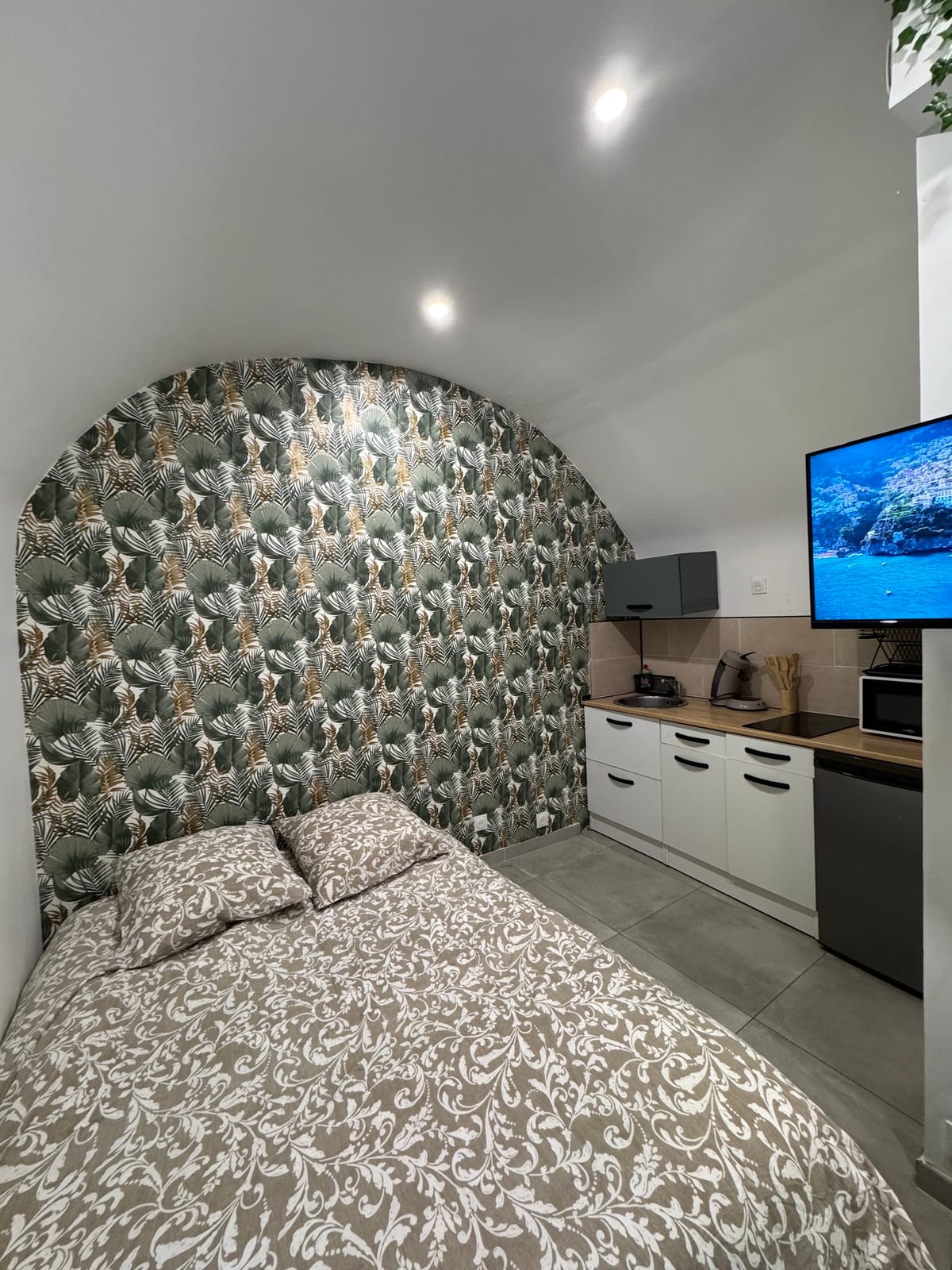
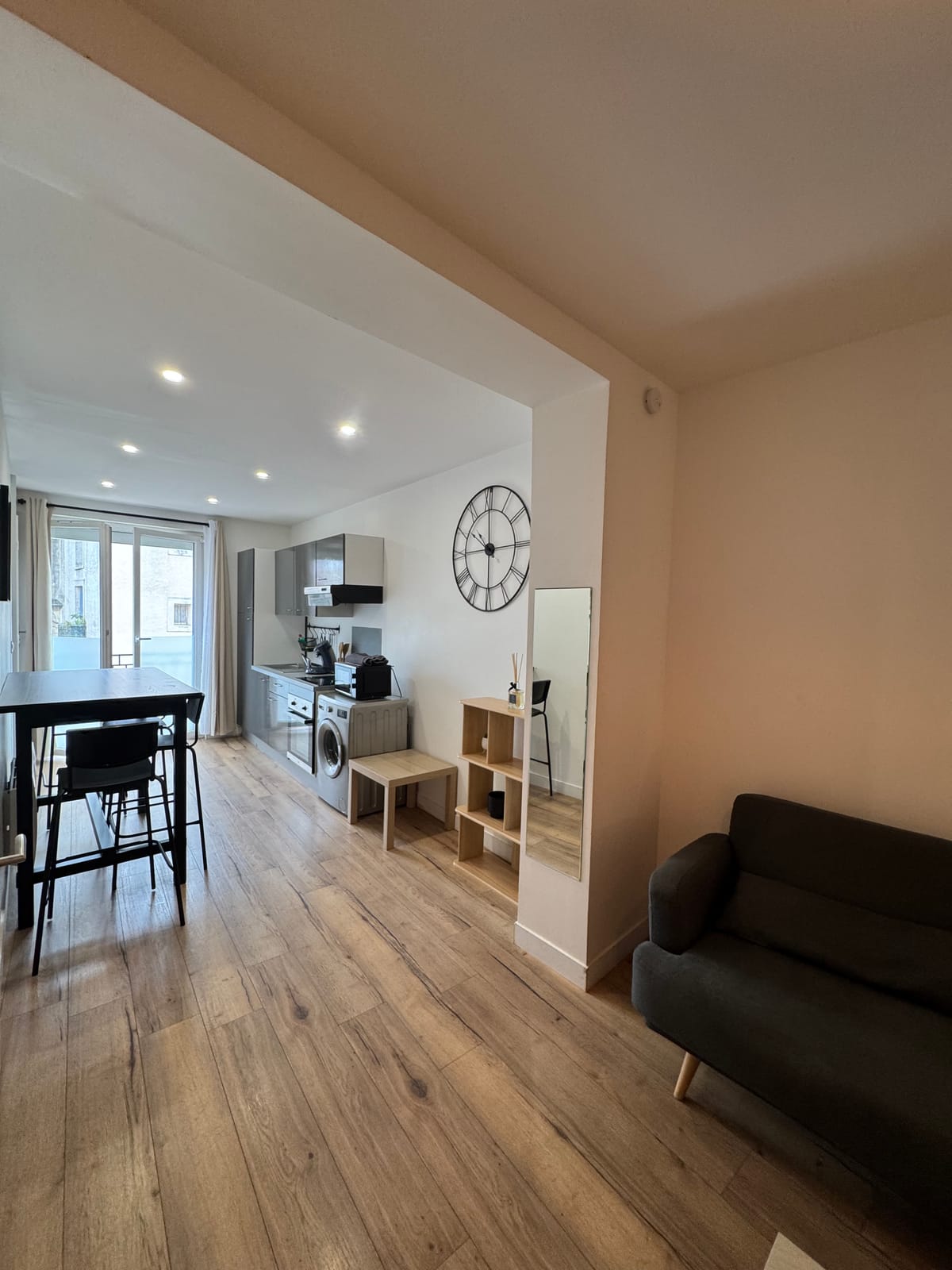
For a solo or duo golfer, the studio large enough, with its double bed and workspace to organize the week. Several, the duplex offers two bedrooms and three beds, convenient for a group golf stay with a washing machine on site. The two units share the same address in downtown Saint-Jean-de-Védas, with quick access to A709 and A9 to extend to other villages in the west, such as Lavérune or Saussan.