A village on the Mosson plain
Lavérune has 3,302 inhabitants and extends on the right bank of the Mosson, west of Montpellier. The territory remains very agricultural : almost four-fifths of the soils are crops, including a large part of vineyards and orchards, with hills emerging westward. The Mosson Valley, between Grabels and Saint-Jean-de-Védas, is also listed as a natural area of ecological interest.
For a traveller, this gives a village of human size, quiet, surrounded by estates, to the immediate edge of the metropolis. We come there for a visit, for relatives settled in the recent estates, for an appointment in one of the companies of the area, or simply to walk in one of the most beautiful castle parks in the area.
Pass the Mosson : 8 minutes and four kilometers
From the centre of Saint-Jean-de-Védas, the road measures 4 kilometres and takes about 8 minutes. The two communes are adjoining : one crosses the river and one arrives. Departmental 5 then serves the neighbouring villages of Pignan, Saussan and Saint-Georges-d-Orques.
The interest in staying on the Saint-Jean-de-Védas side is that Lavérune does not offer : tram. Line 2 is about 7 minutes walk from the accommodation and runs to Sabines, Saint-Roch station and the centre of Montpellier. You keep the car to Lavérune and the villages in the west, and you leave it parked in the evening to get down into town.
The Château des Évêques, its park and the Hofer-Bury Museum
To the south of the old village, the former residence of the bishops of Montpellier is the main reason for a visit. The castle park is listed as historical monuments. It is open to walkers, and is often mentioned among the most beautiful historical gardens of the Midi. The castle itself hosts the Hofer-Bury Museum, dedicated to contemporary painting.
A short walk away, the church of the Assumption-de-Notre-Dame-et-Saint-Pierre-ès-Liens combines parts of the 14th and 18th centuries. It is adjacent to a 14th century chapter hall, a vestige of the Montpellier chapter buildings. A rare feature : since 2014, a municipal decree prohibits advertising within a 100-metre radius around remarkable buildings, which preserves the vicinity of the ancient heart.
Montpellieran madness, north of the village
On the road to Juvignac, the castle of the Engarran is one of the "cradles" built in the eighteenth century by the bourgeoisie and the nobility of Montpellier, in the middle of their wine estates. Its grid is classified as a historical monument, with a singular history : it once closed the Place de la Comédie in Montpellier, before being bought for the estate in 1785.
The Biar estate, near the route of the old Domitian Way, dates back to the 12th century and belongs to the same family of houses. On leaving the village towards Saint-Georges-d-Orques, an industrial building does not go unnoticed : the coffee roasting factory installed since 1970, whose main building is dressed as a package of coffee.
For whom this base makes sense
- A visit to relatives in Lavérune : you are 8 minutes from home, without disturbing them, with a kitchen equipped to receive or make a simple dinner.
- A heritage day west of Montpellier : the park of the Bishops in the morning, then the Engarran, then Pignan or Saint-Georges-d-Orques in the afternoon.
- A professional appointment In the sector : the workspace and wifi of the two housing units allow to prepare or finish the day on site.
Studio or duplex for a stay near Lavérune
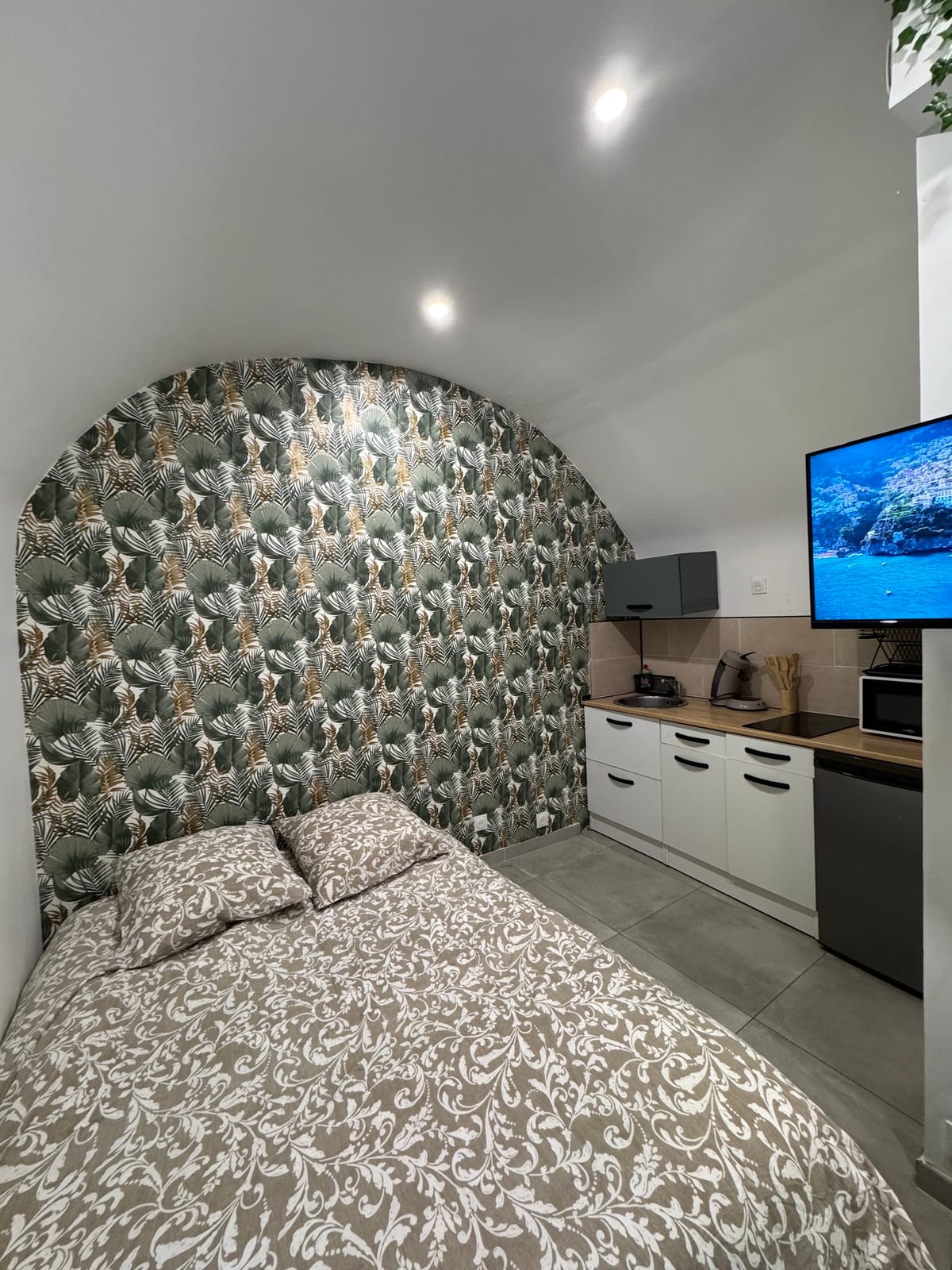
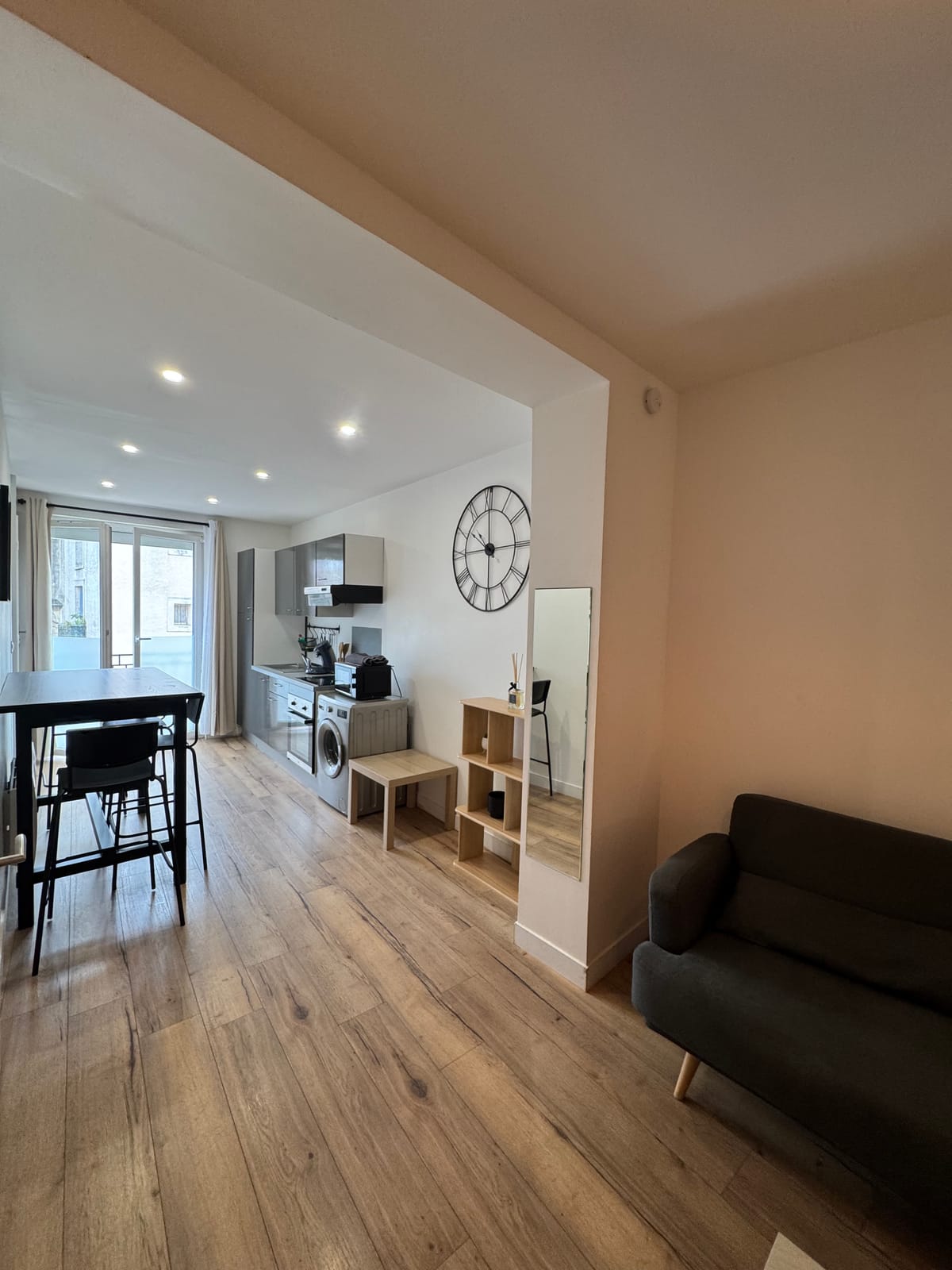
On two, the studio sufficient : double bed, equipped kitchen, work space. Family or several, the duplex offers two bedrooms, three beds and a washing machine, convenient for a stay of several nights. Both units are at the same address in downtown Saint-Jean-de-Védas, where one night is enough to book.
To extend westward, the pages devoted to Pignan and Saussan detail the neighbouring villages.