A town on the wine and olive plain
Pignan has 8,431 inhabitants in 20.5 square kilometres; Its inhabitants are called the Pignais or the Pignaises, and the commune serves as central office in the canton of Pignan. Local agriculture remains marked by viticulture, and the commune is known for a specialty : the reddish of Pignan, an award-winning olive oil from olive trees of the same name, produced by famous olive cellars.
Twelve minutes from housing
The road measures 8.4 kilometres and runs in 12 minutes. This proximity makes it possible to combine an evening in the city centre of Saint-Jean-de-Védas, tram 7 minutes walk from the accommodation, with an exit in a much larger town, with complete shops and services.
Fort-Viel and the Castle of the Count of Turenne
In the old centre, a medieval complex has been listed as historical monuments since 28 July 1999 : the two towers of Fort Viel and the Bosquet, the remains of the old castle and the old church. Not far away, since 1895, the town hall has occupied the castle of the Count of Turenne, built at the end of the 17th century and registered as historical monuments since 2012, redesigned by architect Daviler.
The Abbey of Vignogoul and its ancient music festival
On the road to St George's Orcas, the Abbey of Vignogoul is a former female monastery attested since the middle of the 12th century, sold as a national property at the Revolution and classified as a historical monument since 1862. Since 2010, the site has hosted an annual festival of ancient music, a way to visit a place full of history other than by passing by.
Castle Park, Forum and Olive Festival
The park of the castle runs on foot, as does the sports course of the Garrigas. The Forum market hosts the commune all year round, and every month in October, the olive festival celebrates the fruit by tasting olive products. Pignan also has 8 general practitioners, a psychologist, 7 physiotherapists, 2 pharmacies and a psychiatric clinic, the Saint Martin psychotherapic centre in Vignogoul.
A Protestant temple with a turbulent history
The first Protestant temple in Pignan was built in 1598, after the edict of Nantes, and then destroyed during the religious wars. A third building opened in December 1803, financed by parishioners; In August 1815 he remained the only burning temple in the department of Herault during the religious divisions of the time. It became obsolete and closed to the public from 2013 for security reasons, before the property was sold in 2023.
The municipality has also created a concerted development area on the Saint-Esteve site, on an area of 30 hectares, with at least 650 units delivered from 2017, a sports complex, new shops and new green spaces. This project has greatly altered the appearance of the municipality, visible from the D5 department, but has not erased the character of the old medieval centre. In 2010, Pignan already accounted for 2,639 housing units in its territory, 94.1% of which were principal residences, with 9.32% being social housing units in 2011.
For one more walk, the two capitels of the Pioch des Montres, the large and the small, recall the ancient use of dry stone huts, and the site of Fort Viel completes the discovery of the communal territory.
Studio or duplex for a stay on the side of Pignan
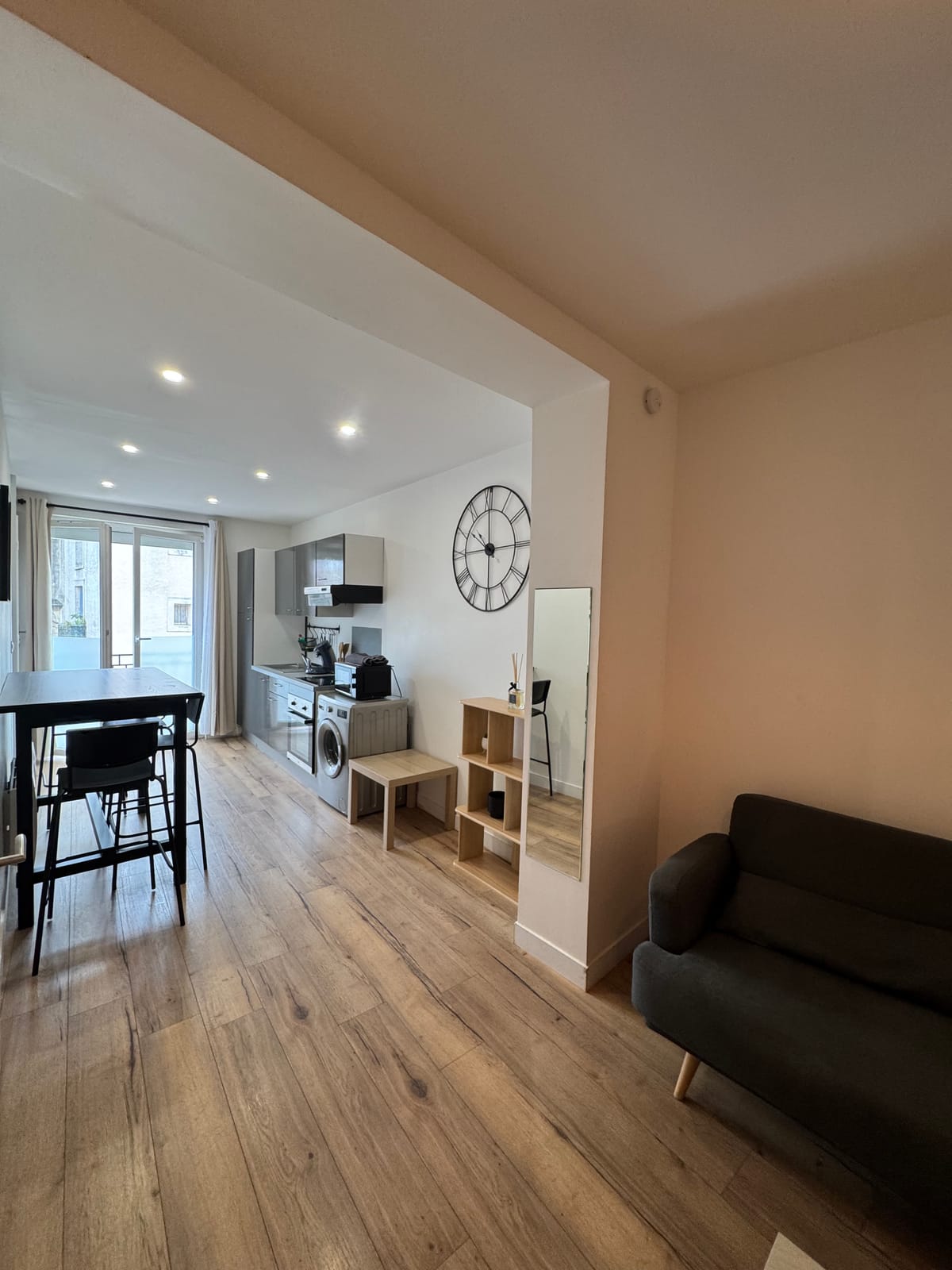
For two people who come to visit the abbey or the old center, the studio enough, with its equipped kitchen and work space. For a family stay or related to a professional appointment in the activity area of Pignan, the duplex offers two bedrooms, three beds and a washing machine, at the same address, with a stay accessible from one night and an autonomous arrival per key box.