Fabrègues, at the foot of the Gardiole mountain
Fabrègues has 7,447 inhabitants and extends at the foot of the Gardiole massif, between garrigue and wine plain, drained by the Mosson, the Coulazou and the Aigarelle. The name of the village comes from the Latin fabrica, the artisan workshop, which has long designated a forge : Fabregues was never a simple agricultural hamlet. The old village, organized around an old castelas now disappeared, kept its fortified gates and medieval houses in the Upper Quarter. Around the region, the village is still marked by vines, although the number of farms has fallen sharply, from 184 in 1988 to 27 in 2010 and 30 in 2020, to larger areas.
Seven minutes, a garrigue in common
From the centre of Saint-Jean-de-Védas, Fabrègues meets in 7 minutes for 6.3 kilometers. The two communes are not only nearby : they share the same natural area of ecological interest, the "garrigues de la Lauze", covering 581 hectares between Fabrègues, Saint-Jean-de-Védas and Villeneuve-lès-Maguelone. To stay in Saint-Jean-de-Védas to go to Fabrègues is therefore to stay in the same garrigue territory, with in addition the tram within walking distance for days without car.
From the oppidum of the Roque to the bell tower
At the confluence of the Mosson and Coulazou, the remains of the Roque's oppidum bear witness to an occupation dating back to the Arécomiques Volques, a Celtic people settled in Languedoc from the sixth century B.C.E. The site is classified as a historical monument and features remains of Gallic walls and houses. In the village, the church of St. James kept a bell tower whose base dates back to the twelfth century and the summit to the seventeenth, with a bell of 1767; The building has been listed as historical monuments since 1947. The estate of Old Mujolan completes this heritage complex, which is also protected, as well as the castle of Launac, occupied from prehistory and then by the Romans, before passing in 1175 to the hands of the Order of the Temple, then of the Knights of Malta.
A rare bird plain, a market, parks
The plain of Fabrègues-Poussan, classified Natura 2000, is home to one of the last Languedoc populations of the Pink-breasted Pie-grièche, alongside the Rollier d'Europe and the Outarde Canepetière. Closer to the village, the protected area of Fabrègues-Madeleine offers another way of walking in garrigue, towards Mont Saint-Baudile or Pioch de Camille, two reliefs that frame the town. Le Marché Couvert remains the landmark of the village centre, and to blow after a walk, Fabrègues offers several green spaces : the Jardin des Écureuils, the Parc du Pigou with its lake, the health path and the square of Queen Helen.
For whom this step makes sense
- A hike on the Gardiole : the massif is joined in a few minutes by car, and the accommodation serves as a comfortable base camp, without camping or lodging to book away from the shops.
- A family outing : the Natura 2000 plain and the village parks are easily combined with an afternoon of rest on the tram side and equipped kitchen.
- A step on the coastal road : Fabrègues is located on the axis leading to the Gardiole and the coast, a convenient crossing point before or after a day of sea.
- A vineyard weekend : the plain remains marked by viticulture, from which combine tasting in cellar and hiking on the heights.
Studio or duplex before going craphuter
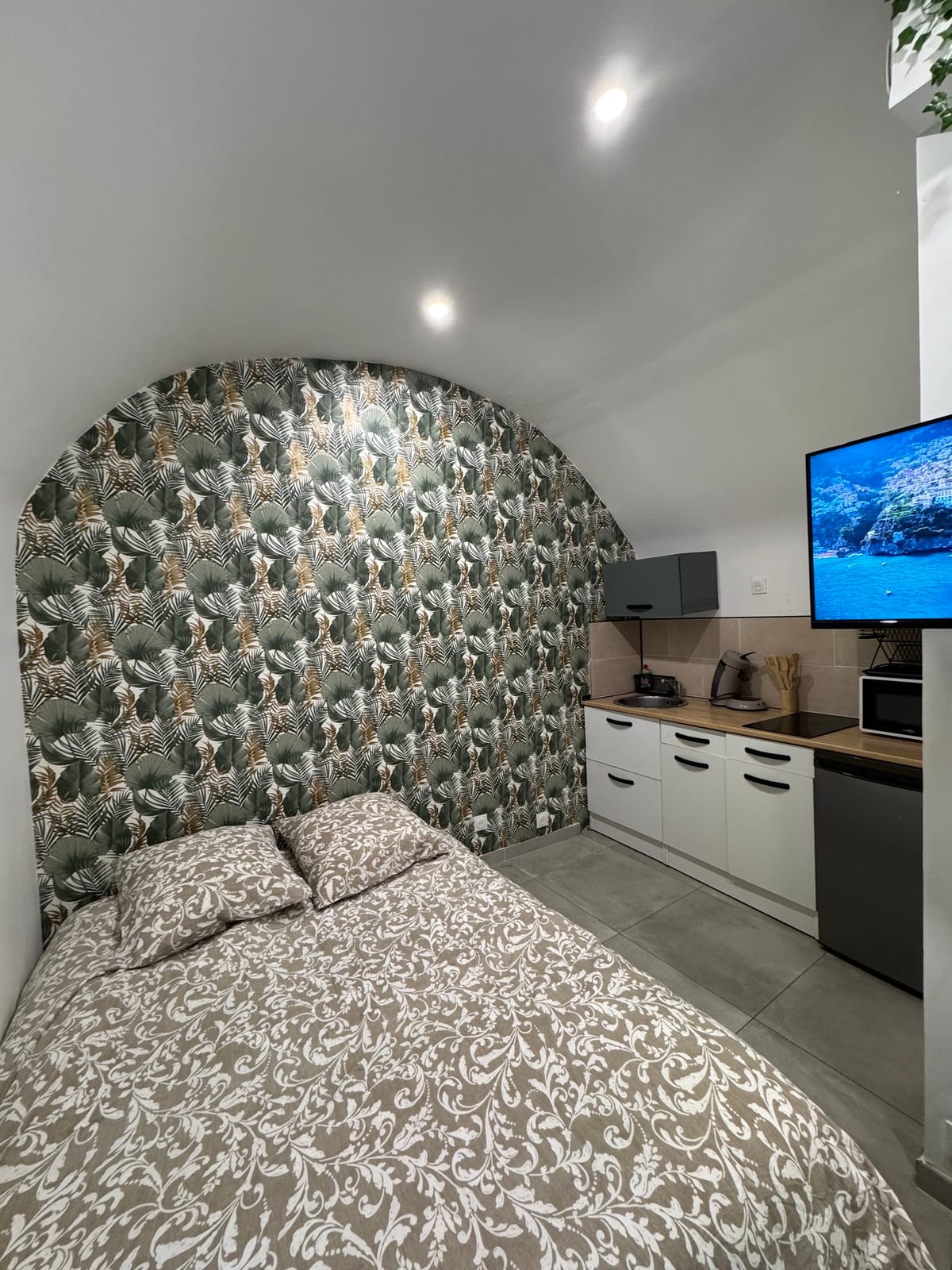
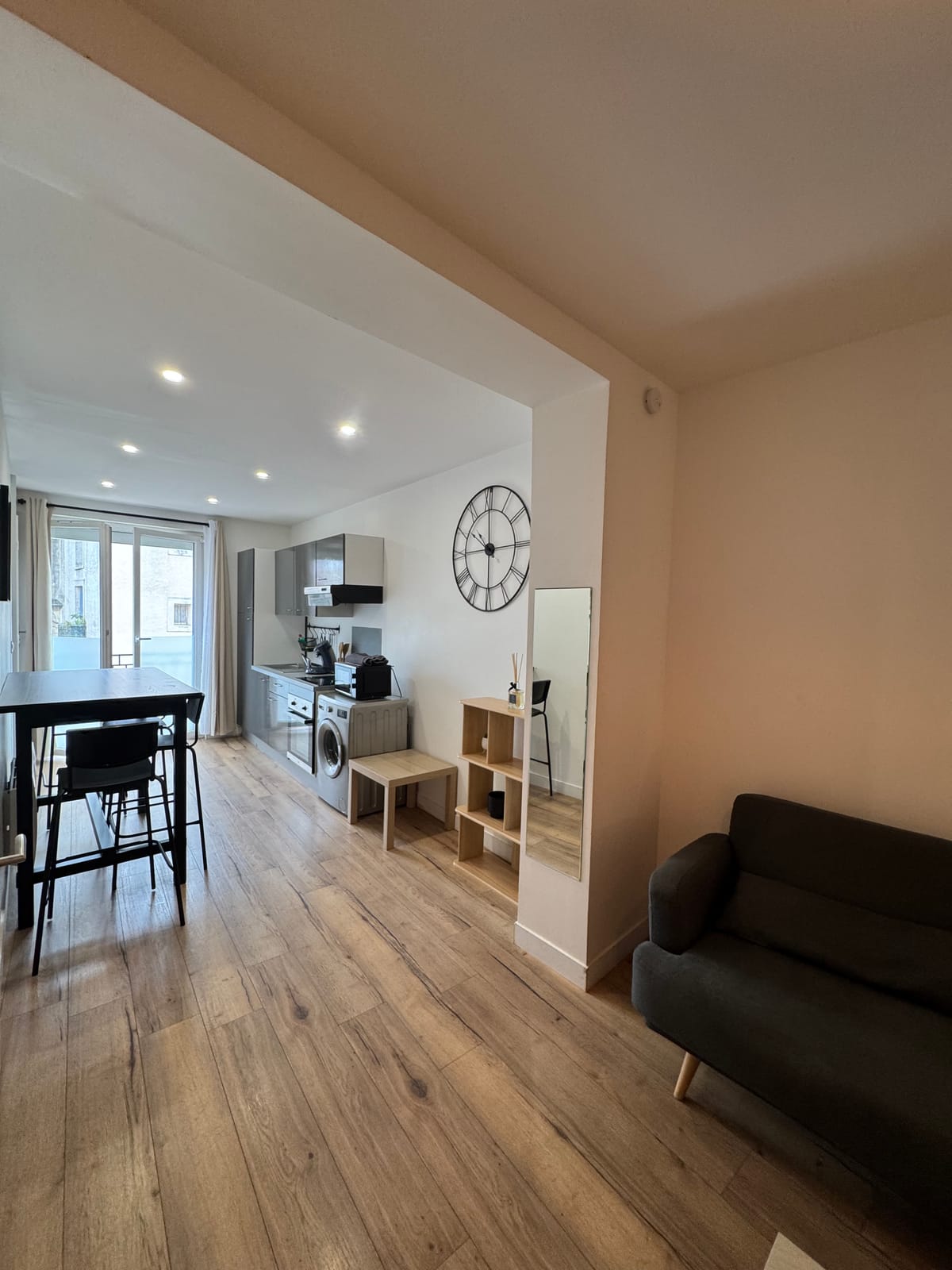
For a short getaway to two, the studio enough : double bed, equipped kitchen, mobile air conditioning for warm days of garrigue. Family or several, the duplex offers two bedrooms and a washing machine, convenient when returning from a dusty hike. Both units share the same address, right in downtown Saint-Jean-de-Védas; the minimum stay is 2 nights, and the A9 joins quickly to return to the coast. To extend southward, the page dedicated to Villeneuve-lès-Maguelone present the other commune which shares the same garrigue.