A village perched west of Montpellier
Murviel-lès-Montpellier has 2,075 inhabitants and extends over only 10.1 square kilometres, in a relief marked by significant declines : about 100 meters of elevation between the high point, at 200 meters of altitude at the place called Valcrose, and the low point of the valley, around 100 meters. The centre of the village is located around 140 meters. The village therefore occupies a balcony position, in a garrigue massif north of the plain of Pignan, where water remains a rare resource.
From the accommodation, 21 minutes to the hills
The journey to Murviel-lès-Montpellier is 12 kilometres long and takes 21 minutes by car. It is a half-day or whole-day trip rather than a quick way : the village climbs, visits on foot, and its relief invites you to take your time. From Saint-Jean-de-Védas, the return is without complications, with quick access to motorways A709 and A9 and then to Montpellier or another village in the west.
Two thousand years of occupation
The Castellas hill above the village has been occupied for at least the second century B.C.E. The vestiges of the temple, including the fountain, are classified and listed as historical monuments in 1896, 1971 and 2010, and a mensa ponderaria, ancient measuring table, was discovered there in 2008. The Paul-Soyris Archaeological Museum gathers some of these discoveries in the heart of the village. The church of Saint John the Baptist, with its 12th century Romanesque apse inscribed with historical monuments in 1963, completes this heritage path around the medieval castrum built on ancient ruins.
The domain of the Mas God, vines, sheep and lake
Riding the municipalities of Montarnaud, Murviel-lès-Montpellier and Saint-Paul-et-Valmalle, the Mas Dieu estate covers 540 hectares. A landfill project was considered in 1990 before being abandoned for softer development : 145 hectares for agricultural projects (wine, olive, truffle), 242 hectares for pasture for an endangered caussenard herd, and 100 hectares of public park with a free lake, covered by walking trails. It is one of the large green lungs in the west of the agglomeration.
For whom this step makes sense
Murviel-lès-Montpellier is suitable for a heritage and nature outing, away from the crowd : the village is ready for a slow walk between the oppidum, the museum and the church, before joining Mas Dieu for a walk by the lake. It is also a stage for those interested in local viticulture, with its cooperative cellar, in an area of hills where there are more winemakers than tourists.
A village that still lives from the vine
Murviel-lès-Montpellier remains marked by viticulture : 143 establishments were established at 31 December 2019, of which 29, or 20.3 % of the total, in specialized and scientific activities, compared with 17.1 % at the department level. However, the number of farms fell from 58 in 1988 to 27 in 2010 and 17 in 2020, while the agricultural area used decreased from 262 to 184 hectares over the same period. The wine cooperative cellar of the village remains the most visible witness of this activity, alongside the castle of bishops.
A studio to radiate west of Montpellier
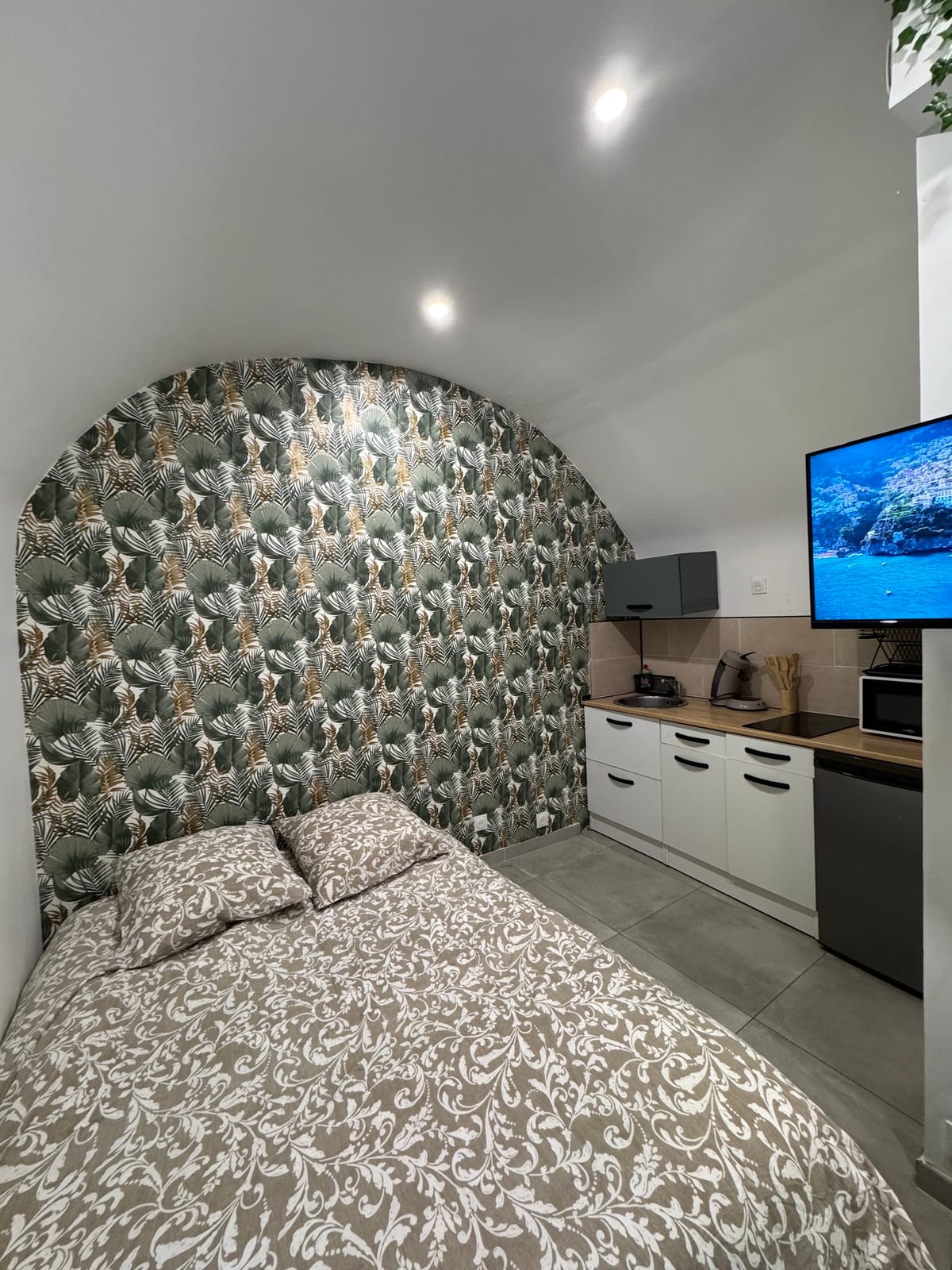
The studio, with its double bed, equipped kitchen and work space, is enough for a quiet base where to explore Murviel-lès-Montpellier and neighbouring villages. It is located in downtown Saint-Jean-de-Védas, at the same address as the duplex for a stay of several, with free parking nearby and quick access to the A9 to leave west the next day.
To continue to neighbouring villages, the pages dedicated to Pignan and Montarnaud detail the rest of the sector.