A city between plain and activity area
Vendargues has 7,262 inhabitants on a territory of 9.2 square kilometres and extends about 12 km east of Montpellier, towards Lunel, at the crossing of national roads 110 and 113. The neighbouring municipalities are Baillargues, Castries, Le Crès, Saint-Aunès and Teyran. The municipality has 1,051 establishments, of which 26.6% are in trade, transport, accommodation and catering. Agriculture, oriented towards viticulture, fell sharply : from 75 farms in 1988, only 16 remained in 2020, on an agricultural area increased from 489 to 150 hectares. Vendargues has seen a sharp increase in its population since 1962, as have many communes in the Montpellier agglomeration : the village has extended to the limits of the triangle formed by the two national and the intercantonal link of north avoidance, to occupy all its space. Marcelin Albert Park, named after a leader of the wine revolt of the early 20th century, and the Pompidou Health Centre complete the village's facilities, alongside the Fontaine, a heritage landmark in the centre of town.
22.2 kilometres and 21 minutes separate the two municipalities
22.2 kilometers and 21 minutes separate Saint-Jean-de-Védas from Vendargues, crossing the agglomeration of Montpellier from west to east. From Saint-Jean-de-Védas, quick access to the A709 and then the A9 makes it easy to reach this side of the metropolis, without going through the city centre.
The studios of France Télévisions, a daily filming
Since 2018, France Télévisions has set up production studios in Vendargues to shoot the daily series Un si grand soleil, on a site of 16,000 m2. The group's post-production has been there since 2022, followed by carpentry and decor production : an unusual activity for a commune of this size.
Meyrargues, the hamlet that dominates the village
The hamlet of Meyrargues overlooks the village and preserves the chapel Saint-Sébastien, a former vestige of a command of the Hospitallers of the Order of Saint John of Jerusalem, reported in acts from 981, then in 1111 and 1248. The adjoining estate, the castle of Meyrargues, was once a fortified farm whose first known owner, Jean de Saint-Ravy, was master of the hotel of King Henry IV and called himself lord of Meyrargues. The mathematician Alexandre Grothendieck, a Fields medallist and one of the founders of political ecology in France, lived there from 1945 to 1948 with his mother.
From Venerianicus to Vendargues, a Gallo-Roman origin
Legend has it that the first resident of Vendargues was a veteran of the Roman legion of Augustus, Venerianicus, whose name has evolved over the centuries : Venerianicus in 924, Venranichos in 961, Venraneges in 1005, then Vendargues from 1536 before settling in Vendargues in 1626. The territory was crossed by the Domitian way, a section of which today bears the name of the way of the Mint; archaeological discoveries in the present Serre Garden tend to prove that the first dwellings were close to this place, surrounded by crops of wheat, rye, oats, vines and olive trees. The house of General Pierre Berthezène, Baron of the Empire born in 1775 and died in 1847, is still in the village square.
A useful step for a filming or a professional appointment
- An appointment or a shooting linked to the studios of France Télévisions, 21 minutes from Saint-Jean-de-Védas.
- A professional stage in the Vendargues area of activity, one of the most active in the sector.
- A walk to the hamlet of Meyrargues and its woods of Saint-Antoine, away from the bustle of the activity area.
Studio or duplex between two days of shooting
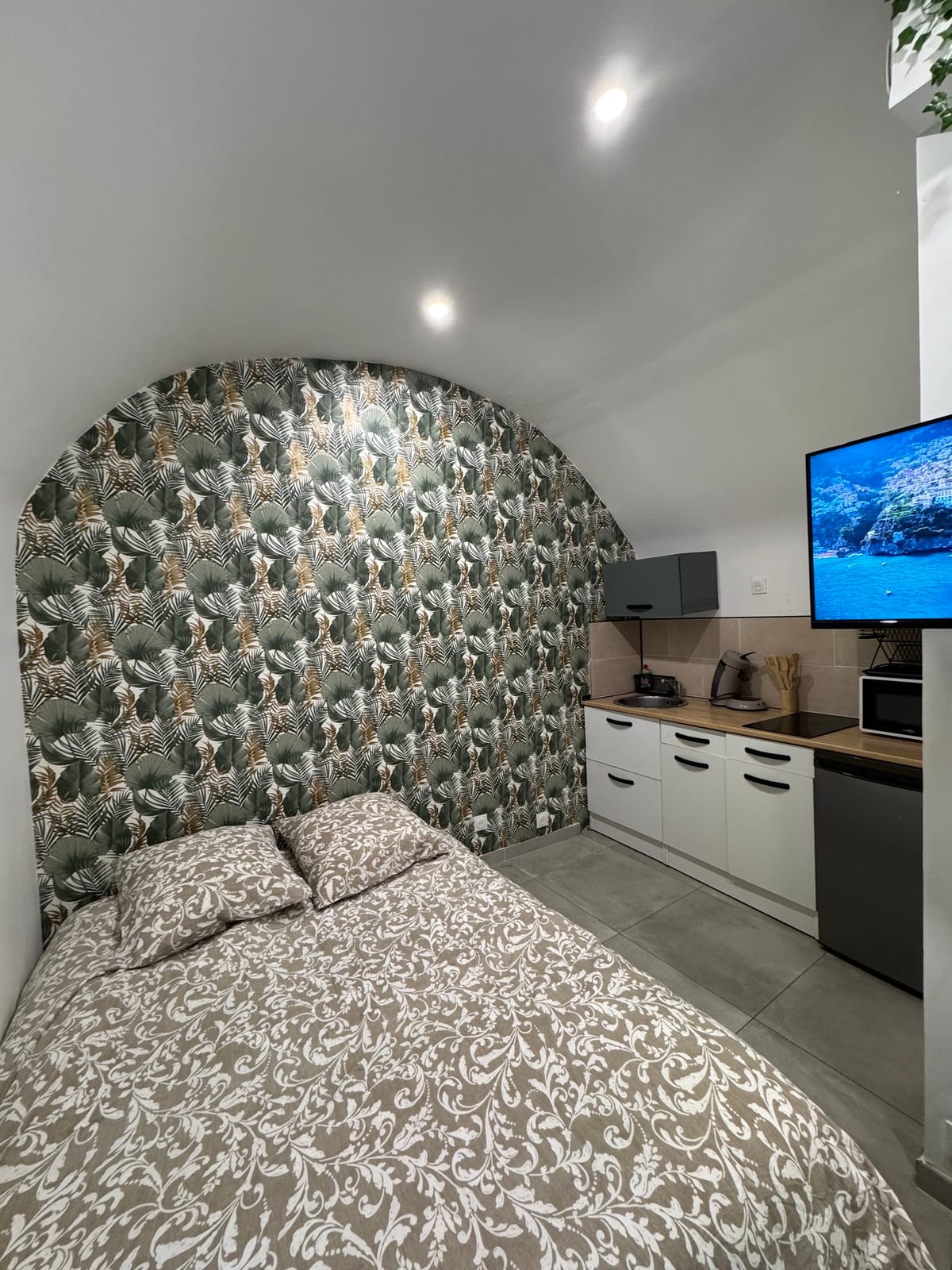
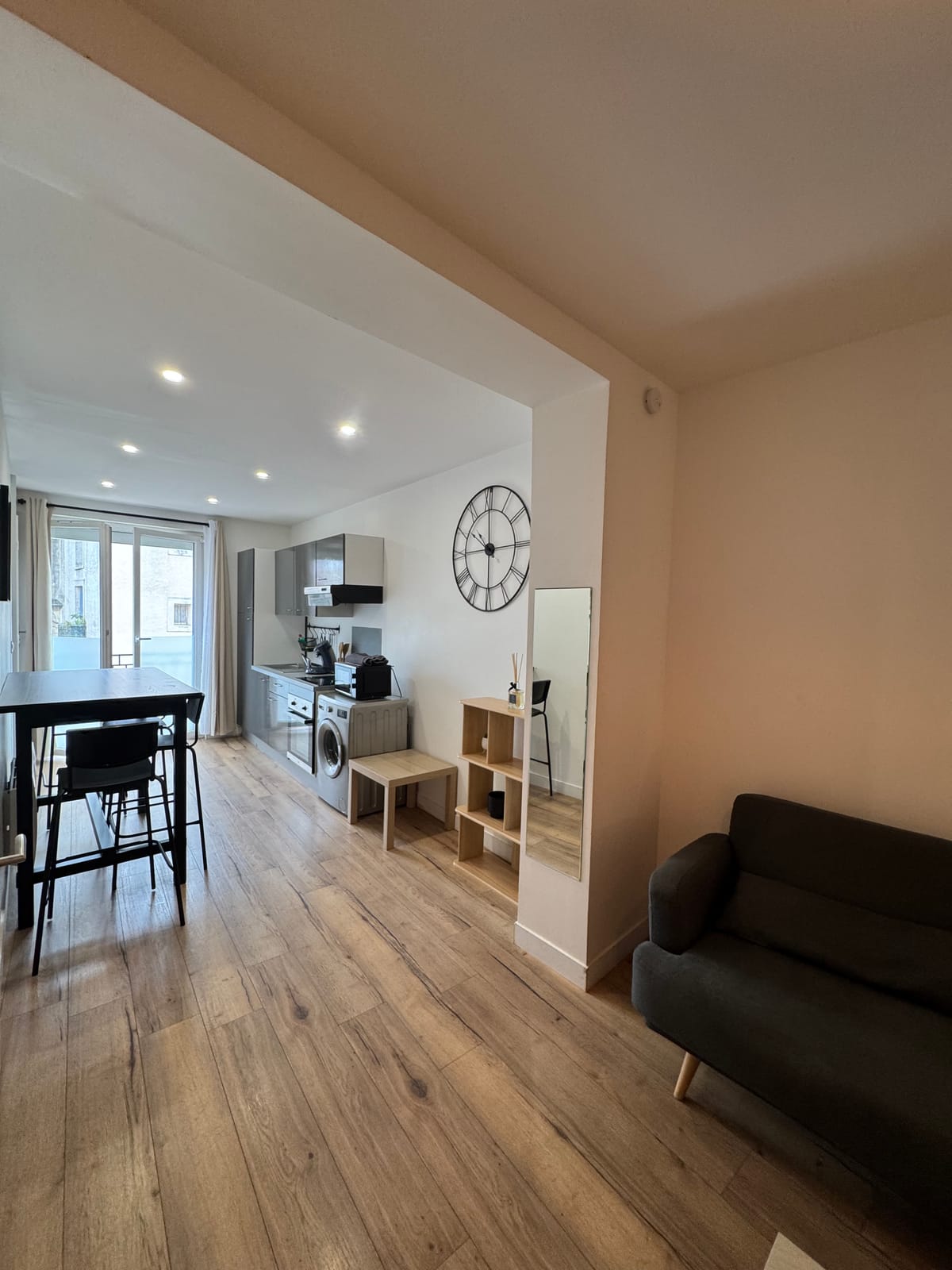
For a professional stay, the studio offers a work space and the necessary wifi between two days of shooting or meeting, with quick access to the A709 to take the road in the morning. As a team or family, the duplex offers two bedrooms and three beds. The page devoted to Castries complete this stage towards the east of the metropolis.