A residential town on the left bank of Lez
Castelnau-le-Lez has 26,058 inhabitants and is second in the communes of Montpellier Méditerranée Métropole, behind the city centre. It extends to the northeast of Montpellier, the Lez of which separates it to the west, on a soft relief that ranges from 19 to 93 meters above sea level.
The commune grew rapidly : 450 inhabitants in 1793, nearly 15,000 in the early 2010s, 26,058 today. This growth has given rise to a predominantly residential city, with pavilion areas such as Devois, buildings in the Clairval area, and a tram-driven shopping centre. For a traveller, it is less a tourist destination than a place of visit to relatives or appointments in one of its activities.
Of the 3,319 establishments surveyed, specialized, scientific and technical activities and business services account for 23.6%, compared with 17.1% at the departmental level.
Same line 2 : the tram as the driving wire
By car, the town meets in 21 minutes from the centre of Saint-Jean-de-Védas, for 18.4 kilometers. The tram offers another logic : the line 2 departs about 7 minutes walk from the accommodation and passes through the central area of Castelnau-le-Lez, without change.
The communal territory has several tram stops, including Via Domitia, Aube Rouge, Notre-Dame de Sablassou, Centurions, La Galine and Clairval. For a visit to relatives, a dinner or an evening, the car is left at free parking without time limit, 200 meters from the accommodation, and there is no need to look for a place on the other side of the metropolis.
Lez, its mills and banks
Lez gives its name to the city and structures its landscape. The river is home to a species that is not found elsewhere, the endemic sculpin, protected by a Natura 2000 site of 239 hectares. The rivers of Lirou and Lez are also inventoried as a natural area of ecological interest, on 127 hectares.
On its castel section, the river ran a series of mills : Lavalette, the Martinet, Navitau, the Guilhems, the Poudrière and the Pont mill. The canal brought to the Navitau mill is still spotted. The Berges du Lez park allows you to walk along the water, and the Historic Centre is itself bordered by the river.
The town has many green spaces for a shorter walk : Parc Montplaisir, Jardin des Perrières, Domaine des Oliviers, Bois du Devois, Bois du Miradou. To the north, the area of Caylus and Courtarelles, which remained fairly preserved, includes the wood of Caylus, 9 hectares.
Substantial, Domitian Way and St. John the Baptist Church
The territory has been inhabited for a long time. The site of Substantion corresponds to a pre-Roman oppidum, then to the Gallo-Roman locality of Sextantio, relay on the Domitian way between Italy and Hispania. After 737, the bishops of Maguelone took refuge there and resided there until 1030, when Montpellier did not yet exist as a city. Later, a castle called Castellum Novum, the "new castle", was built on the left bank of the Lez, a little away from Substantion : it gave its name to the village, renamed Castelnau-le-Lez in 1865. The Crès, in the east, detached on September 30, 1872.
A section of the Domitian Way, north of the Devois district, has been listed as a historic monument since February 5, 1987. Rue de la Monnaie, opposite the Palais des Sports, a copy of a mile mark of the track recalls this passage; The original was found in the 19th century in the Lez bed.
The church of Saint John the Baptist, Romanesque, dates from the end of the twelfth century and was fortified in the fourteenth. Its bell tower, rebuilt in the eighteenth century, carries a wrought iron campanile; it has been a historic monument since 1911 (ref. Mérimée PA00103407). In the south-east, the domain of Verchant (PA34000042), renovated in the nineteenth century in the style of Montpellierian madness, has been registered since 1983 and functions as a hotel. Place de la Liberté, on the site of the former town hall, the Museum of Resistance and Deportation presents photos, objects and models on the Second World War.
Districts, market and health centre
The city is divided into distinct districts : Caylus and Courtarelles to the north, Devois to the east, the Centre, the Historic Centre to the west, the Mas de Rochet to the southwest and Eurêka. The Mas de Rochet mixes activity park, health centre and housing : there is the Clinic of the Mas de Rochet, the Park Clinic and the Maguelone Orthopaedic Centre. Eureka extends the Montpellieran business park of the same name, with tertiary, technological and medical companies.
Local life also includes the Castelnau-le-Lez market, 2 swimming pools and a cultural calendar, including Les Musicales in May and Les Nocturnales, jazz concerts and world music, in the 2nd half of July.
Studio or duplex for a stay linked to Castelnau-le-Lez
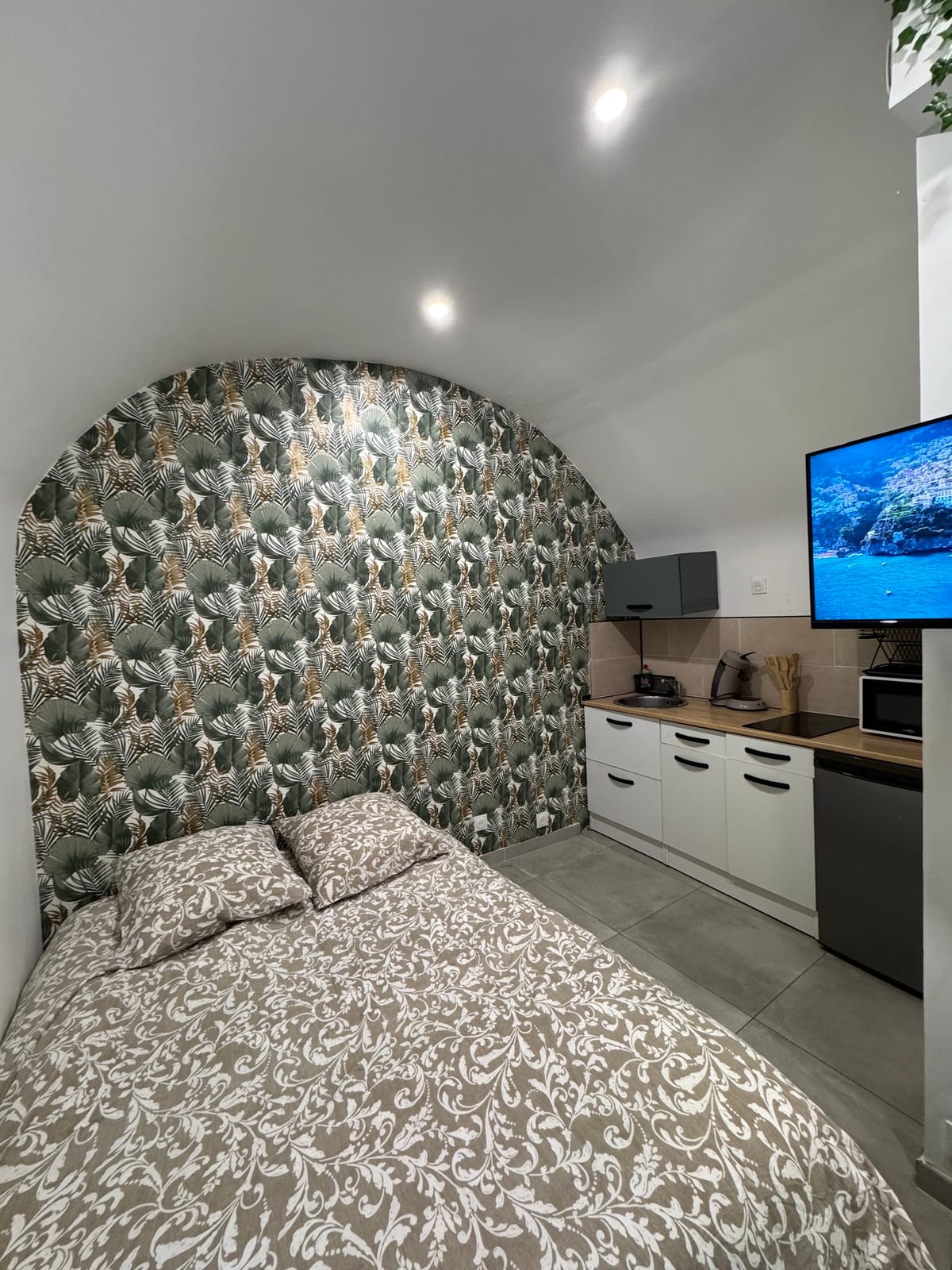
For an appointment at the Mas de Rochet or a mission in Eureka, the studio offers a double bed, a work space and wifi to prepare your day, up to two.
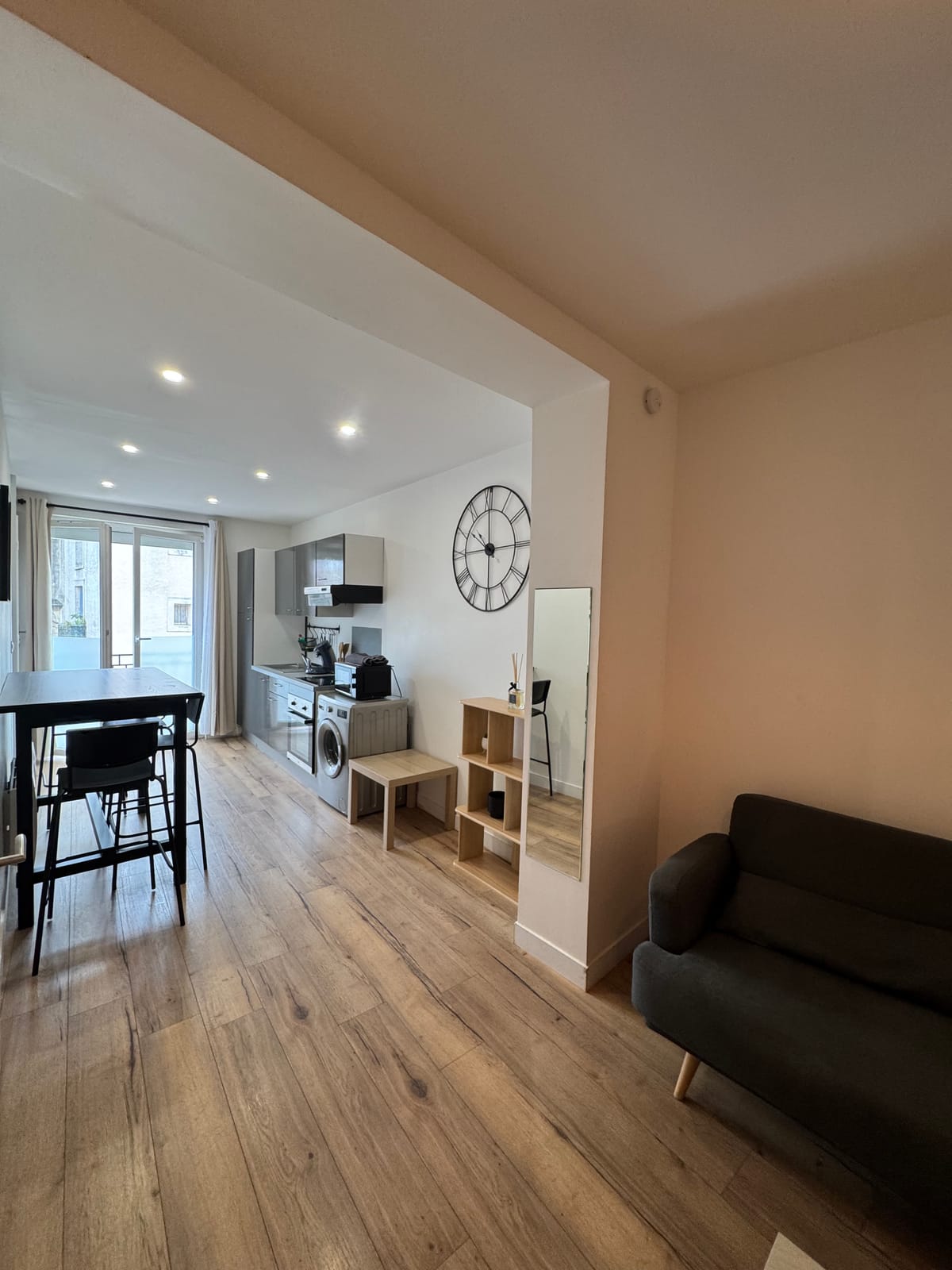
For a family visit of several days, the duplex accommodates 4 travelers, with two bedrooms, three beds, a kitchen and a washing machine. The arrival is autonomous per key box from 5pm to 11pm, departure before 11am, without minimum night imposed.
To expand eastward, see the pages dedicated to Stone, former part of the same municipality until 1872, and Clapiers.