A small village of the north-west garrigues
Murles has 353 inhabitants in 23.8 square kilometres, making it one of the least populated municipalities in the whole area around Saint-Jean-de-Védas. The village is set up along a road that climbs to the plateau of Valène wood, in a still largely wine-growing landscape. Two natural areas of ecological interest are identified in its territory, including the Puech Estrous scrubland and the wooded garrigues of north-west Montpelliérais, a complex shared with many neighbouring municipalities.
An anecdote sums up the character of the village : until 2004, its streets did not have a name, an exception that the inhabitants eventually gave up under pressure from administrations and companies whose mail was lost or whose software did not manage streetless addresses.
Half an hour drive to the plateau
From Saint-Jean-de-Védas, it takes 21.3 kilometres and about 31 minutes to the north-west garrigues. This is the price of a real change of scenery, barely half an hour from the agglomeration, between Lake Cancarié and Lake des Plantiers that punctuate the landscape. As the bird flies, Murles is only 15.5 kilometres from Saint-Jean-de-Védas, which highlights how the more winding mountain road takes its time to climb towards the plateau of Valène wood.
The village is more suitable for a day trip than for on-site accommodation : it is better to keep a more central drop point, like Saint-Jean-de-Védas, and radiate to Murles from there, combining the stage with Combaillaux or Vailhauquès, closer to the agglomeration.
The ruins of Montlaur Castle
The ruins of the Château des Montlaur, which dates back to the 11th and 12th centuries, dominate the village and attract a bit of tourism. The seigneury belonged to the Montlaur family, later settled in Montpellier with the title of marquis.
The church of the Nativity of Saint John Baptist of Murles was listed as historical monuments in 2016. Not far away, the Caravettes Mass recalls the former Barony of Caravettes, whose annual induction ceremony continues to be held in Murles in October.
A small to large economy
Murles has only one farm with its registered office in the municipality in 2020, compared to nine in 1988 for a used agricultural area of only 4 hectares, a sign of a territory that is now more residential than agricultural despite its wine roots. In non-agricultural activities, 20 establishments are located in the municipality, of which 6 are in specialized and administrative departments, i.e. 30% of the total, compared with 17.1% in the department. The territory also preserves two more quiet spaces, the Pigeonnier and the park of the Epeutre, suitable for a break in the shadow after the visit of the ruins, in a village that has long lived at the pace of the Valène wood and its hanged road.
For whom this base makes sense
- A quiet walk in the garrigues : Murles completes a day that also includes Combaillaux and Vailhauquès, closer.
- A need for total calm The village has 353 inhabitants, far from the animation of Saint-Jean-de-Védas or Montpellier.
- A desire for medieval heritage The ruins of the Château des Montlaur are open to visitors.
On the plateau, a lavogne, these stone pools designed to water the herds, and Lake des Plantiers recall the pastoral past of these garrigues, just like Lake Cancarié, a little further on the same relief.
Studio or duplex before exit to Murles
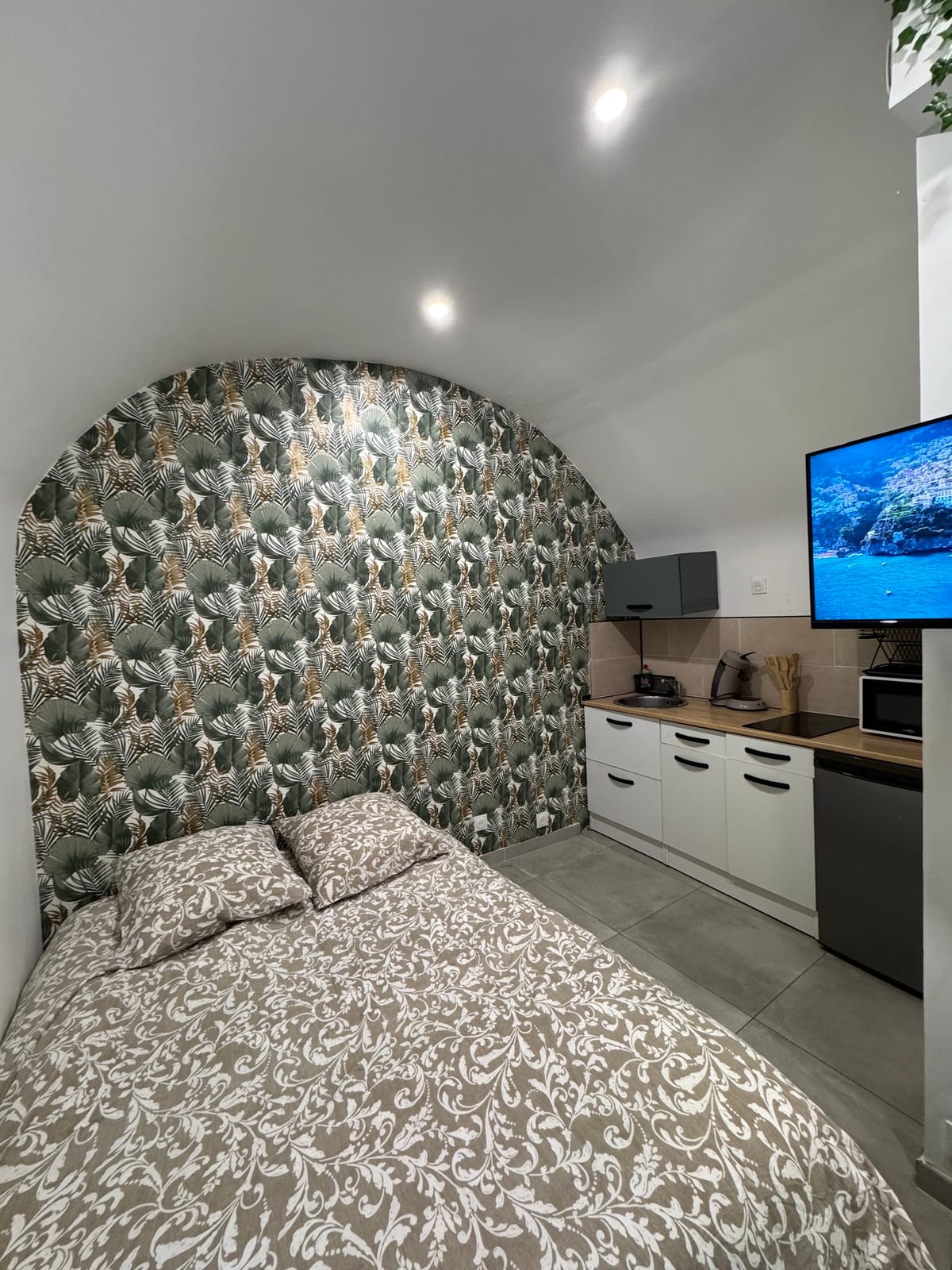
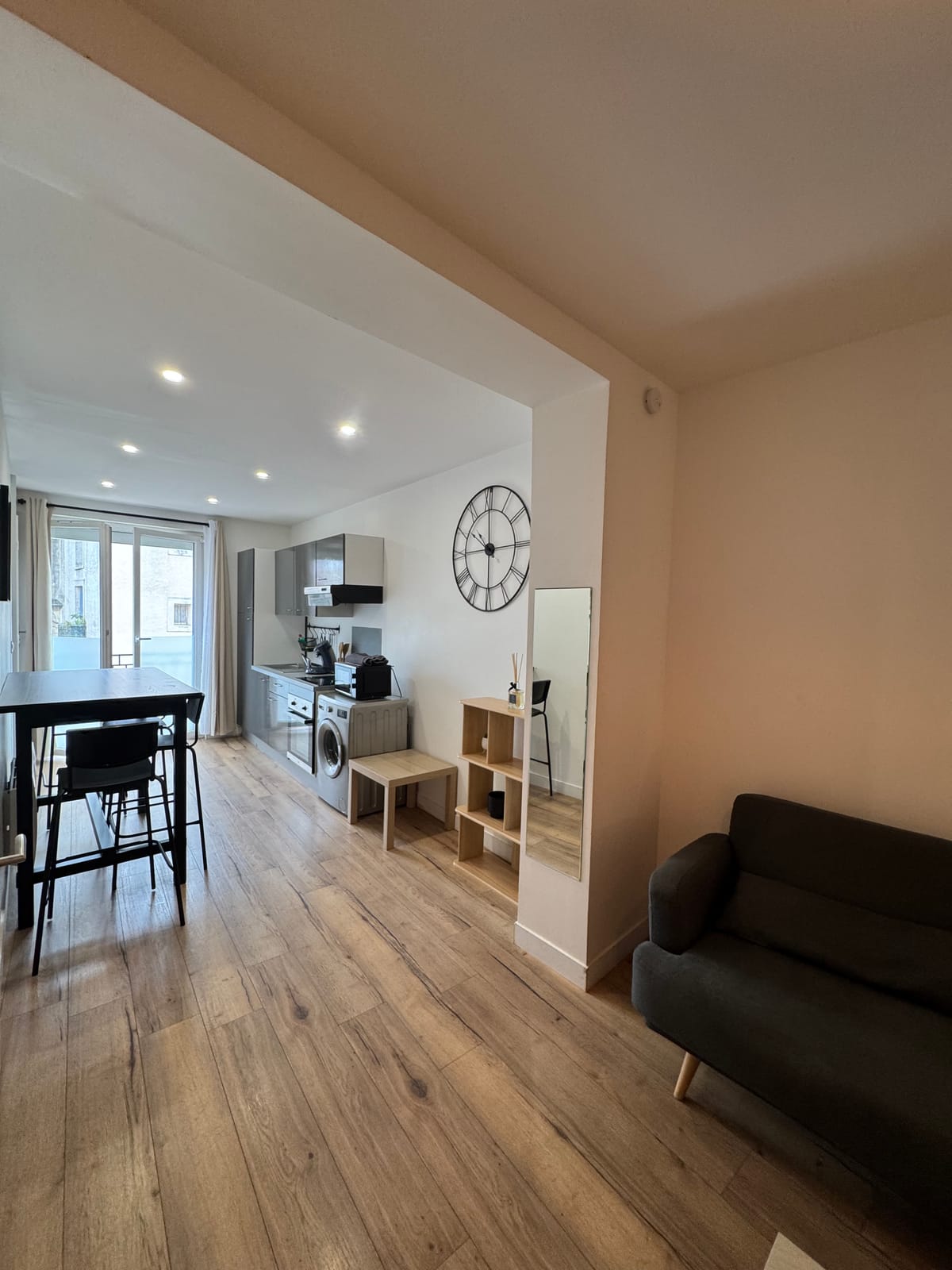
On two, the studio enough for a day in the garrigues, with its equipped kitchen to prepare for the road. Family, the duplex offers 2 bedrooms and 3 beds, with a useful washing machine for a stay of several days in the area. Both units are in the centre of Saint-Jean-de-Védas, with quick access to the A709 and A9 to organize the road to Murles and its neighbours.