A fishing village facing the pond
Vic-la-Gardiole has 3,428 inhabitants for 30.7 square kilometres, between Montpellier and Frontignan. The southern part of the territory consists of ponds, including Vic's pond, and wetlands; To the north, the Gardiole massif brings a dense garrigue. The town was a small fishing village for a long time before gaining in attractiveness, driven by the proximity of Montpellier : its population is close to 10,000 inhabitants in summer, compared to about 3,000 in the rest of the year.
The name of the village changed twice : Vic became "Vic-les-Étangs" on June 9, 1885, with reference to the numerous lagoons surrounding it, before taking his current name on March 12, 1914. "Guriole" comes from the nearby hill, where there was a guard post belonging to the bishops of Maguelone.
Local curiosity : the beach area does not depend on Vic-la-Gardiole. It is shared between Frontignan and Villeneuve-lès-Maguelone, making Vic-la-Gardiole a coastal hinterland village rather than a seaside resort.
Fourteen minutes to the pond and woods of the Aresquiers
From the accommodation, the road is 14.1 kilometres long and takes about 14 minutes. Vic-la-Gardiole has been attached to Sète Agglopole Méditerranée since 2002, which places it in the orbit of Sète and its pond of Thau, unlike the municipalities closer to Montpellier. The Conservatoire du Littoral acquired 1,561 hectares at Vic Pond in 1979, and 279 hectares at Frontignan Salts and 85 hectares at Les Aresquiers Wood in 1980 : three protected areas bordering the commune to the south and west.
Saint Leocady, the church that served as a refuge
In the centre of the village, the Romanesque and fortified church of Sainte-Leocadie dates from the 12th century. Its defensive vocation is still in its thick walls : it served as a refuge for the population in case of danger, and kept an internal tank for water supply during a siege. It has been listed as a historic monument since 1921, one of the few buildings of this type also preserved intact in the area.
A vineyard between two Muscat appellations
The terroir of Vic-la-Gardiole is argilo-calcaire, different from the sandy soils of the nearby Camargue. Muscat petit grain is the main grape variety, divided between two appellations : Muscat de Mireval on part of the commune, Muscat de Frontignan on the rest. The number of agricultural holdings in the municipality decreased significantly from 50 in the 1988 census to 18 in 2020, a trend similar to that observed in the rest of the department over the same period.
Nevertheless, the village remains equipped for daily life : a post office, a tourist office, a pharmacy, a medical office, a dental office and a physiotherapist complete a wide range of shops for its size, with a wine cellar in organic cultivation, a bakery, a butcher shop and a supermarket.
For whom this base makes sense
- A stop on the road to the pond of Thau : Vic-la-Gardiole opens the way to Sète without being there already, with a dwelling remained more central on Montpellier.
- A tasting of Muscat to integrate into a wider stay on the Hérault vineyards.
- A short heritage visit The church of Sainte-Leocadie is discovered in a small hour, without a program to extend.
Studio or duplex before heading to the pond of Thau
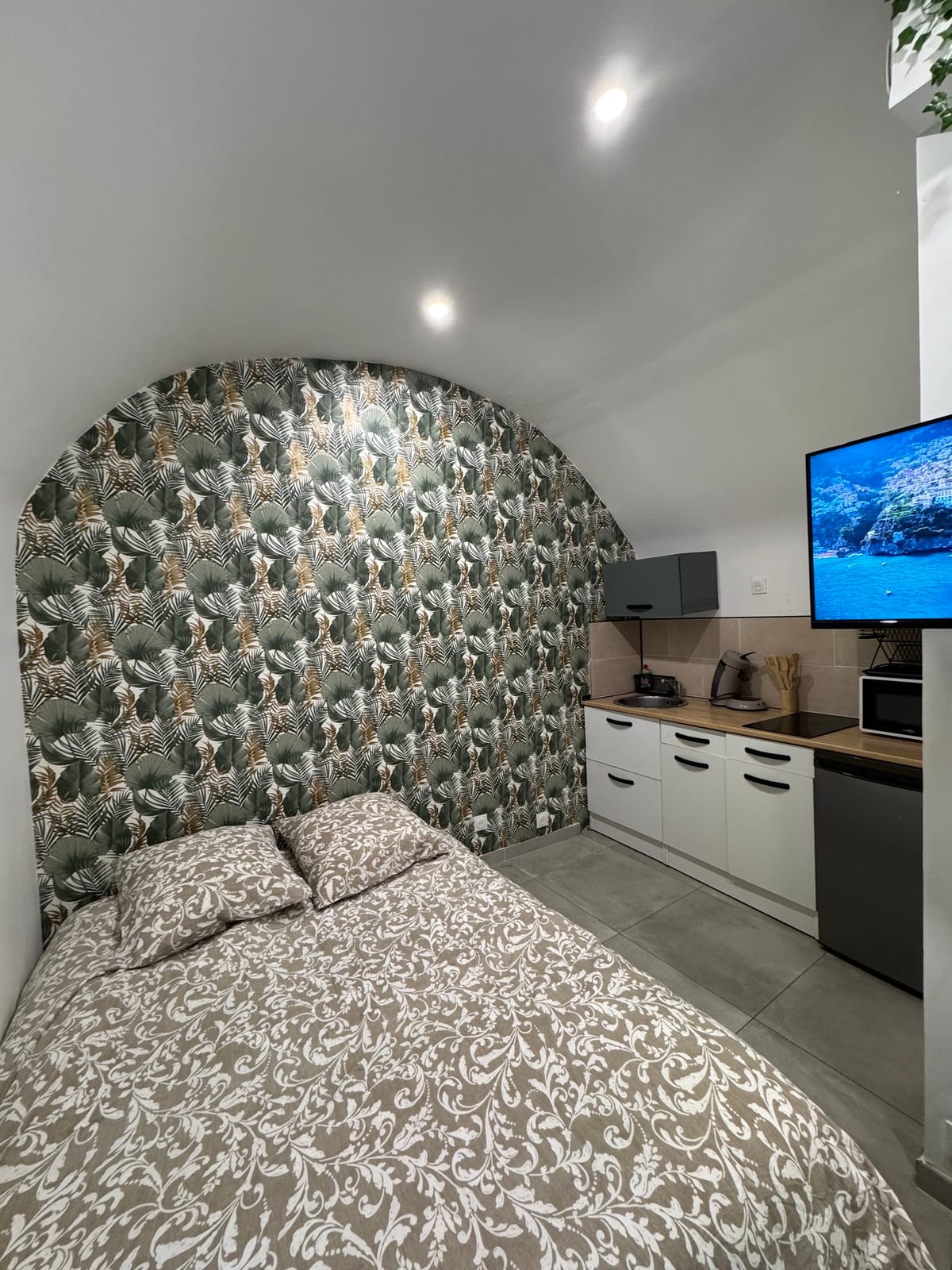
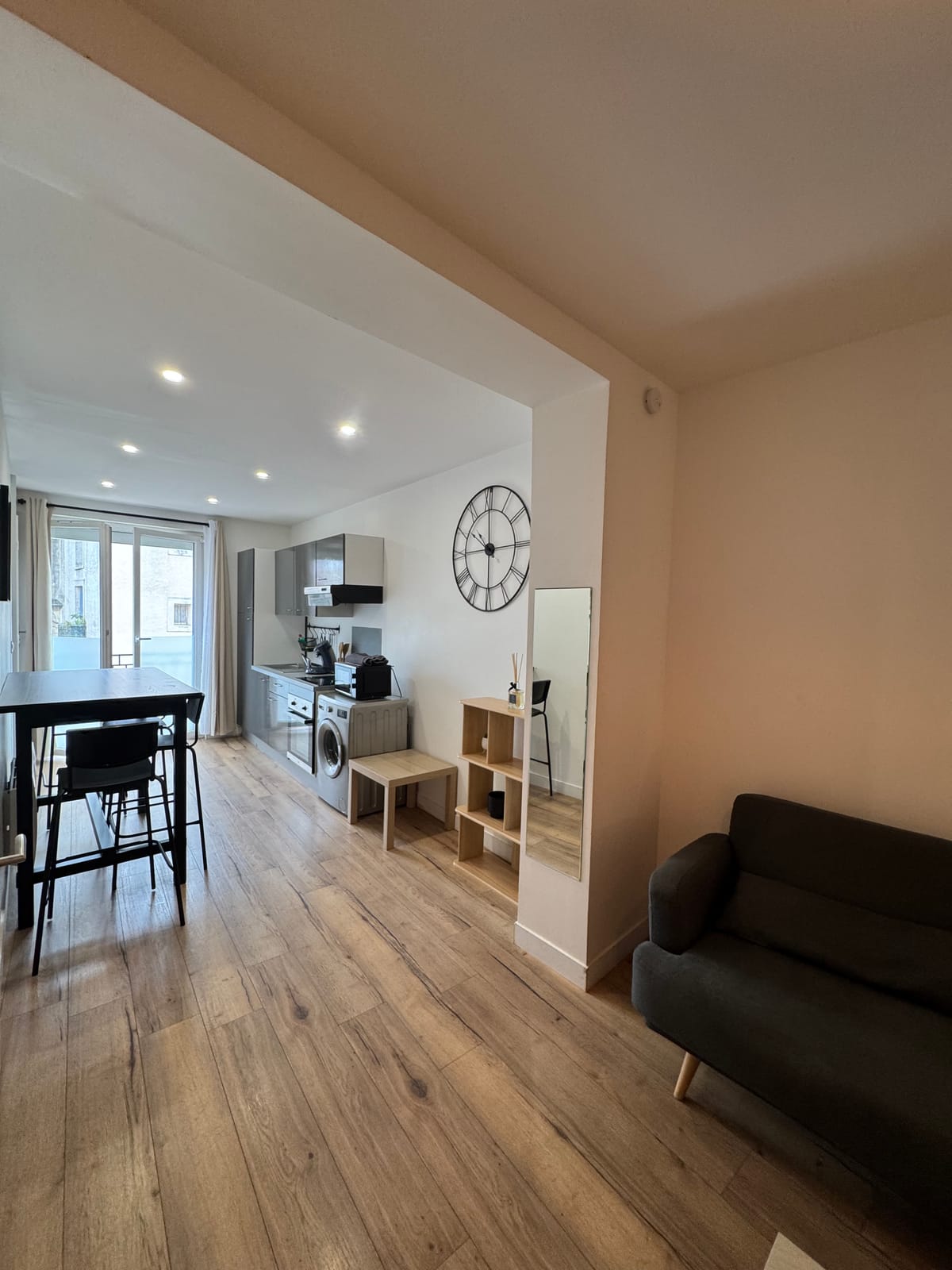
For one step to two before continuing to Sète, the studio offers a double bed and a kitchen equipped to cook before or after the road. Several, the duplex brings two bedrooms and a washing machine, useful for a stay of several days between ponds and vineyards. Both units share the same address in downtown Saint-Jean-de-Védas, 14 minutes from Vic-la-Gardiole.
The page devoted to Villeneuve-lès-Maguelone extends the discovery of nearby Palavasian ponds.