A commune between ponds and the Mediterranean
Villeneuve-lès-Maguelone has 10,872 inhabitants in 31.2 square kilometres, south-southwest of the historic centre of Montpellier. The territory extends from the Mosson plain to the sea, with part of the Gardiole massif in the background. Five protected areas are shared by the municipality : the Estagnol National Nature Reserve, the Vic Pond, the Méjean Pond, the Villeneuve Salines and the Palavasian Ponds, a wetland recognized by the Ramsar Convention. It is one of the most coastal and preserved municipalities of the first Montpellier crown.
The name has changed several times. Between 1816 and 1831 the commune was called Villeneuve-Angoulême. It then resumed its present form, with the "lès" which officially links it to Maguelone since 1992. The village has its own station, Villeneuve-lès-Maguelone, on the coastal line, and a market set up alternately place de l'Église and by Gérard-Bouisson.
The bridge linking the two municipalities
From the centre of Saint-Jean-de-Védas, the road measures 6.7 kilometres and runs in 8 minutes. The route crosses the Mosson via the Pont de Villeneuve, on the departmental road that marks the boundary between the two municipalities. This bridge, registered as historic monuments in 2012, serves as a simple landmark : crossing it is enough to pass from one municipality to another.
Maguelone Cathedral and the old village
The history of Villeneuve-lès-Maguelone begins on an island, today connected to the continent by a dune cordon : Maguelone was, from the early Middle Ages, the seat of a bishopric. Saint-Pierre-et-Saint-Paul Cathedral, in Romanesque times, still stands between ponds and sea, and remains the most identifiable monument in the municipality.
In the village, the 12th century church of Saint-Étienne has been listed as a historical monument since 1840. An old church, Our Lady of Olivet, was converted; The chapel of the Penitents completes a religious complex that remains dense for a commune of this size.
A pink flamingo reserve
To the south of the territory, the Estagnol National Nature Reserve, classified in 1975, protects a pond and its wetlands over 77 hectares. The area is covered by two Natura 2000 zonings, the Palavasian ponds and the Palavasian ponds and the pond of l'Estagnol, which attract a breeding, wintering or migratory avifauna, with rare species : dwarf tern, cut-necked gravelot, sultan tale, and numerous pink flamingos. An ornithological point of view, arranged on site, allows to observe them from a dedicated post, without leaving the commune.
For whom this base makes sense
- A desire for a preserved coastline The ponds and the Villeneuve dune cordon offer a different landscape from the nearby resorts.
- A targeted heritage visit The cathedral of Maguelone and the church of Saint-Étienne are visited in half a day, including Villeneuve bridge.
- A natural exit to observe the birds of the ponds, to combine with a more urban stay in Montpellier.
- A round trip by train : the town has its own station, an alternative to the car for who prefers to leave the accommodation without taking the wheel.
Studio or duplex to radiate to Villeneuve
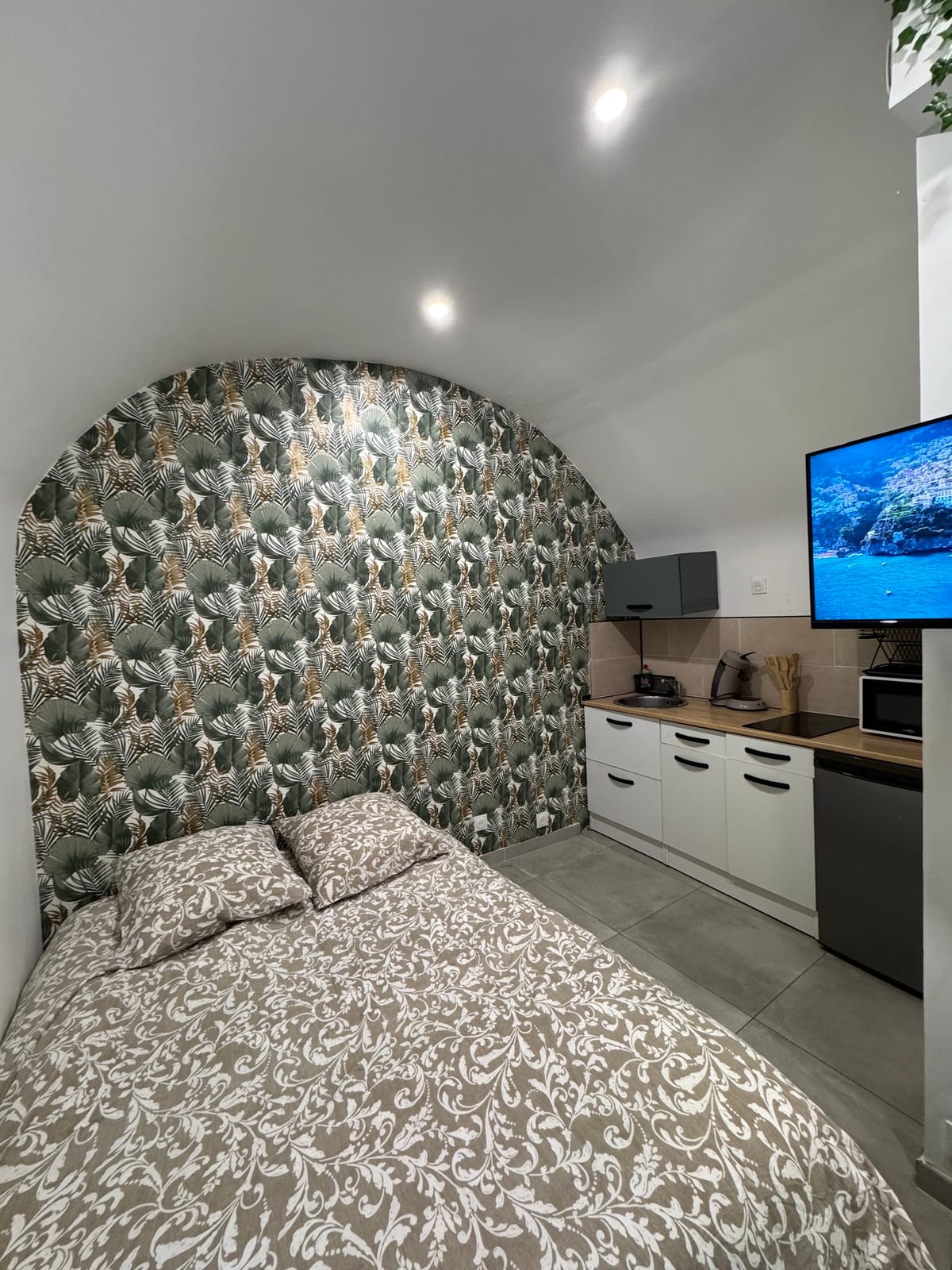
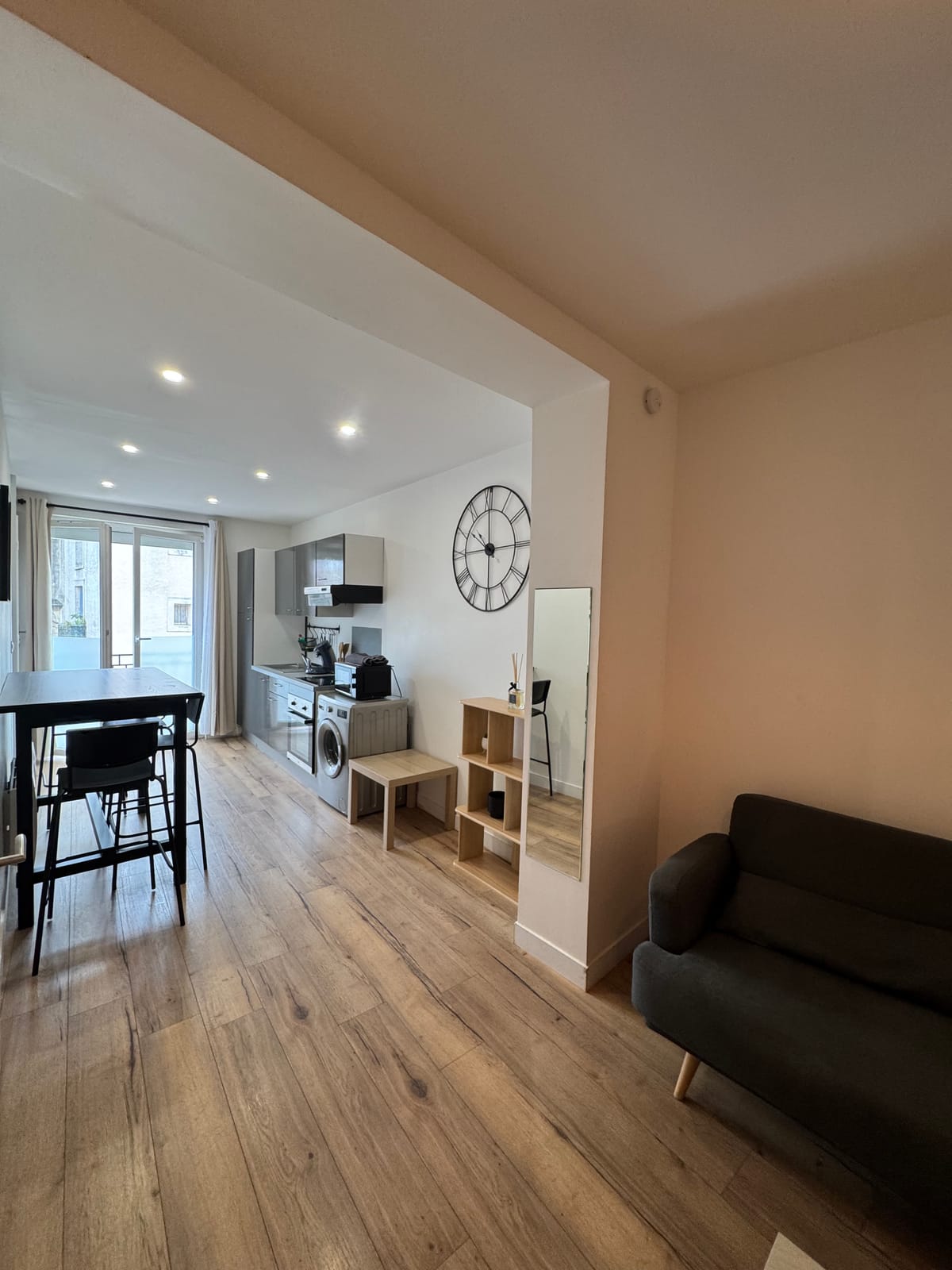
On two, the studio Just for a day out to the cathedral and ponds, with its equipped kitchen to prepare a picnic before leaving. Family, the duplex offers two bedrooms and a washing machine, convenient after a beach or marsh exit. Both units are located at the same address, in the city centre of Saint-Jean-de-Védas, 8 minutes from Villeneuve-lès-Maguelone and 7 minutes walk from the tram for the days facing Montpellier.
To extend towards the coast, the page dedicated to Vic-la-Gardiole details another municipality of the Palavasian ponds, a few kilometers further on the same coastal road.