A bridge town in the centre of the department
Gignac has 6,651 inhabitants and extends 29.9 km2 in the centre of the department of the Hérault, between the Larzac high garrigues in the north, the Taillade massif in the east and the Liausson massif in the west in the Herault valley. It is the most important city in the area, with its bus station that connects many communes in the centre Hérault. The municipality has 607 establishments, of which 24.1% are in trade, transport, accommodation and catering. Agriculture, which has long been dominant, has fallen sharply : from 217 farms in 1988 to 59 in 2020, on an agricultural area increased from 1,290 hectares to 609 hectares.
About 25 minutes by motorway A750
From Saint-Jean-de-Védas, it takes about 25 minutes by road for 29.3 kilometers, via the A750 motorway, exits 59 or 60, in the direction of the center of the Hérault. A 40-seat carpooling area, including two reserved for people with reduced mobility, is located at Exit 59.
Two bridges on the Hérault, two centuries apart
The Gignac bridge on the Hérault was undertaken in 1776 by engineer Bertrand Garipuy and completed in 1810. Two centuries later, the Languedoc bridge, designed by Michel Virlogeux to allow the A750 motorway to cross the river, was put into service on 11 June 2008 : the two structures respond, a few tens of meters one from the other.
The Gignac Canal and the Meuse Dam
Built around 1897, the Gignac Canal still irrigates 1,800 hectares of vineyards and orchards in the plain, a development that has long led to local agricultural development. Upstream, the Meuse Dam, on the Hérault, is open to the public and makes it possible to observe the river before it enters the gorges of the Hérault, classified Natura 2000 on 21,736 hectares.
Three ways to enjoy Gignac from Saint-Jean-de-Védas
- A hike in the gorges of the Hérault, upstream of the village.
- A stop on the road to Saint-Guilhem-le-Désert or d-Aniane, via the A750.
- A discovery of the heritage of the city centre, between the two bridges, the Sarrasine Tower and the Saint-Pierre-aux-Liens church.
- A visit to the Old Vehicle Space, for the curious mechanics.
The church of Notre-Dame-de-Grâce and the drama of the bell tower of 1738
The Church of Notre-Dame-de-Grâce, listed as a historic monument in 1989, would occupy the site of an ancient Roman temple dedicated to Vesta. The church of Saint-Pierre-aux-Liens, rebuilt between 1635 and 1677 after the wars of religion, experienced a tragedy on 7 December 1738 : its bell tower collapsed on a Sunday, causing the vault to the faithful and causing the death of more than 100 people; Its western facade has been listed as historical monuments since 1963. Not far away, the hotel of Laures, which belonged to the family of the same name, welcomed in the twentieth century the tourist office before becoming a private property; Capion Castle completes this built heritage of the city centre. Gignac also has a bus station, a stopping point of the Hérault Transport network which connects it without correspondence to many villages in the centre of the department; the commune was served by the train between 1894 and 1949, on the line from Montpellier to Rabieux. Mills had been donated to the abbey of Saint-Guilhem-le-Désert since 1189, and a Masonic lodge existed in Gignac at the end of the 18th century. During the French Revolution, the local revolutionary society grew from 150 members in 1791 to 264 a year later. Gignac is now twinned with the Croatian city of Ogulin.
Studio or duplex before climbing the gorges
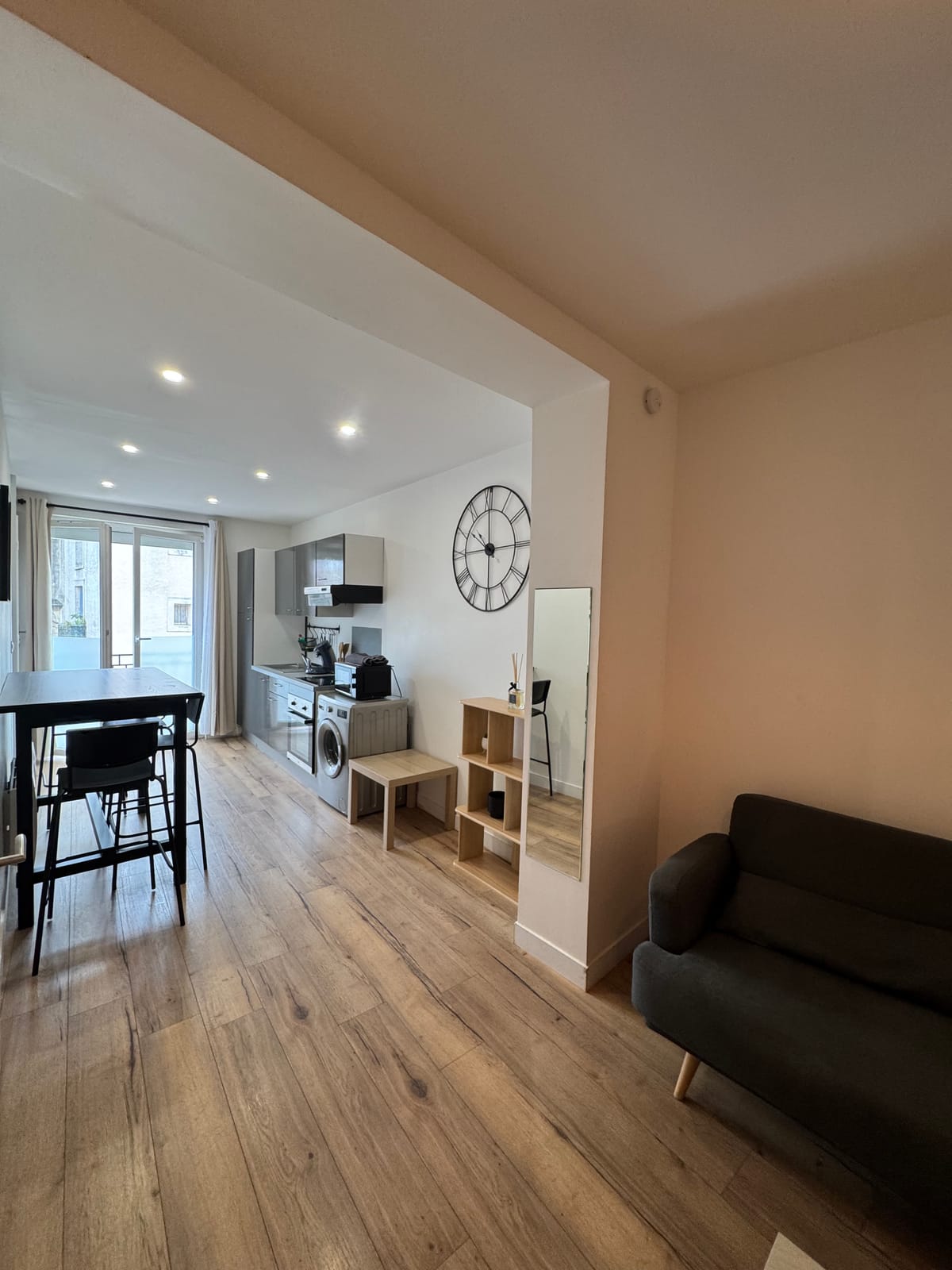
The duplex, with its washing machine, is suitable for a stay of several days dedicated to the gorges of the Hérault and the surrounding villages. On two, the studio Just for one step before going up the valley. The page devoted to Aniane, neighbouring Gignac, completes this route to Saint-Guilhem-le-Désert.