Popian, seat of a Carolingian vigerie
With 380 inhabitants on 5.9 square kilometres, Popian is one of the smallest municipalities in the department, also known as the Poupian variant. In the Carolingian era, however, the village was the seat of the only vigory in the middle valley of the Hérault : the viguier exercised royal justice there in the name of the Viscount of Béziers and Agde. This old administrative status contrasts with the present size of the village, strongly implanted in the orbit of the neighbouring village of Pouget, where the same family of lords has long maintained its influence. Popian has seen a sharp increase in its population since 1975.
The castle and its 14th century tower
The castrum of Popian, built in the tenth century, is attached to the domain of the lords of Montpellier in the twelfth century; The castle of Popian is also one of the properties of Guilhem de Montpellier in 1114. In 1535, the lands and seigneuries of Popian were recorded in the name of Girard de Popian, before moving to other local families. From the medieval building, today only a 14th century tower remains. The main body of the present castle was built in the early nineteenth century.
A police prefect and architect of Touquet
Fernand Raux, a senior official who became prefect of Paris police between 1917 and 1921, owned a house in Popian where he was buried in 1955, alongside his wife and parents. The architect Rolland de Villario, born in the commune in 1885 while his father was the mayor, drew the plans of several buildings of the Touquet-Paris-Plage, a city where he made his entire career, before being brought back to Popian at his death. Joseph Railhac, a lawyer and landowner in Popian, was also Mayor of Lodève and Member of Parliament for the Hérault.
A village of the Hérault wine plain
Popian is located in the "vineland plain", a small agricultural area that occupies the coastal strip of the department of l'Hérault. Viticulture remains the dominant technical-economic orientation of local agriculture, in the continuity of the seigneuries and estates that have marked the history of the village. The number of farms remained stable, from 20 in 1988 to 19 in 2020, from 22 in 2000 to 15 in 2010, for a used agricultural area of 203 hectares. In addition, the public administration, education and health sector remains the largest employer in the municipality, with 7 of the 25 establishments surveyed in the trade and crafts sector. The Saint Vincent de Popian church, referred to in the general inventory of the Occitanie region, completes the religious heritage of the village, alongside the castle.
Join Popian from housing
Popian is 34.7 kilometres from the accommodation, for 29 minutes of smooth traffic, towards the center of the department, beyond Gignac and the valley of the Herault.
Three reasons to stop in Popian
- A discreet heritage exit : the castle and its 14th century tower interest the curious medieval history, far from the most visited sites.
- A passage through the Hérault vineyards : Popian integrates into an exit that explores the wine plain around Gignac and Aniane, without ever getting far from the Herault valley.
- A quiet stay With 380 inhabitants, Popian offers a real contrast with a more urban stay in Saint-Jean-de-Védas.
Studio or duplex for a stay near Popian
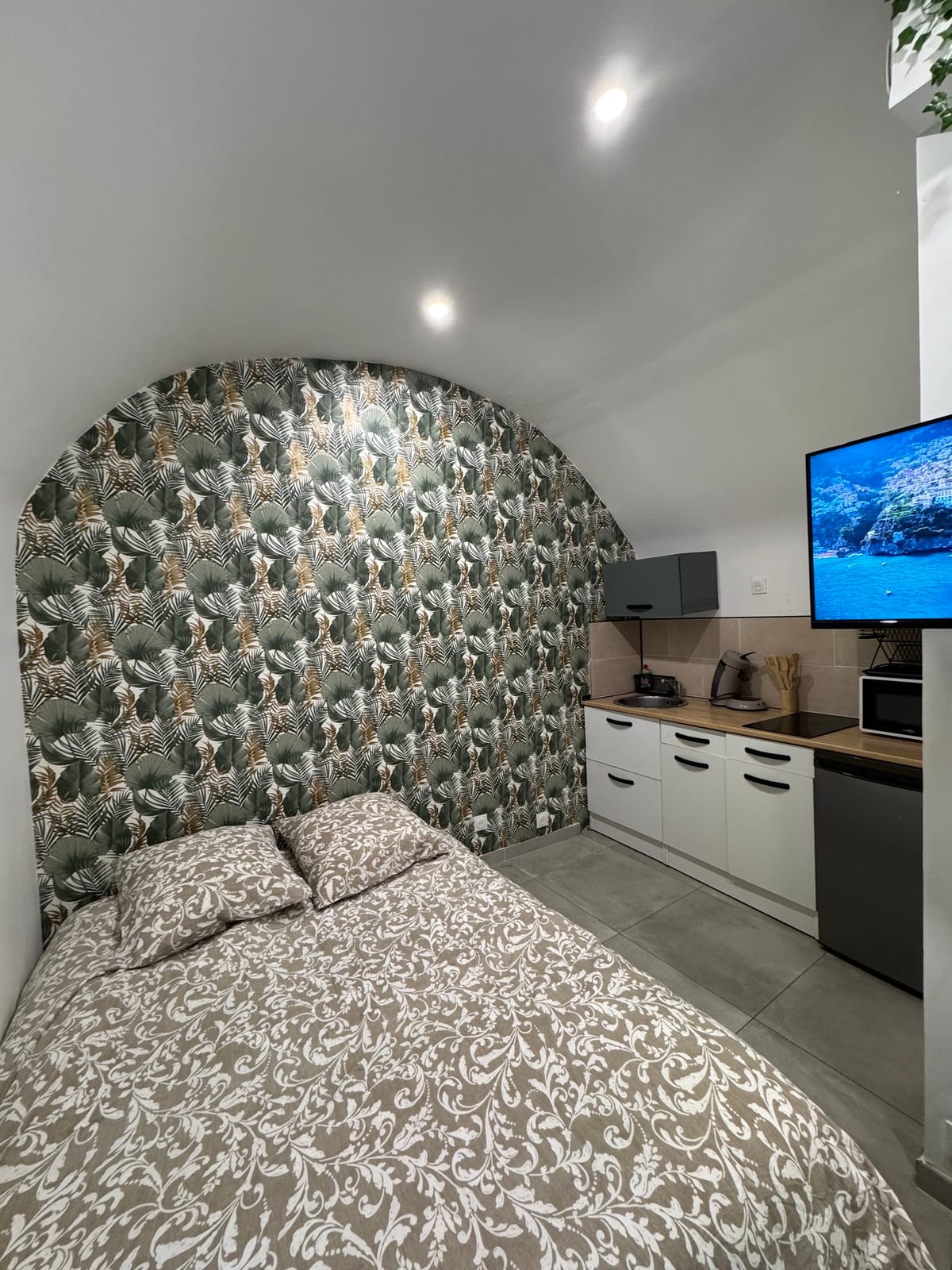
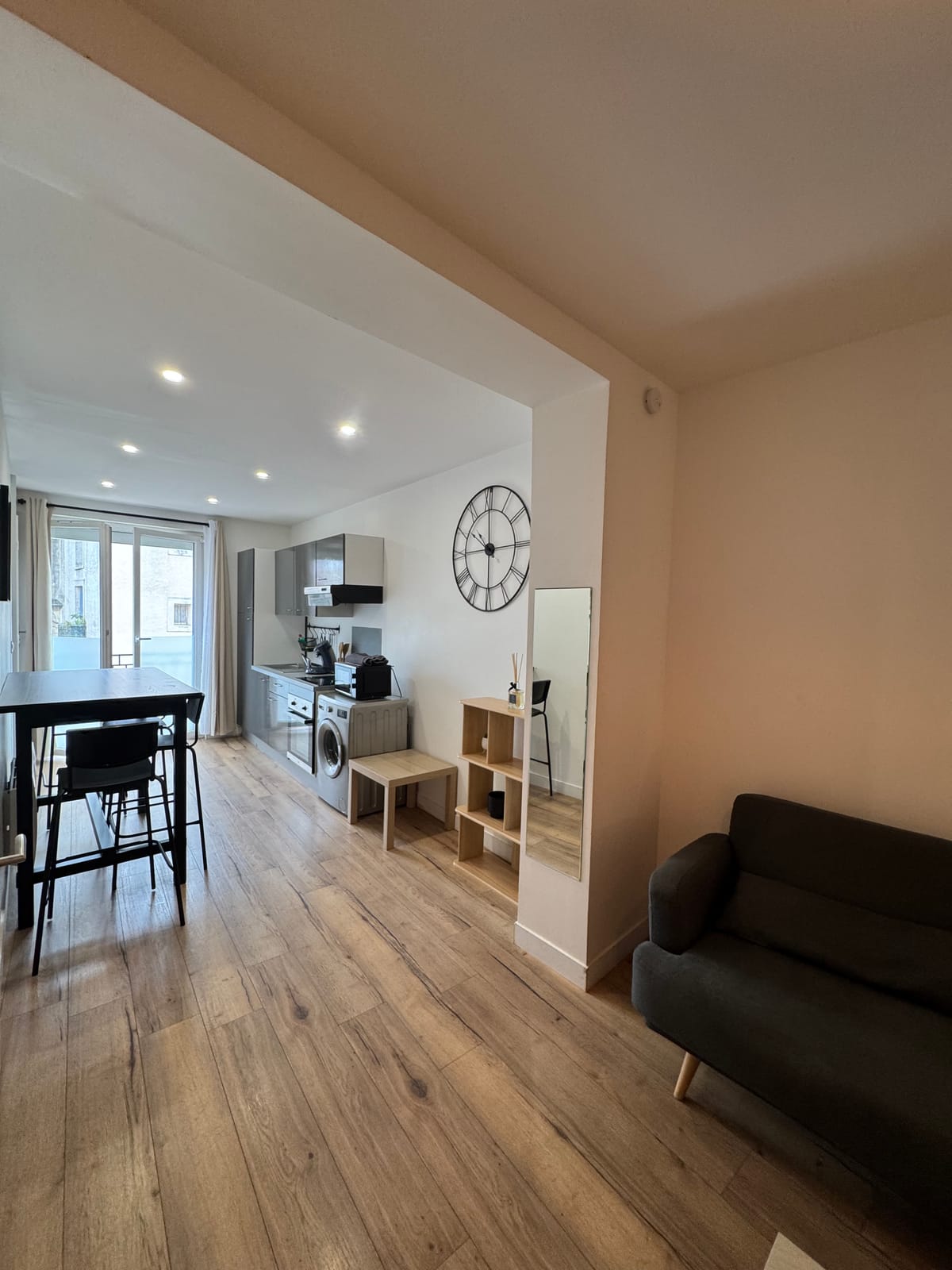
For a curious couple of medieval history, the studio enough for a day trip to Popian and the surrounding vineyard, with its work space to prepare the next stage of the stay. The duplex best suited to a family that extends the stay to Gignac or Aniane, with its two bedrooms and washing machine. Both units share the same address in downtown Saint-Jean-de-Védas, with no minimum number of nights imposed.
For a nearby village, the page dedicated to Aniane details access to this area of the Herault Valley, closer to the river than Popian.