A village of garrigue, nicknamed "the whistlers"
Viols-le-Fort has 1,229 inhabitants on 16.9 square kilometres, north of Montpellier, surrounded by the communes of Argelliers, Saint-Martin-de-London and Viols-en-Laval. Its inhabitants are nicknamed "the whistlers", with reference to the way in which they pronounce the name of the village, a sobriquet who gave its name to the municipal bulletin, "Lou Sifflaire de Viols". The village has long formed a single community with Viols-en-Laval before their separation.
38 minutes to the gorges of the Hérault
From the accommodation, Viols-le-Fort joins in 32.9 kilometers, for about 38 minutes of road, in fluid circulation. The municipality is covered by two Natura 2000 areas : the gorges of l'Hérault, which cut a limestone massif of 21,736 hectares, and the high garrigues of Montpelliéres, sheltered by several pairs of Bonelli eagles.
A land of dolmens and menhirs
The territory of Viols-le-Fort contains a remarkable number of prehistoric remains : several dolmens, including that of the Draille, oval tombs, tumulus and the menhir of the Truc de Marti. In the village, the Fanabregol tower serves as a bell tower in the heart of the old centre, next to the church of the St. Stephen's Invention. Several views on the heights offer a panorama of the Saint-Loup and Hortus peaks, including a specific view of the nearby quarry.
A name remained mysterious
The origin of the name Viols-le-Fort remains uncertain : the old forms range from Volio in 1109 to de Bolio in 1392, before stabilizing in Viols-le-Fort. The inhabitants are also nicknamed after a 16th-century confusion between the name Viol and the viòl , which designates a path or alley, hence the "s" added to the modern name. Economically, 152 establishments are located in the municipality, 35 of them in administration, education, health and social work, well above the departmental average. Four farms, compared with 33 in 1988, are now growing 147 hectares of used surface, in polyculture and polyfarming.
A limestone massif virgin of large infrastructures
The pine forest of Pins de Salzman de Saint-Guilhem-le-Désert, classified as seed bearing by the forest services, grows on the dolomitic rocks of the gorges of the Hérault, at the boundary of the communal territory. The massif remains untouched by large infrastructures, which explains the good conservation status of its forest and rupicle habitats, favourable to a rare fauna and flora in the region. The cliffs of the area, between the Saint-Loup peak and the Hortus peak, house three endemic plant species, a rare natural heritage for a site so close to Montpellier.
For whom this base makes sense
- A hike between dolmens and viewpoints : the prehistoric circuit and the panoramas on the Saint-Loup peak meet from the village.
- A way out in the gorges of the Hérault The limestone massif and its forests begin near the commune.
- A quiet stay, far from the coast : Viols-le-Fort remains a rural village, 38 minutes from the accommodation.
Studio or duplex for this stay
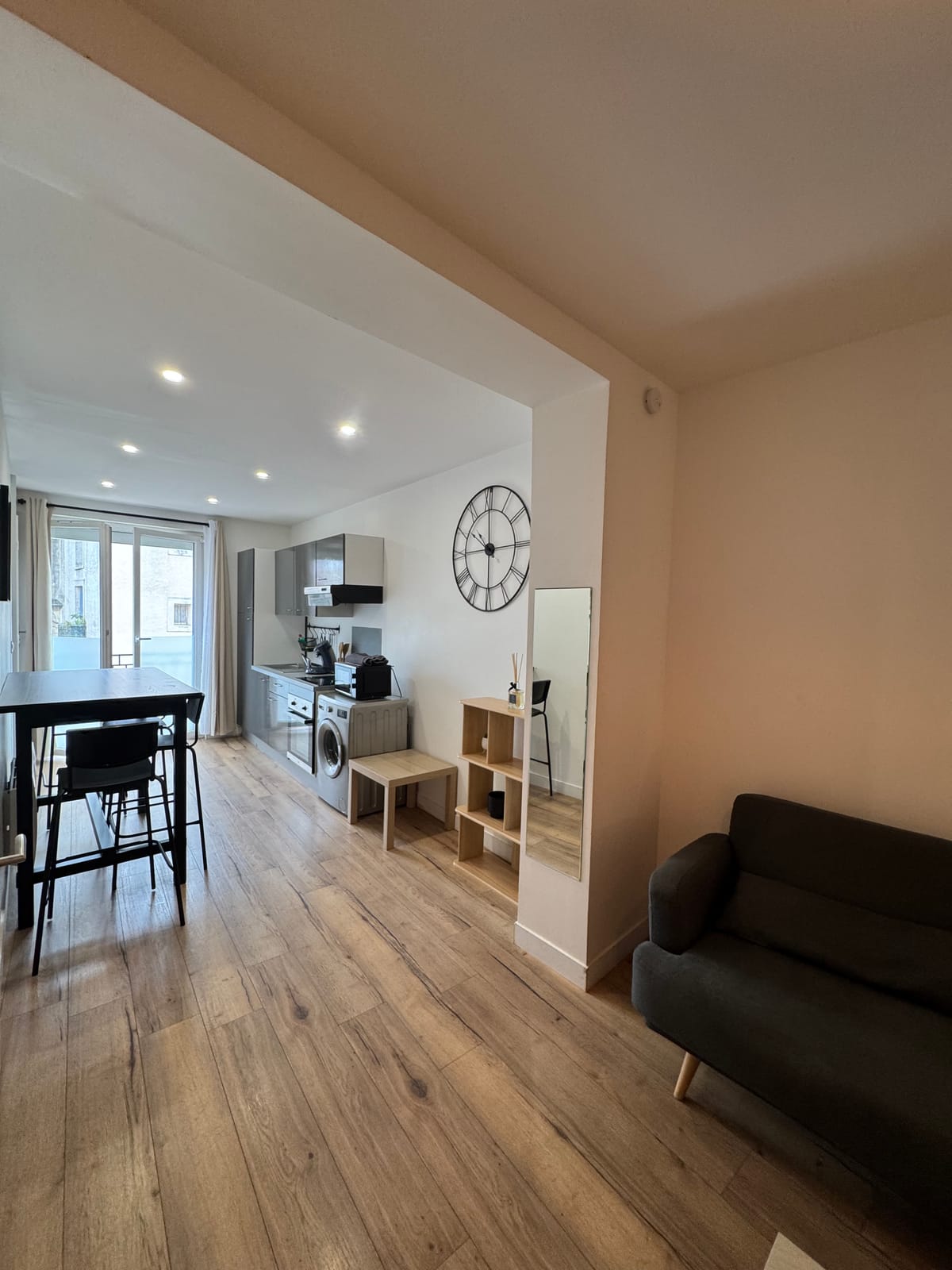
For a quiet hike to the dolmens, the studio Enough, with its equipped kitchen to prepare a picnic before leaving early in the morning. Family, the duplex leaves room for the return of a long day of walking in the garrigues. Both units are located in the city centre of Saint-Jean-de-Védas, with free parking at 200 metres and a self-contained arrival per key box.
To extend towards the Saint-Loup peak, the page dedicated to Saint-Jean-de-Cuculles details the other side of the massif, south side, closer to the housing.