A village hanging from the Saint-Loup peak
Saint-Jean-de-Cuculles has 531 inhabitants on 9.1 square kilometres, on the southern slope of the peak of Saint-Loup. The village, built on a steep slope, owes its name to its church, dedicated to Saint John the Baptist from its foundation, around 962. Two Natura 2000 sites cover the commune : the Saint-Loup peak massif, with its endemic lawns and plant species, and the Montpelliérais high garrigues, which house three pairs of Bonelli eagles, or 30% of the regional population. Three natural areas of ecological interest of type 2 complement this scheme : forested garrigue in the northwest of Montpellierais, on 16,219 hectares and 17 communes, the Pic-Saint-Loup and Hortus massif, on 11,816 hectares, and the Salade agricultural plain, on 273 hectares.
34 minutes to the high garrigues
From the accommodation, Saint-Jean-de-Cuculles meets in 28.7 kilometers, for about 34 minutes of road, in fluid traffic. The commune is bordered by Saint-Mathieu-de-Tréviers in the northeast, on the road leading to the gorges and reliefs of the pic Saint-Loup.
12th century church and Romanesque bridge
The church of the Nativity of Saint John the Baptist, dated the twelfth century, has been listed as a historic monument since 1925. The village also preserves the traces of its ancient ramparts, raised at the time of the Hundred Years War, in 1340, to protect itself from the insecurity of the time. At the exit of the village, the bridge of Yorgue, a Romanesque bridge with two piles, crossed Yorgues Creek, one of the streams draining the commune with the Lirou and the creek of the Cross; It remains relatively well preserved, but not classified. The tumulus of La Serre des Grottes, the oldest, bears witness to an occupation of the site long before the foundation of the village.
A century of small village history
The current town hall was built between 1910 and 1911, and the first wedding was held on 2 December 1911. The village's small clock bell was installed in 1888. Before World War I, a statue of the Virgin of the Cabasse was placed on the ridge of the same name, after a disagreement between neighborhoods on its location. From 1929 to 1967, a resident of the village combined the sale of tobacco, the bell ringing three times a day and the holding of a small bistro, at a time when few households had telephones. The interior of the church was completely restored in 1989. In economic terms, the municipality has 52 establishments, 10 of which are in commerce, transport and accommodation-restoration, and 14 farms for 159 hectares of area used. In 1906, under the laws of the Third secular and anticlerical Republic, the church became a state property, which remains a visible trace of national history in this small village. In 1900, the central square of the village did not yet exist in its present form : it was leveled one winter by several young men, with the agreement of the then mayor.
For whom this base makes sense
- A hike to the Saint-Loup peak The massif and its trails begin at the gates of the village, 34 minutes from the accommodation.
- A quiet heritage visit : the registered church and the Romanesque bridge are discovered in a small hour, far from the bustle of the coast.
- A stop before the villages of the pic Saint-Loup : Saint-Mathieu-de-Tréviers and the Matelles extend the exit without changing the base.
Studio or duplex for this stay
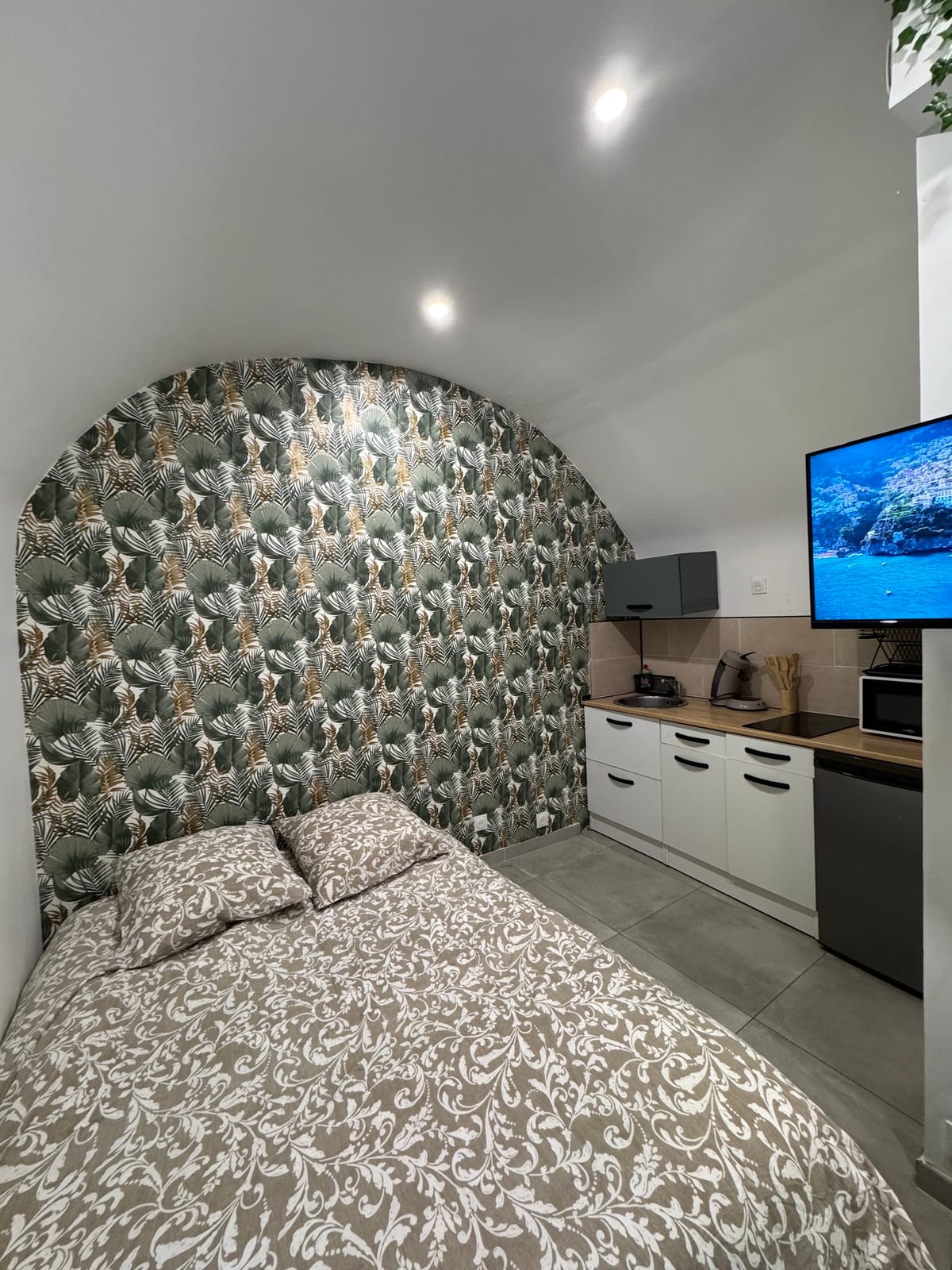
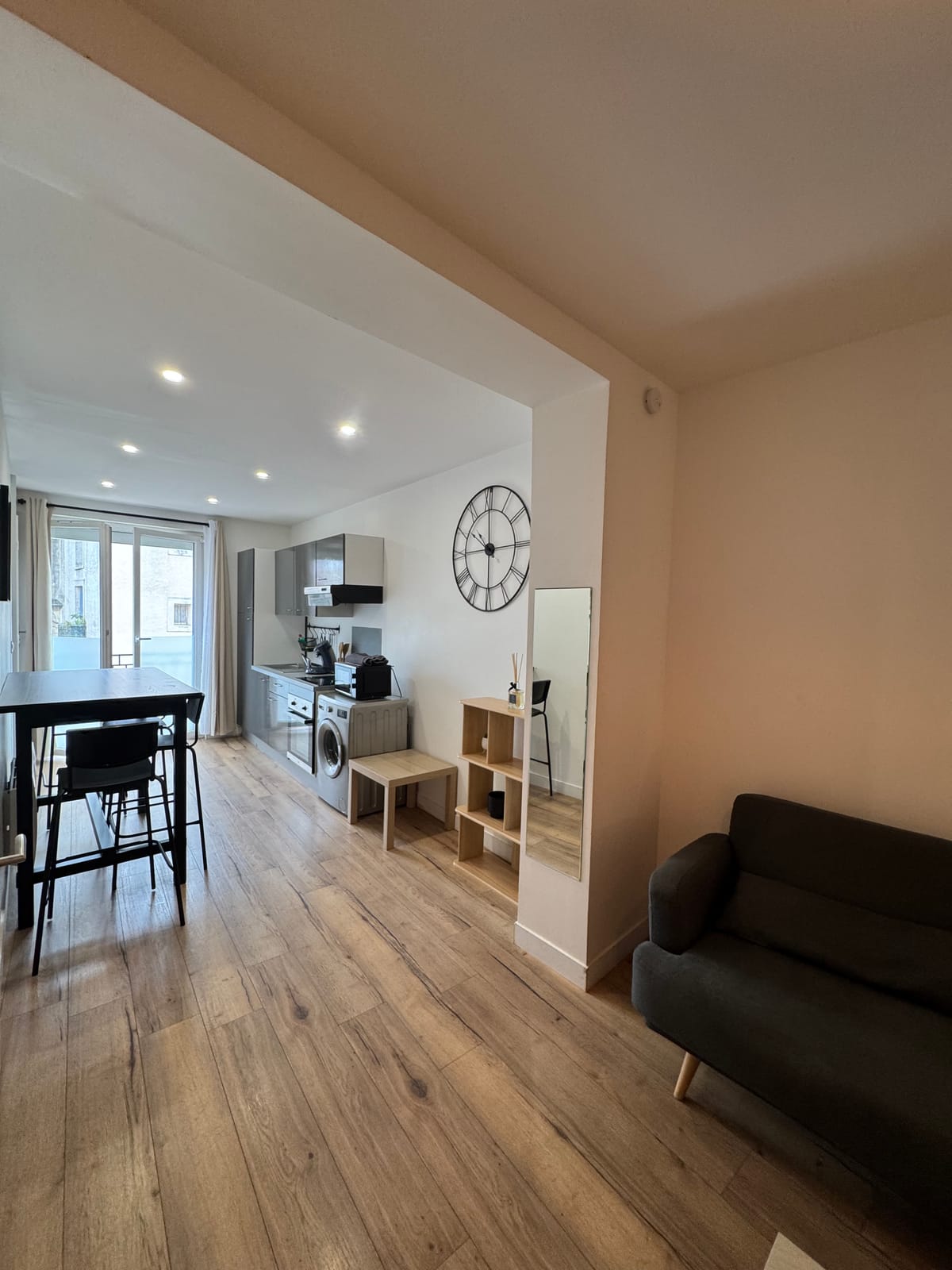
For a quiet hike with two, the studio with its workspace to prepare the itinerary the day before departure. Family, the duplex, with its three beds, allows to leave early without bothering to wake up. Both units are located in downtown Saint-Jean-de-Védas, with quick access to the A709 to take the road to the Saint-Loup peak.
To extend the output, the page dedicated to Materials complete this quiet base towards the trails of the Saint-Loup peak.