A village built on its own careers
Beaulieu has 2,264 inhabitants on a 7.9 km2 territory and was built on a limestone plateau around a 11th century castle. The village, crossed by Via Domitia, is famous in the region for the stones extracted from its quarries, on the plateau of Regagnat to the south of the commune, an activity that has occupied many traders and artisans over the centuries.
Thirty-two minutes northeast
From Saint-Jean-de-Védas, the road measures 31.1 kilometres and runs in 32 minutes. Beaulieu remains connected to the agglomeration by two bus lines, the 612 and the 605, which join Castelnau-le-Lez at the stop Notre-Dame-de-Sablassou, linked to line 2 of the tramway of Montpellier, the same line that serves the accommodation within 7 minutes walk.
The Théâtre des Carrières and the 11th century castle
The former extraction activity left a cultural heritage : the Théâtre des Carrières, installed in an old stone quarry, and the Jardin des Carriers, nearby. The Château de Beaulieu, built in the 11th century, and the Notre-Dame-de-la-Pitié chapel, classified as a historic monument since 1979, complete the village's heritage. The park adjacent to the chapel, the Parc Notre-Dame-de-la-Pitié, and the Croix de la Mission, a little further in the village, punctuate a walk between these different landmarks, before or after a visit to the Théâtre des Carrières.
La Via Domitia and the vineyards in name
The wine village of Beaulieu is crossed by Via Domitia, the ancient Roman way. The commune produces hillsides of Vérargues, classified as appellation d'origine contrôlées du Languedoc, and hosts a weekly market, the Beaulieu market, as well as a medical center, the Espace Thalès.
A nickname, a twinning and a service economy
The name Beaulieu comes from the Latin bellus locus, "a beautiful place" : a pleasant place to live, chosen after the abandonment of a first neighbouring village named Aissadanègues. Ten other French communes also bear the name Beaulieu, in particular in Ardèche, in the Cantal or in Côte d'Or, which distinguishes even more that of the Hérault in research. The locals are nicknamed the Manges-Agasses, a souvenir of a village dispute around an oak house containing a nest of peas. The municipality is twinned with Tales, Spain, in the province of Castellón, and also belongs to the Alliance des Beaulieu association of France and any country, which brings together the homonymous municipalities. Beaulieu's economic activities are divided between viticulture, stone quarrying, shops and tourism. In economic terms, 182 establishments are located in Beaulieu, 44 of which are in specialized scientific and technical activities, or 24.2% of the total, compared with 17.1% at the departmental level; 9 farms had their headquarters in the municipality in 2020, compared with 49 in 1988 on a used agricultural area of 322 hectares.
The church of Saint Peter and the roads to Sussargues and Lunel
The Saint Peter parish church was built in 1860, in the extension of the historic village. Beaulieu remains served by several departmental roads : the RD610, which connects Montpellier to Alès, the D120 to Sussargues and Campagne, and the D118, which joins Saint-Drézéry to Saturngues. A school bus also serves the municipality, to the Victor-Hugo and Louis-Feuillade high schools in Lunel. On flight, Beaulieu is 23.3 kilometres from Saint-Jean-de-Védas, a gap that clearly illustrates the winding route of hinterland roads in relation to the direct line between the two municipalities.
For whom this base makes sense
- A cultural outing at the Théâtre des Carrières, in a mineral setting inherited from the activity of the village.
- A discovery of the vineyards of the appellation coteaux du Languedoc, in circuit with the neighbouring villages of Castries and Sussargues.
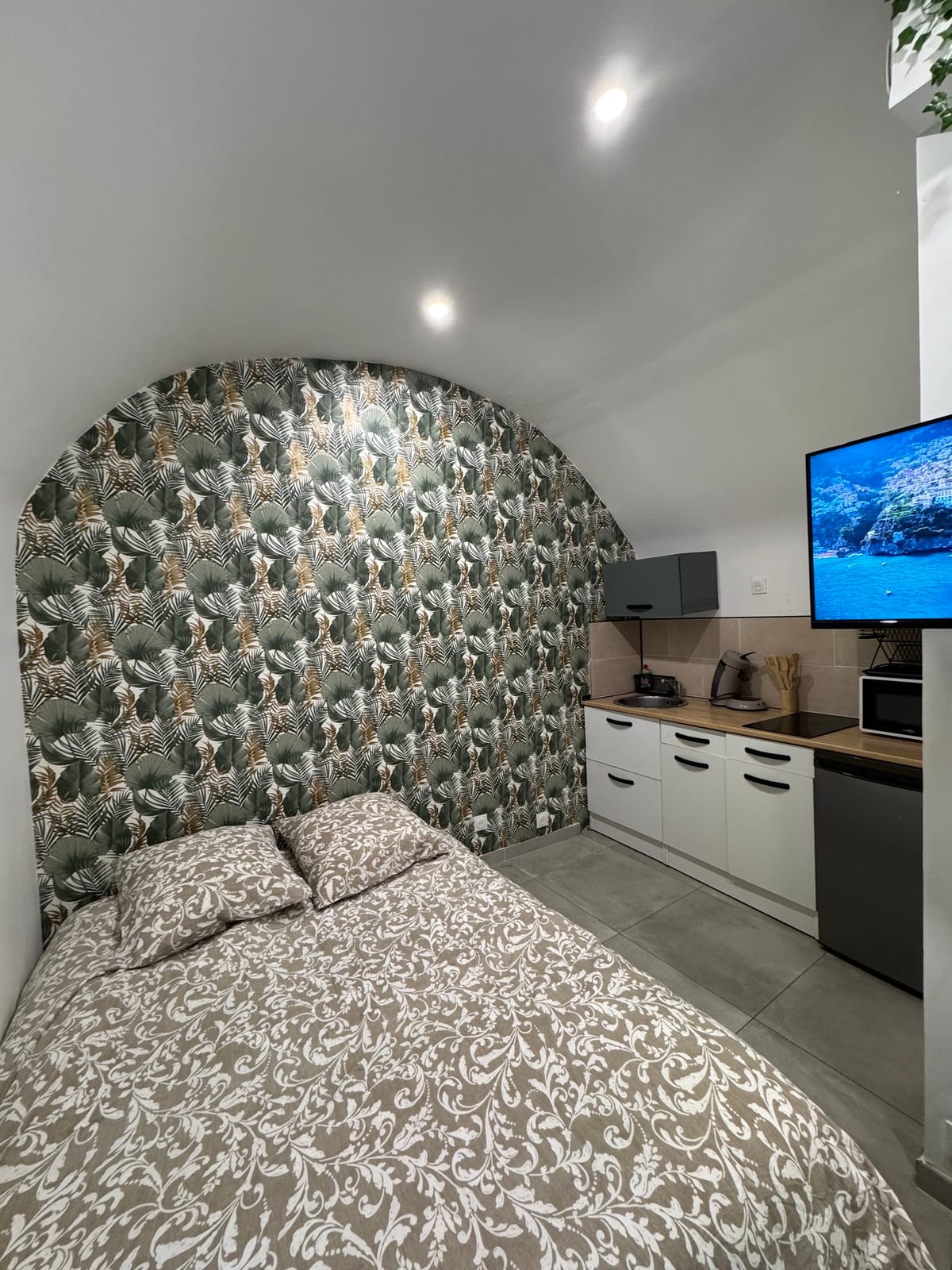
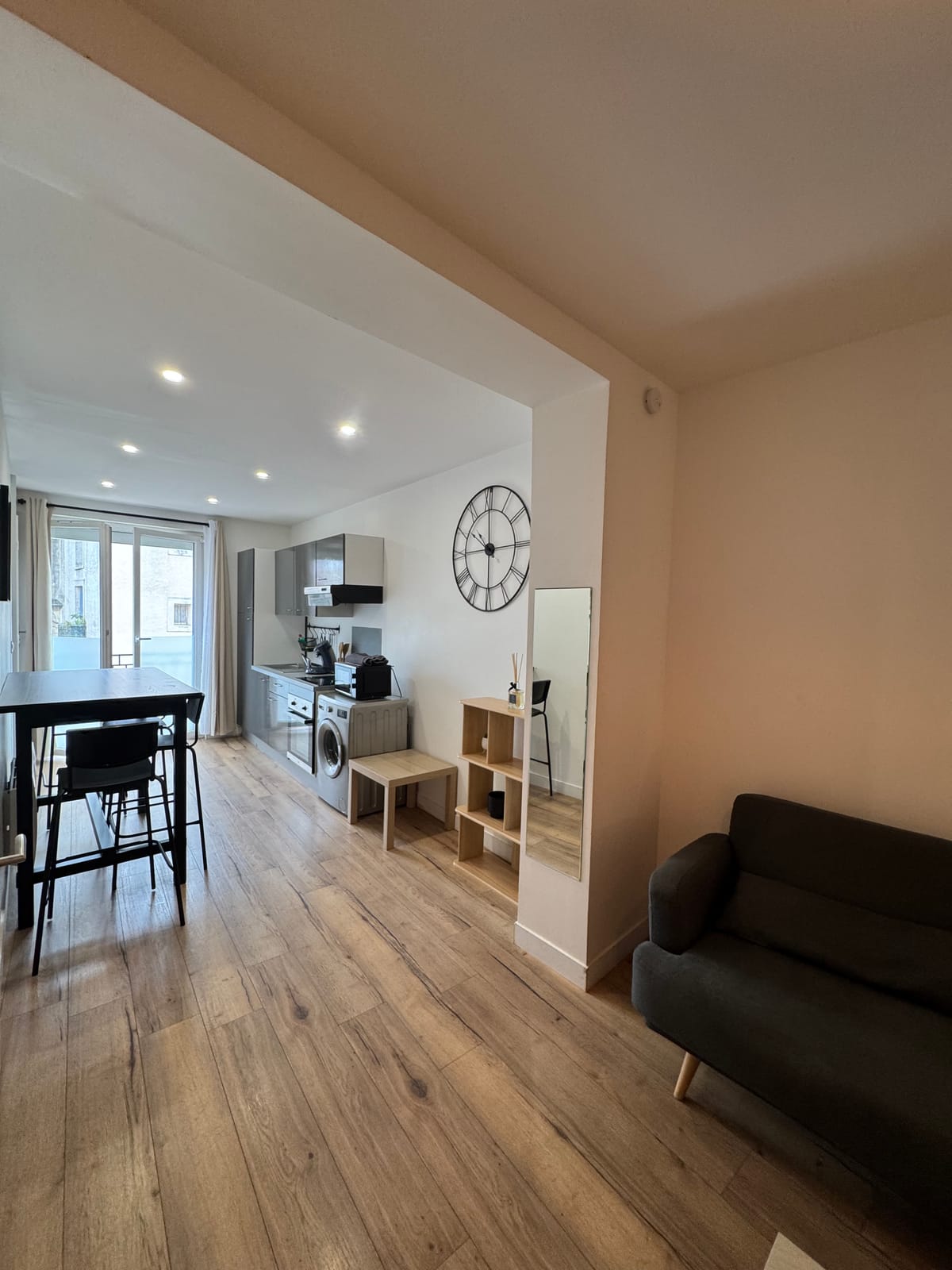
- A stay in the studio or the duplex, with the same tram line that connects the accommodation and, further, Beaulieu by the bus.