A village between pond of Thau and garrigue
Wolfian has 2,169 inhabitants and is located between the lake of Thau, in the south, and an area of vines and garrigue, in the north, in the community of Sète Agglopole Méditerranée. The village has seen a sharp increase in its population since 1962 and has retained an exceptional ancient heritage, still discovered by recent archaeological excavations conducted by the National Institute for Preventive Archaeological Research. Agriculture, historically oriented towards viticulture, has fallen sharply : from 122 farms in 1988, there remained only 17 in 2020, a decrease of 86%, on an agricultural area increased from 499 to 147 hectares.
Count 20 minutes by RD613 and A9
It takes 20 minutes from Saint-Jean-de-Védas, for 24.7 kilometers, by the RD613 and then the A9 motorway, which directly reaches the commune without detour through the centre of Montpellier.
On the trail of the Domitian way and the Gallo-Roman villa
In the autumn of 2020, these excavations exhumed, in the garrigue south of the route of the Domitian way, an exceptionally preserved section of this ancient road, with its central part reserved for official convoys and its side lanes less carefully arranged. Not far away, a Gallo-Roman villa dedicated to the production and export of wine included its own workshop and a port on the pond of Thau; became a sumptuous estate in the fifth century, it is now presented at the Gallo-Roman site museum Villa-Loupian, with its mosaics. A few hundred metres away, near the present Church of St. Cecile, archaeologists also found the remains of a large Paleo-Christian church, with a hexagonal baptismal tank and a necropolis later created on the same site. The village also keeps track of another local legend, the haunted house known as Villa des Tilleuls, nestled in the middle of the vineyards.
Two classified chapels, from the 11th and 12th centuries to 1949
Two religious buildings are classified as historical monuments. The chapel of Saint-Hippolyte, in Romanesque style of the 11th and 12th centuries, has been since 1923; It preserves a festive arched gate and a polygonal fortified bedside, covered with a cul-de-four vault where four oric arches cross. The Church of St. Cecile, mentioned in 1099, has been in the east since 1949; its bell, dated 1731, has been classified since 4 May 1961.
The castle became town hall, in the heart of the medieval village
After antiquity, the village settled a few hundred metres from the Paleo-Christian church, surrounded by a wall encompassing the castle of Loupian, now the town hall of the commune, and its chapel of Saint Hippolyte. Wolfian was then in the territory of the ancient diocese of Agde. The municipality is served by RD613 and the A9 motorway, both of which run along the northern edge of the Thau pond. The village also has several green spaces, the square Jean Monnet, the private park of the estate of St-Louis and the communal pine forest of the Four in Chaux, a welcome shadow after visiting the ancient site. The relief culminates in Puech Redon and Puech d'Ampalou, above the Lake Cambelliés, a water point suitable for a break after the vineyard. It has 182 establishments, 29.1 per cent of which are in trade, transport, accommodation and catering, representing 53 of the total. The municipality is also classified in zone 2 for radon risk, a level considered low, and in mine risk zone related to old underground cavities.
A family since 1713
The Maison Renouvier has been present in Loupian since 1713, the year of birth of Jean-Marie Renouvier, son of a married couple in 1709. From 1754 to 1783, members of this family held the position of first consul of the village, before settling in Montpellier.
Studio or duplex on the road to Gallo-Roman site
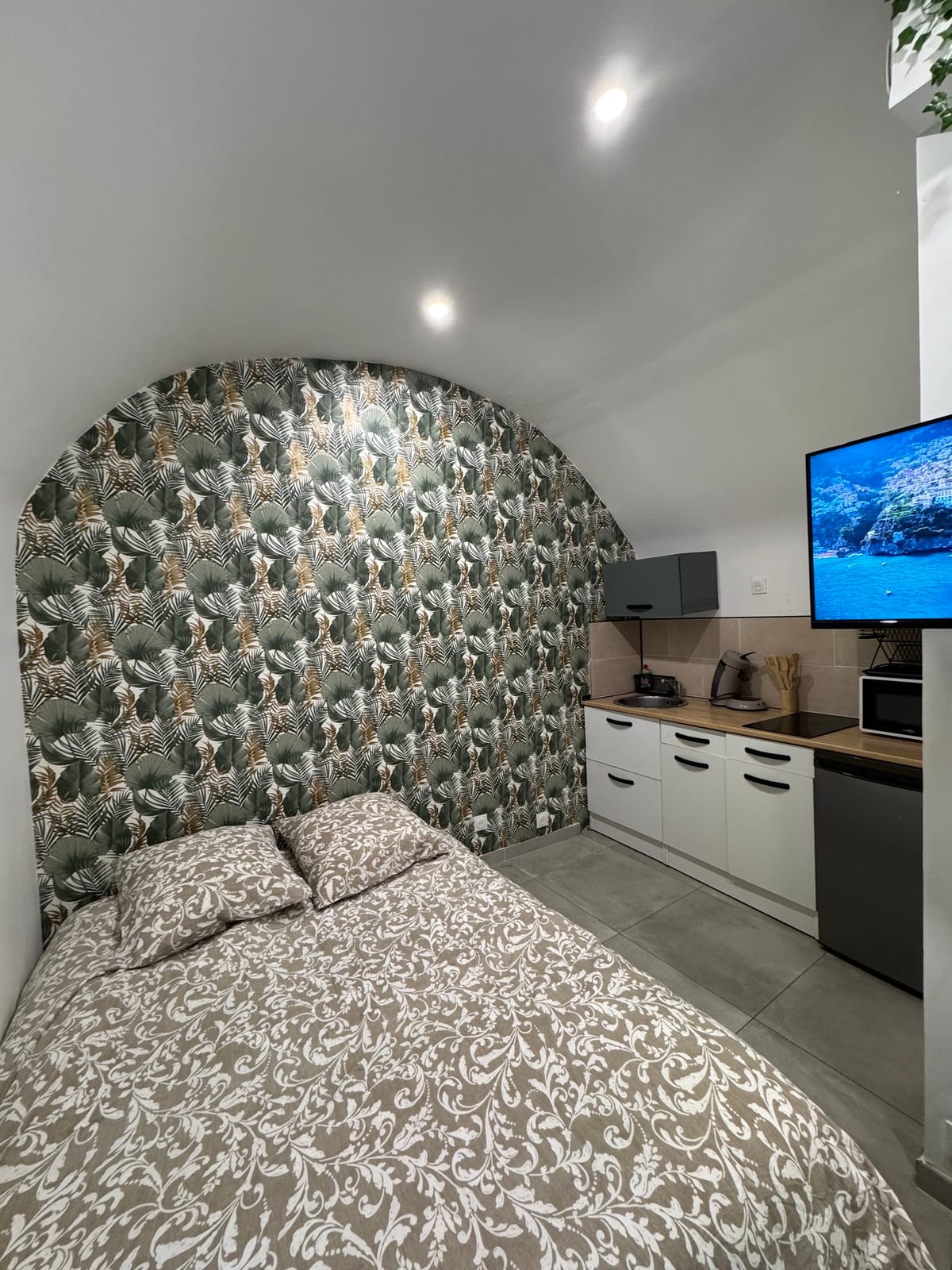
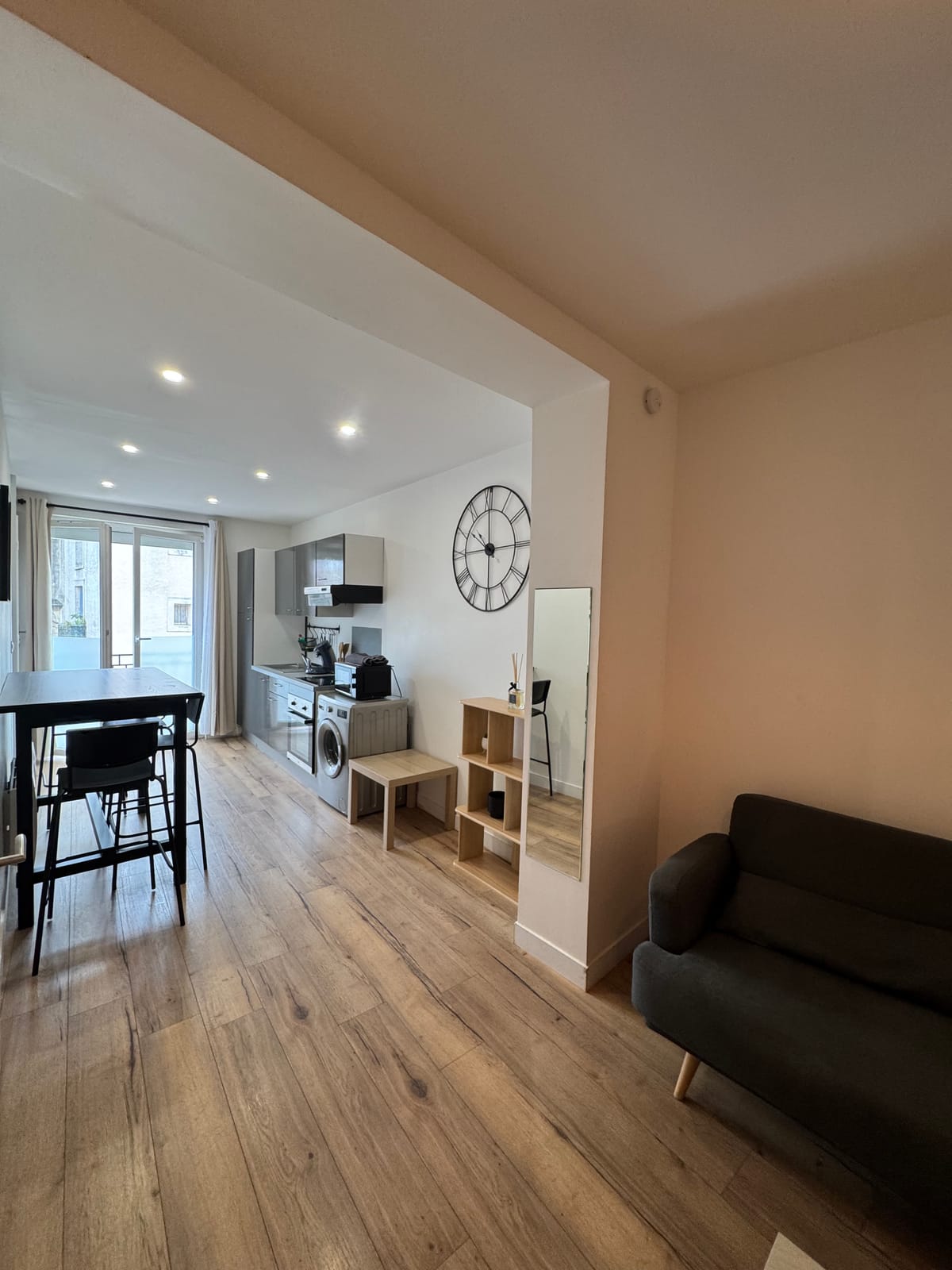
The studio suitable for a two-way heritage stage, between Domitian Way and Romanesque Chapels. The duplex, with its two bedrooms, lends itself to a family visit of the Gallo-Roman site and the two classified chapels of the village. The page devoted to Bouzigues, next to the pond of Thau, extends this stage.