The most maritime village in the Thau Basin
Poussan has 6,797 inhabitants on almost 29.9 square kilometres in the Sète agglomeration. The communal territory, spread over about 3,000 hectares, is divided between the Mure Mountains Garrigue in the west and the wine plain in the east. The village occupies the most maritime part of the Thau basin, but is not on the shore itself.
16 minutes by the motorway
From the accommodation, Poussan meets in 20.1 kilometers, for about 16 minutes of road, in fluid circulation. The A9 motorway crosses the commune, with an exit, number 33, towards Sète. This quick access makes Poussan a practical step between Saint-Jean-de-Védas and the coast.
Remparts, presbytery and castles
The village preserves nearly two hundred meters of 14th century ramparts, in stone with bosses. The former prioral house of Benedictines, which became presbytery in 1765, is described by the regional management of cultural affairs as one of the most beautiful examples of Languedocian domestic architecture of its century. It is now listed as historical monuments, as is the castle of the Garenne and the house Vinas. The village owes its name and emblem to its past as a pig farming village.
The protected thau pond, at the gates of the village
A land of 69.5 hectares, owned by the Conservatoire du littoral, protects part of the pond of Thau in the commune. Zoster grasses that develop there, on 8,320 hectares at basin level, are classified Natura 2000 in very good conservation status. It is the same pond that also borders Gigean, Bouzigues and Sète, a little further on the road. The Thau pond is also classified as a site of international importance for the reception of the pink flamingo and wintering area for the black-necked greb.
A site occupied since prehistory
The territory of Poussan bears traces of human occupation as early as the Neolithic, with a possible oppidum on Puech Gayes hill. The first written mention of the village dates from 960, when Countess Berthe donated the villa of Poussan and her church of Saint Peter to the Abbey of Montmajour. Several Languedoc seigneurial families followed at the head of the village, including the Castres, the Montlaur and the Lévis de Mirepoix, who left houses still visible today. In 1793 Poussan became the capital of a canton that brought together Montbazin, Gigean and Bouzigues. The population is still relatively young : in 2018, 35.0% of the population were under the age of 30, compared to 35.4% on a departmental average, and 23.9% were over the age of 60, compared with 27.5% at the departmental level.
For whom this base makes sense
- A quick step to the Thau Basin : Exit 33 of the A9 puts Poussan 16 minutes from the accommodation.
- A heritage visit : the ramparts and the 14th century presbytery are discovered in an hour of walking in the village.
- A base for the Thau pond : Bouzigues and Sète extend the exit without changing accommodation.
Studio or duplex for this stay
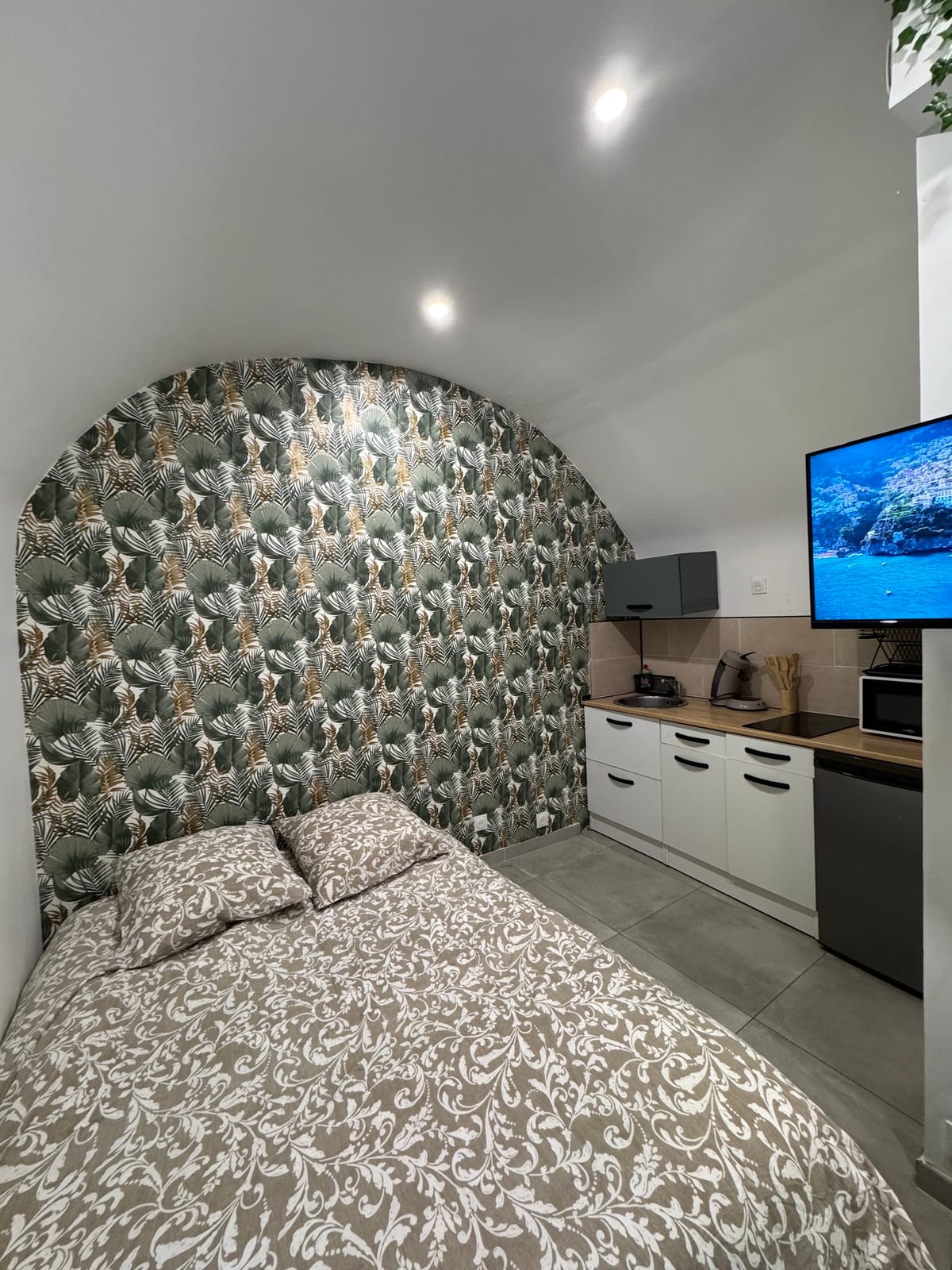
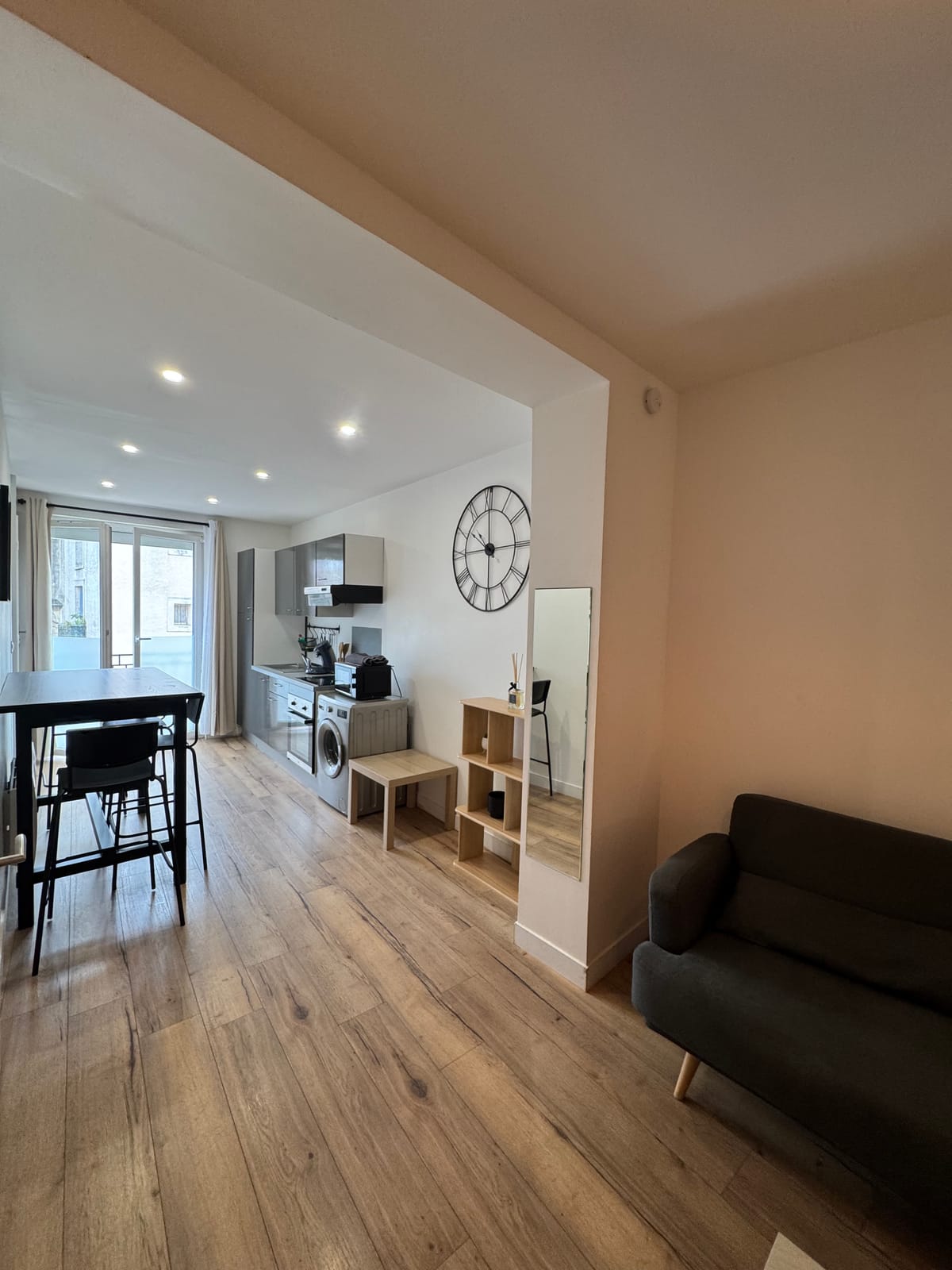
For a quick stop to the Thau pond, the studio Two guests are enough, with direct access to A709 and then A9. For a longer stay between garrigue and vineyards, the duplex offers three beds and a kitchen equipped to cook the products of the basin of Thau. Both units are in downtown Saint-Jean-de-Védas, with a stand-alone arrival per key box.
To continue towards the Thau Basin, the page dedicated to Bouzigues complete this step.