Saint-Nazaire-de-Pézan, at the gates of the Petite Camargue
Saint-Nazaire-de-Pézan has 625 inhabitants, about 3 kilometres southwest of Lunel. The name of the village has evolved over the centuries : attested as simple Saint-Nazaire in 1793 and then in 1801, it officially became Saint-Nazaire-de-Pézan by decree in 1956, an administrative evolution that only really took effect in 1970, more than a decade later. Much of its territory lies in a wetland, between the Golden Pond and the Petite Camargue, a wetland protected by the Ramsar Convention on 41,705.5 hectares. The village is bordered by manades, and the Camargua traditions are part of its identity, alongside an agricultural activity oriented towards apple trees, vineyards, market gardening and cereals, and a dynamic artisanal area that complements this traditional agricultural economy.
Thirty-four minutes to the gold pond
From Saint-Jean-de-Védas, it takes 34 minutes for 32.1 kilometers. It is a full morning or afternoon trip, rather than a quick round trip, between wildlife observation, discovery of the village and possible stop on the Mauguio side on the way back.
Pink flames and turtles cistudes on the pond
The gold pond, acquired by the Conservatoire du Littoral on 609.4 hectares, communicates with the sea by a grau that reaches the port of Carnon. Ranked Natura 2000 over an area of 7,020 hectares under the Habitat and Bird Directives, the site mixes dune system, brackish habitats and freshwater areas, a diversity that explains its ornithological interest. Wild ducks, pink flamingos, scissor turtles, herons and sogrets find protected habitat, between dune system and brackish habitats, sometimes very salty on the south and east shores, sometimes softened by fresh water on the north shores. The village's reeds, long known, have regained their vitality thanks to careful management of water levels.
A Church Back After Wars of Religion
Under the present church dedicated to Saint-Nazaire-et-Saint-Celse, a habitat of the Lower Roman Empire was discovered, at the origin of the village; Paleo-Christian sarcophagi were even discovered right next door. The Romanesque building, built on an ancient Carolingian place of worship, was destroyed during the religious wars before being rebuilt with the stones of the old building, in the characteristic stone apparatus known as Montpellier. His bell, offered in 1617 by the Catholics of Lunel as a sign of good neighbourliness, has been classified as historical furniture since 1957. The facade of the bell tower, threatened by collapse in 1850, was then rebuilt in 1870 according to the plans of architect Alaus.
For whom this step makes sense
- An Ornithological Exit The gold pond and its reeds lend themselves to the observation of migratory birds, a few kilometers from Lunel.
- A discovery of the Petite Camargue without moving away from Montpellier The village gives an overview of this protected wetland, more accessible in half a day than the Camargue Gardoise.
- One step before the coast : Saint-Nazaire-de-Pézan is easily combined with a day to Mauguio or La Grande-Motte, on the way back.
The Lunel Canal also passes through the town, another landmark for walking or cycling in this plain landscape.
Studio or duplex before the pond
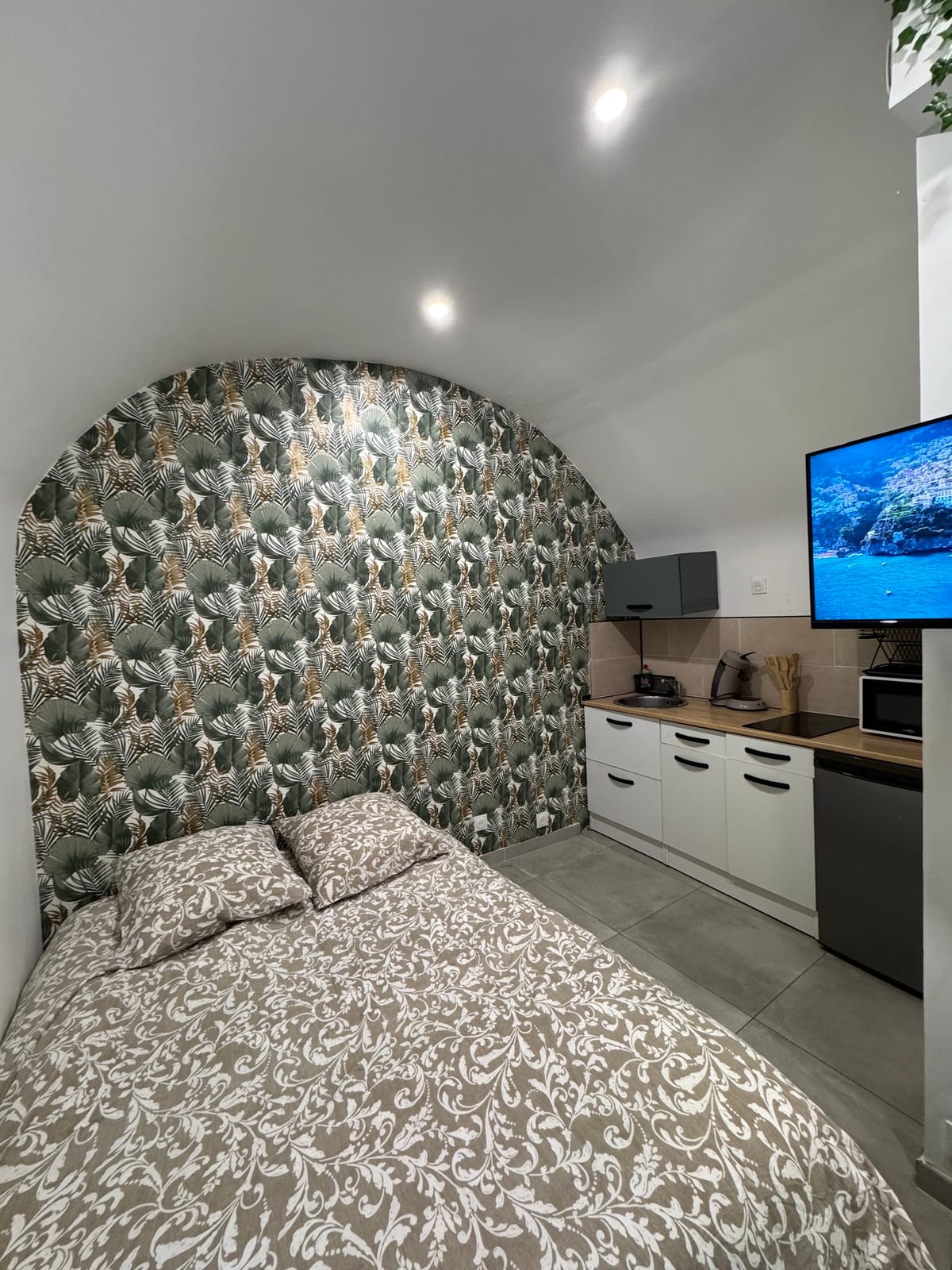
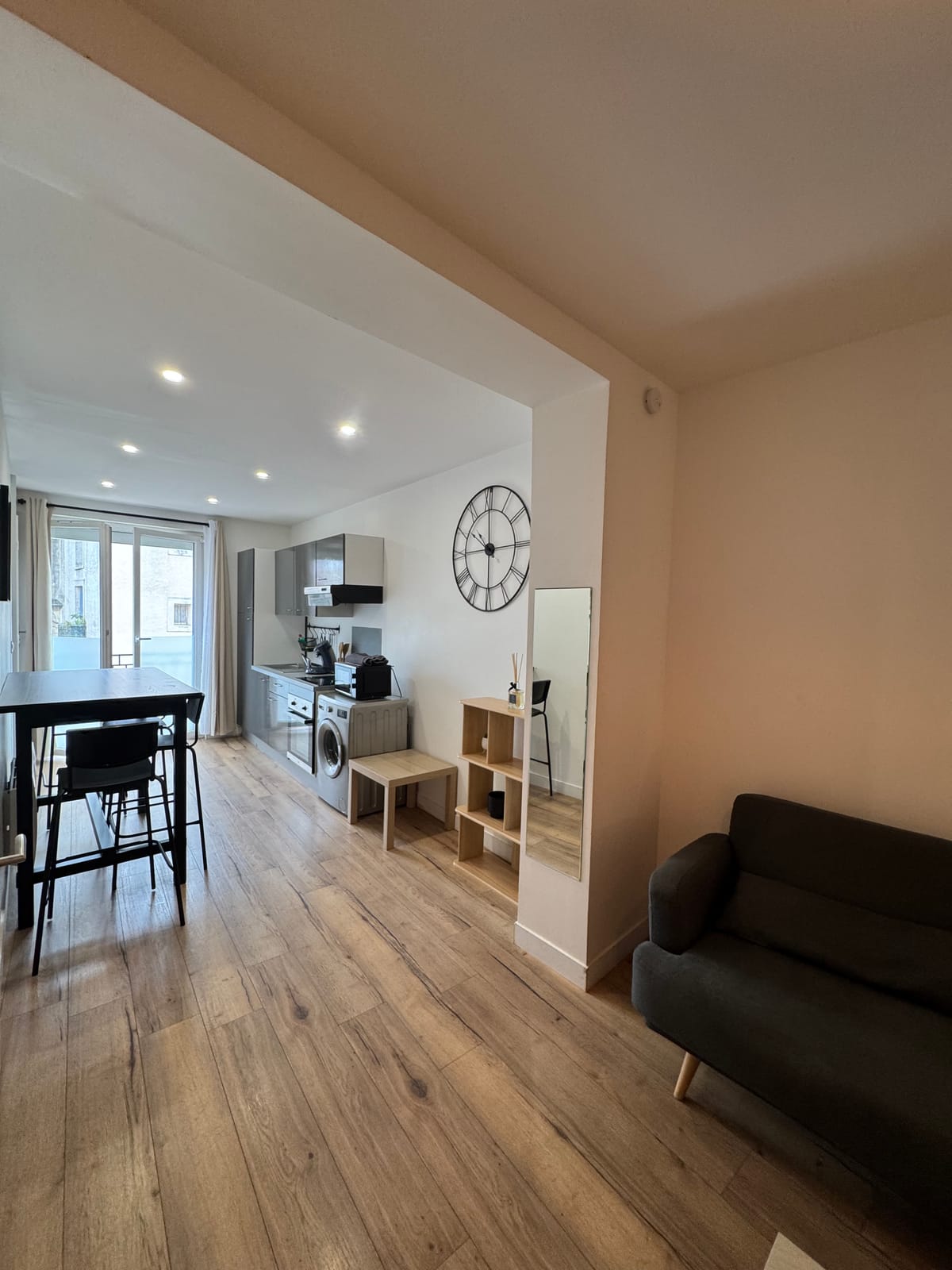
For a two-way outing, the studio enough, with its kitchen equipped for a picnic facing the pond. Family, the duplex offers two bedrooms, three beds and a washing machine. Both units are in downtown Saint-Jean-de-Védas, with a possible stay for one night and quick access to the A9 to reach the eastern part of the department. The page devoted to Mauguio extends the selection around the gold pond.