A village between Montpellier and Lunel
Valergues has 2,238 inhabitants in a 5.3-square-kilometre territory in the Lunel living area, east of the Hérault department. The peri-urban village is located between Montpellier, 17 kilometers away, and Lunel, 5 kilometers away, and remains today the centre city of its urban unit, a member of the community of agglomeration of the Pays de l'Or since its creation in 2012, itself a result of the transformation of the community of communes of the Pays de l'Or, created in 1993.
The name of the commune would come from the Provençal "Valergo", which evokes a small valley, or from the Latin "ager", the field : the ancient forms of the name varied greatly, from "Varquas" in 1099 to "Valanegues" in 1254 and then "Varengues". The housing stock consists of 86.5% of single houses, with only 1.1% of secondary residences, a sign of a residential village more than touristic.
Twenty-six minutes east of the agglomeration
From Saint-Jean-de-Védas, it takes 26.5 kilometres and about 26 minutes to reach Valergues, crossing the Montpellier agglomeration from west to east. The village is located in the same quarter of the agglomeration as Lunel-Viel, Candillargues and Lansargues.
This position makes it more a stage on the road to Lunel than an isolated destination : it is easily combined with one or two neighbouring villages on the same route, rather than programming a dedicated round trip.
The Romanesque church of Sainte-Agathe and the clock tower
The Romanesque church of Sainte-Agathe, whose apse and the southern wall of the nave have been listed as historical monuments since 1963, dates from the end of the eleventh or early twelfth century. It is the oldest heritage landmark in the village, first cited as Ecclesia sanctae agatha in 1099.
The more recent clock tower was built in 1897 on the drawings of architect Léopold Carlier. Overlooking an iron campanile in the shape of an arrow, it peaks at about 22 meters and remains visible by far in the flat landscape of the area. The castle of Tourtoulon completes the built heritage of the commune, while the park of the Villa Romaine recalls a Gallo-Roman occupation of the site, not far from the relief of the Pioch Seilles, away from the village.
A village that has grown little in recent years
By 2021, the municipality had 909 housing units, compared with 849 in 2016 and 808 in 2011, a moderate growth for a village that remains primarily residential : 95.3% of these units are main residences, and 86.5% of individual houses. As for the economy, 184 establishments are located in Valergues, 44 of which are in trade and transport, or 23.9% of the total. Agriculture, oriented towards horticulture, has only 7 farms in 2020, compared to 24 in 1988 for a used area of 53 hectares, a decline that accompanies the increasing place of individual houses in the communal landscape.
For whom this base makes sense
- A step between Montpellier and Lunel Valergues visits by pass, without any significant detour.
- An interest in Romanesque heritage The church of Sainte-Agathe completes a circuit in the villages of the eastern Herault.
- A stay that keeps easy access to both directions Saint-Jean-de-Védas remains central between Montpellier and the axis towards Lunel.
- A curiosity for local toponymies Valergues' name varied greatly, from "Varquas" in 1099 to "Valanegues" in 1254.
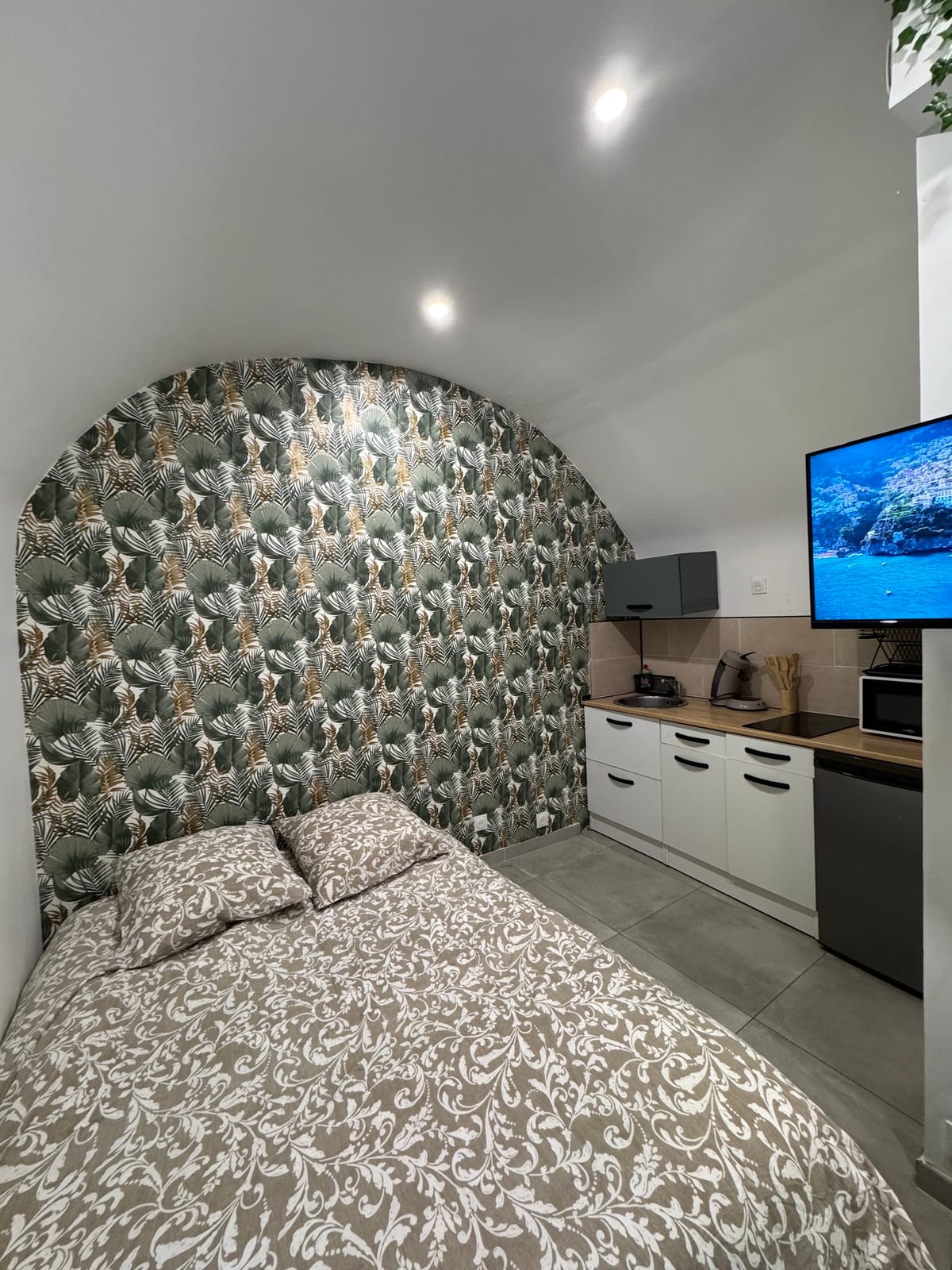
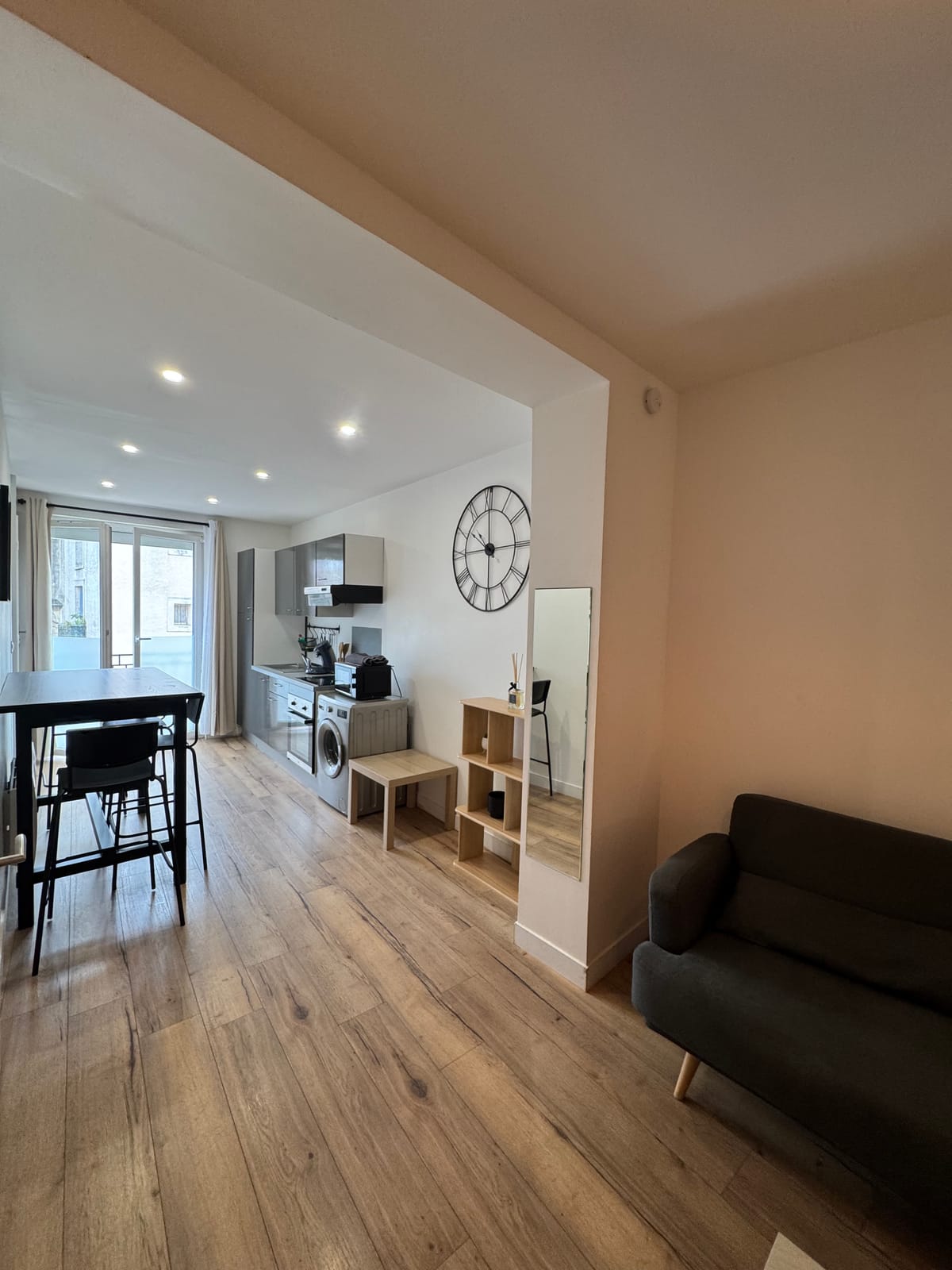
Studio or duplex for a step to Valergues
On two, the studio enough for a stop in Valergues before returning to the road, with its workspace if the trip is also professional. Family, the duplex offers 2 bedrooms and a washing machine, convenient for a stay of several days in East Herault. Both units are in downtown Saint-Jean-de-Védas, with quick access to the A9. Page on Mudaison complete eastbound route.