The Muscat, signature of Frontignan
Frontignan has 24,136 inhabitants and first appears as the city of Muscat. The original commune developed in a wine-growing plain, and its white muscat passed through the centuries : in 1679, a passing English philosopher praised it under the name "Frontiniac", and in 1787, a future president of the United States stayed there and ordered 250 bottles. The local legend goes even further, attributing Hercules the twist of the bottle. The word "muscatier" sometimes refers to what comes from Frontignan.
For a traveller based in Saint-Jean-de-Védas, Frontignan is therefore a double destination : the sea on one side, a vineyard and a city of the other. The municipality is classified as a tourist resort and has been part of Sète Agglopole Méditerranée since 1 January 2017. Sete is only 7 kilometers south-west, making it possible to connect both in the same day.
5 beaches, from Frontignan-Plage to Aresquiers
The coastline of Frontignan is a dune cordon built in a seaside resort, Frontignan-Plage, between the sea and ponds. There are 5 beaches : the entrance beach, the two beaches of the marina, east and west, the Bergerie beach and the Aresquiers beach.
The latter follows the wood of the Aresquiers, 87.1 hectares acquired by the Conservatoire du littoral. On the sea side, the municipality has 3 ports : a marina, a fishing port with "small trades" and a mussel farming port, with its mas where mussels are raised. On the pond of Ingril, three lagoon ports are added to this set, including a river stop on the Rhône Canal in Sète.
The history of the shore is not just seaside : around 1830, a merchant ship loaded with olive oil sank off the Aresquiers, and in 1947 another ship sank a few hundred meters from the beach of Les Mouettes.
Ponds, salt and garrigue of the Gardiole
Behind the beach, Frontignan is a municipality of lagoons. It owns or shares 4 ponds : the pond ofIngril, 685 hectares for an average depth of 0.60 meters; Thau pond, shared with other municipalities; The pond of the Gulls; and the pond of the Peyrad, owned by the State.
The natural heritage is highly protected. The Coastal Conservatory has the Aresquiers wood, Vic pond, the Mouette pond and the Frontignan Salins, the latter on 282.7 hectares. The Palavasian ponds, protected by the Ramsar Convention, cover 7,583 hectares. There are 4 Natura 2000 sites and 10 natural areas of ecological, wildlife and floral interest.
To the north, the town is backed by the garrigue of the Gardiole mountain. Among the reliefs of the commune are Pioch Madame, Pioch Michel and Pioch de la Barre, and the heritage includes a megalith, the dolmen of Coste. For a nature outing, the alternation is simple : salin and ponds in the morning, garrigue in the afternoon.
The heart of town and its 3 protected monuments
The center of Frontignan bears the traces of its history. The church of Saint Paul, inscribed in the historical monuments (ref. Mérimée PA00103455), is one of the first buildings of the city in the eleventh century, with its watch tower; the large tower raised in 1362 to strengthen the city became its bell tower. The Penitent Chapel (PA00103454) and the Féruny Building (PA00103456) complete the list of historical monuments.
On June 25, 1944, a bombardment first reached the refinery, then mistakenly part of the city, and destroyed or damaged a majority of the buildings in the centre. The reconstruction lasted 15 years and gave the centre a more aerated plan than before. The city also has a covered market. A historical detail illuminates the local geography : in 1666, Frontignan ceded part of its territory to allow the creation of Sète.
The city is divided into 11 districts, from the heart of town to Frontignan-Plage, passing through the Peyrad, to the edge of the pond of Ingril, whose name comes from the stone pavement built in 1669.
Join Frontignan : 20 minutes by road
From the centre of Saint-Jean-de-Védas, Frontignan is 21 kilometres away, about 20 minutes' drive. Quick access to A709 and A9 from the accommodation makes it easier to leave to the coast. Frontignan also has a railway station on the Montpellier to Sète railway line, opened in 1839.
The return is free of parking stress : a blue area is 100 metres from the accommodation, and free parking is available at 200 metres. Practical when you get back from the beach in the late afternoon, loaded car.
Studio or duplex after a day at the sea
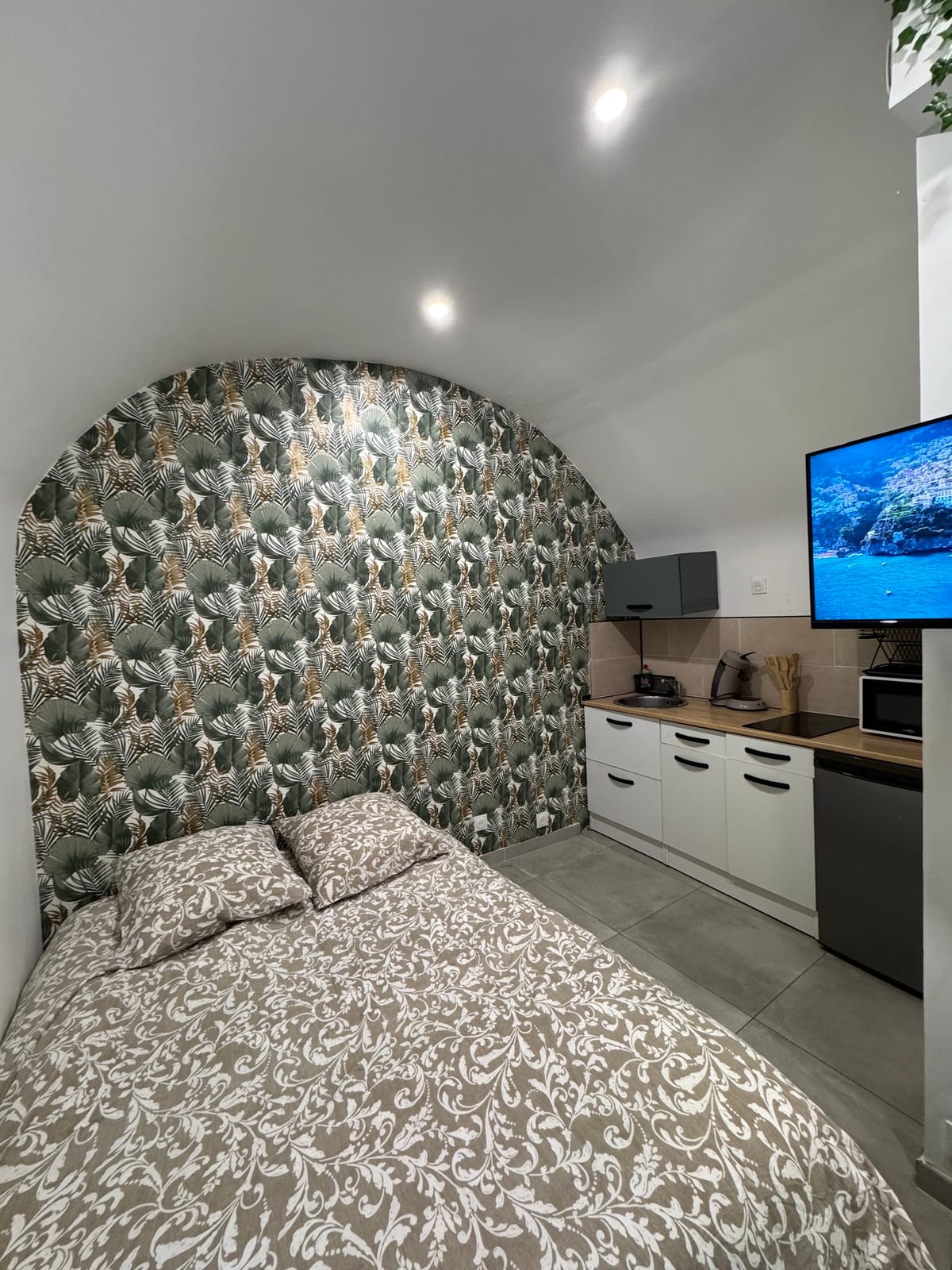
On two, the studio enough for a stay that alternates beaches of Frontignan and evenings in Montpellier by tram line 2, about 7 minutes walk. Its mobile air conditioning and equipped kitchen are appreciable when returning from the sea.
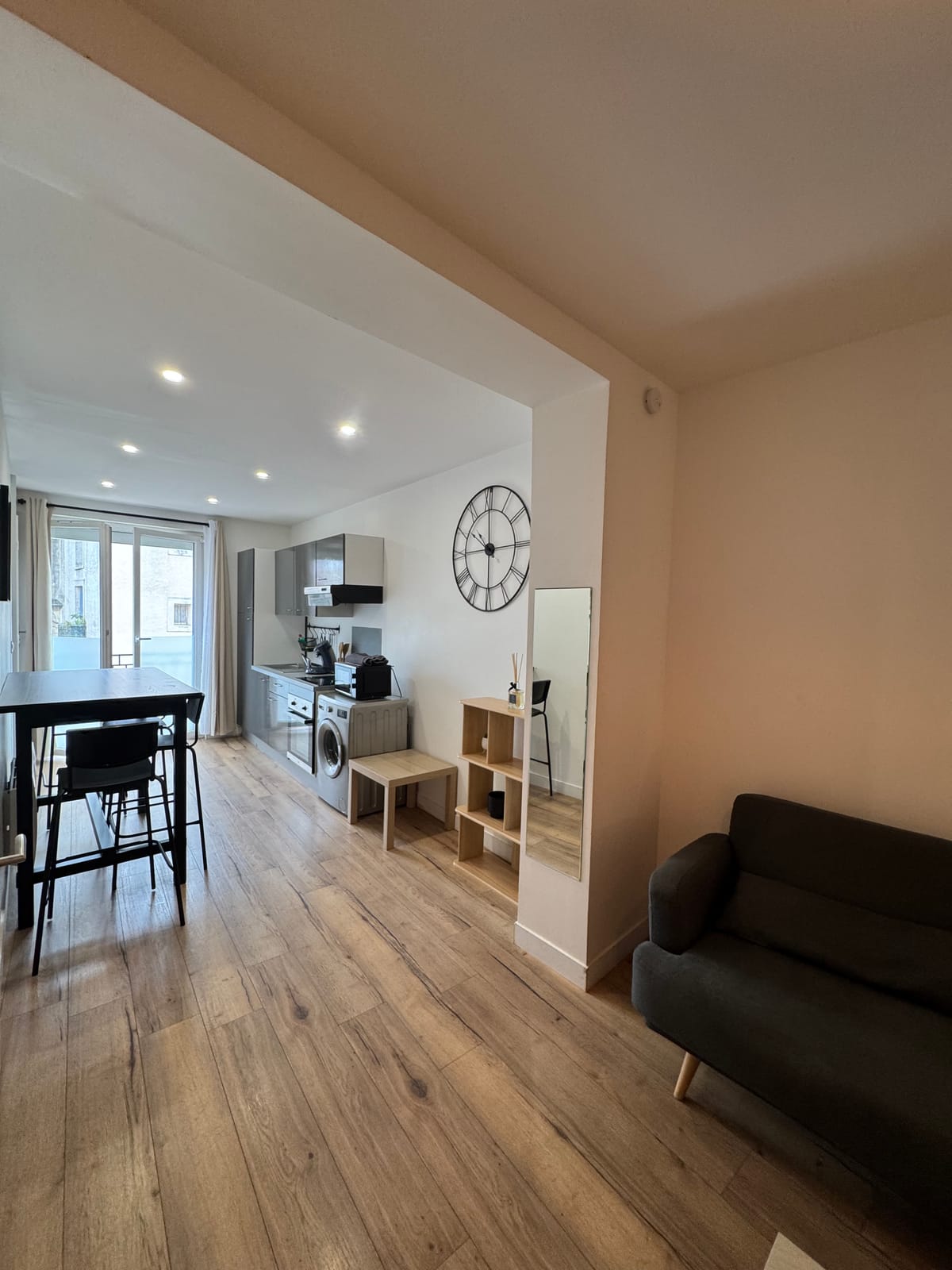
Family, the duplex accommodates 4 travelers, with two bedrooms, three beds and a washing machine for towels and jerseys. The arrival is in autonomy by key box between 5pm and 11pm, and the minimum stay is 2 nights.
To continue around the Thau pond, see also the page dedicated to Balaruc-les-Bains and Vic-la-Gardiole.