A walking village by the pond of Thau
Balaruc-le-Vieux has 2,737 inhabitants and is loved at the end of the Thau basin, against the Gardiole massif, six kilometers from Sète. The ancient village, in traffic, kept the round geometry typical of many Languedoc villages, with walls restored around narrow alleys, doors dating from Louis XIII and the remains of a medieval castle, around the church of Saint-Maurice, of the fourteenth century. Although not classified, this building is referenced in the Mérimée base and listed in the general inventory of the Occitanie region. On a 6.9-square-kilometre communal territory, a Promenade des Remparts runs around the village to a point of view that dominates the cove of the Angle and the basin of Thau.
It takes about 15 minutes drive by the A9
It takes about 15 minutes by road, for 19.3 kilometres, between Saint-Jean-de-Védas and Balaruc-le-Vieux, by exit No 33 of the A9 motorway, which directly serves the village.
Two communes, same history since 1886
Until 1886, Balaruc-le-Vieux and Balaruc-les-Bains formed a single commune. They were split in two on December 11, 1886 : Balaruc-le-Vieux kept the circulade village and its ramparts, while Balaruc-les-Bains developed further south around its thermal baths. A medieval festival in July rekindles the colours of the village every year, with a pyrotechnic spectacle until the ramparts are blown up, in front of an increasing audience.
The muge, totemic animal of the village
Balaruc-le-Vieux has as totem animal the muge, a mule called lo mujol in Occitan, whose origin dates back to a conflict between the bishop of Maguelone and the inhabitants about the taxes on fishing. The structure that represents it was built in 2002, and a song dedicated to it since 2018 during its outings in the village.
A story from the 10th century
Balaruc's name appeared from 961 in the form of Balarug's alode, then evolved in the course of medieval charters : Ballaruc in 1083, Baladuco's castrum in 1120, Balazuc in 1129 and 1145, Baladuc in 1140. A first-century necropolis, discovered in the territory, delivered a Gallo-Roman vase first attributed to a Tarn workshop before being attached to the Graufesenque. A Geoderis study conducted in 2008 and completed in 2015 identified a mining risk associated with old underground cavities left abandoned after the operation of neighbouring mines. Balaruc remained unique until its division in 1886. It now has 346 establishments, of which 45.4 per cent are in commerce, transport, accommodation and catering, or 157 of the total. In the Middle Ages, Guilhem de Balaruc, also known as "de Balazuc", illustrated himself as a troubadour in the 13th century. The river of the Mathe still crosses the communal territory, at the gates of the pond of Thau, whose herbariums welcome pink flamingos, dwarf terns and melanocephal gulls, a curiosity for those who like to observe the birds before returning to the road to Sète.
For whom this base makes sense
- A stop on the road to Sète, 15 minutes from Saint-Jean-de-Védas by the A9.
- A discovery of the circulade village, ramparts and alleyways, before reaching the spas of Balaruc-les-Bains.
- Quick access to the Thau pond, between fishing and viticulture.
- An evening on the Place du Truc, which overlooks the cove of the Angle, to observe the sunset on the pond of Thau.
Studio or duplex before joining Sète
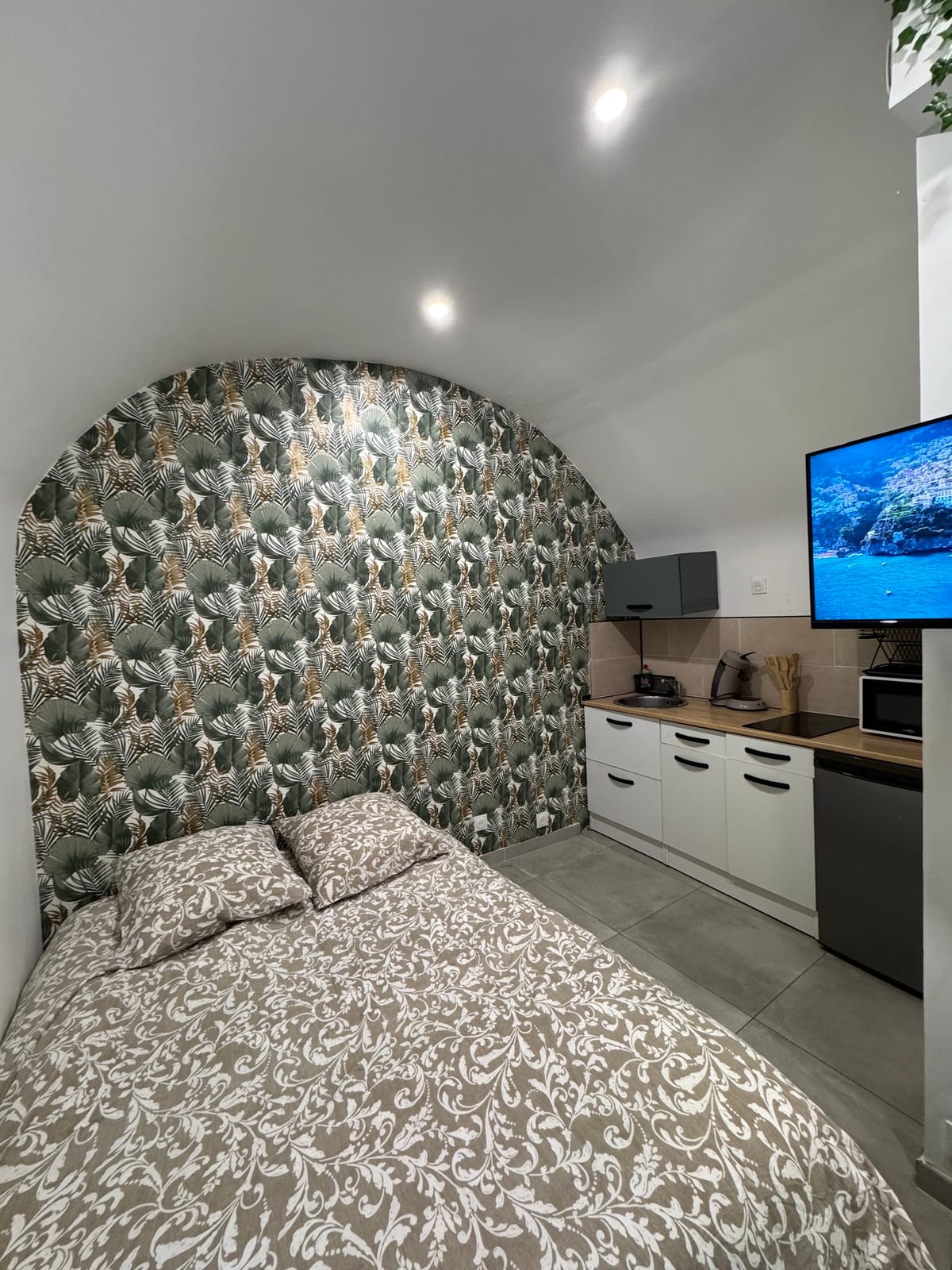
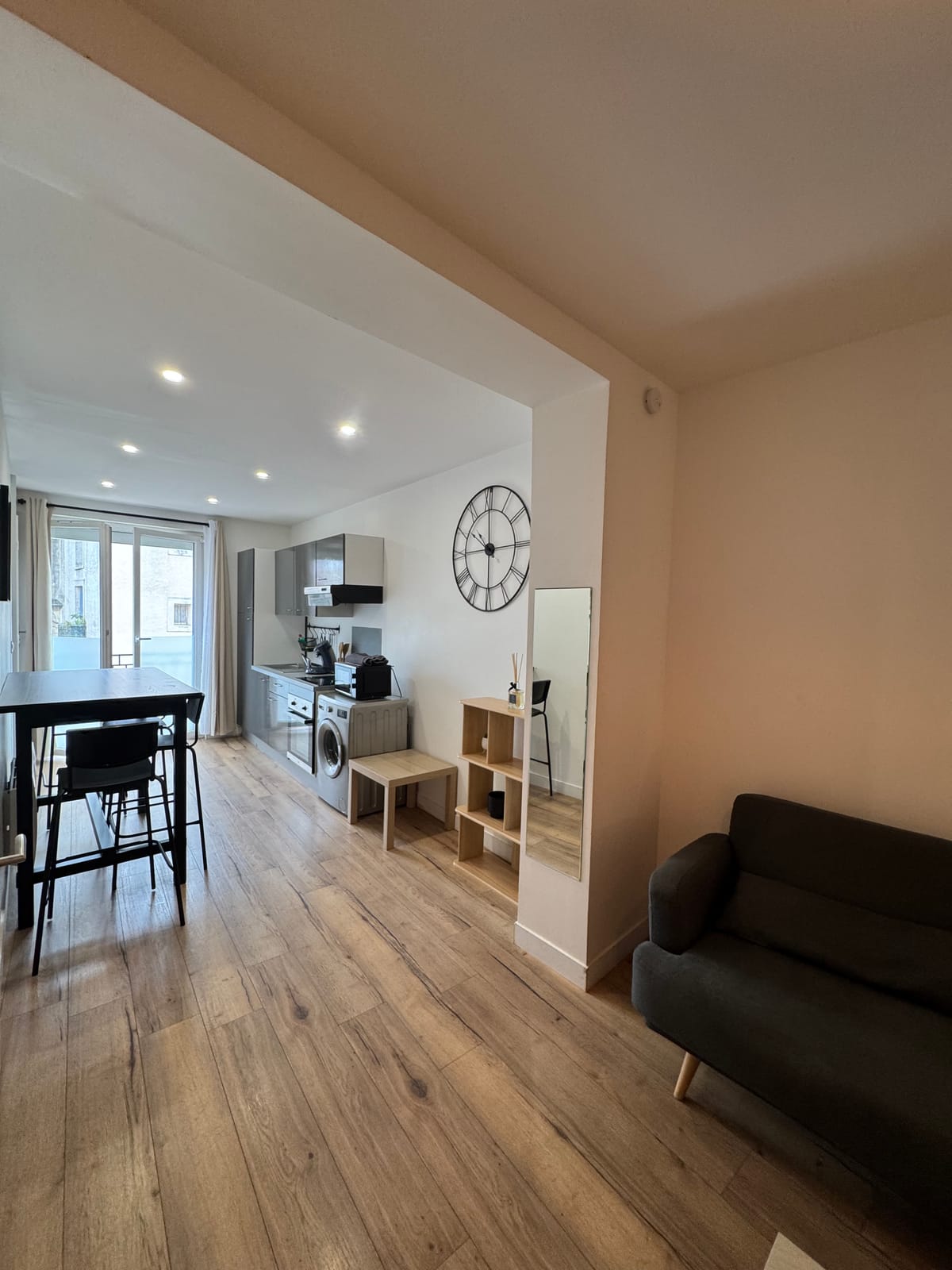
The studio is suitable for a short stage before Sète, with its workspace and quick access to the A9. The duplex, with its washing machine, lends itself to a stay of several days around the pond of Thau, between walks in the alleys of the village and exits to Sète. The page devoted to Balaruc-les-Bains details the neighbouring town and its thermal baths, separated from Balaruc-le-Vieux since 1886 but still accessible in a few minutes.