A village born on the road from Montpellier to Nîmes
Saint-Brès has 3,623 inhabitants in 4.8 square kilometres, east of Montpellier, in the Baillargues agglomeration. The village developed as early as the 12th century thanks to its position on the main road between Montpellier and Nîmes, a major communication axis which would have seen Louis XIV pass in 1660, en route to his marriage to Saint-Jean-de-Luz with the infant Marie-Thérèse.
According to local legend, the village was founded in the fifth century by St.Brice, Bishop of Tours, during a journey to Rome. The first writings evoke its existence only from the 9th century, but the feast of Saint-Brice, on November 13, continues to mark a great local occasion each year.
A territory divided by infrastructure
Today, the communal territory remains marked by infrastructure : the A9 motorway and its A709 ramp border it to the north, while the national road and the railway cross the centre of the village. The two urban entities of Baillargues and Saint-Brès are separated by the Berange River, which flows into the Mauguio pond. A station operated in Saint-Brès from 1845 until its closure in late 2011.
From Saint-Jean-de-Védas, it takes 23.1 kilometres and about 22 minutes to reach Saint-Brès, crossing Montpellier. It is a journey comparable to that of Castries or Vendargues, in the same eastern quarter of the agglomeration, made simple by the direct proximity to the A9.
The old bridge over the Berange and the church of Saint-Brice
The old bridge, at the entrance of the village, crosses the Berange and connects Saint-Brès to Baillargues. This river, now quiet, was navigable in the seventeenth century and was used to transport the wine produced on the commune to the port of Candillargues.
The early Saint-Brice church, which also served as a watchtower, was destroyed during the religious wars and rebuilt in 1635. It was enlarged in the 19th century to follow the demographic growth linked to the cultivation of the vine, with two added side-rests and a wrought iron campanile bell tower, typical of Languedoc. Winegrowers' houses with their adjoining sheds still bear witness to this period.
A trade- and service-oriented economy
Saint-Brès has 256 active establishments, 73 of which are in wholesale and retail trade, transport, accommodation and catering, representing 28.5% of the total, a figure close to the departmental average of 28%. Agriculture, long carried by the vine, has been converted to polyculture and livestock farming : the municipality has only 5 farms in 2020, compared with 37 in 1988 for an area of 71 hectares, a decline which reflects the urban pressure exerted by the nearby agglomeration.
For whom this base makes sense
- A stop on the road between Montpellier and Nîmes : Saint-Brès remains easy to reach since the A9.
- A family outing The Heracles pool and the village parks complete a visit.
- A stay that mixes east and west of the agglomeration Saint-Jean-de-Védas maintains direct access to both axes.
Studio or duplex for an exit to Saint-Brès
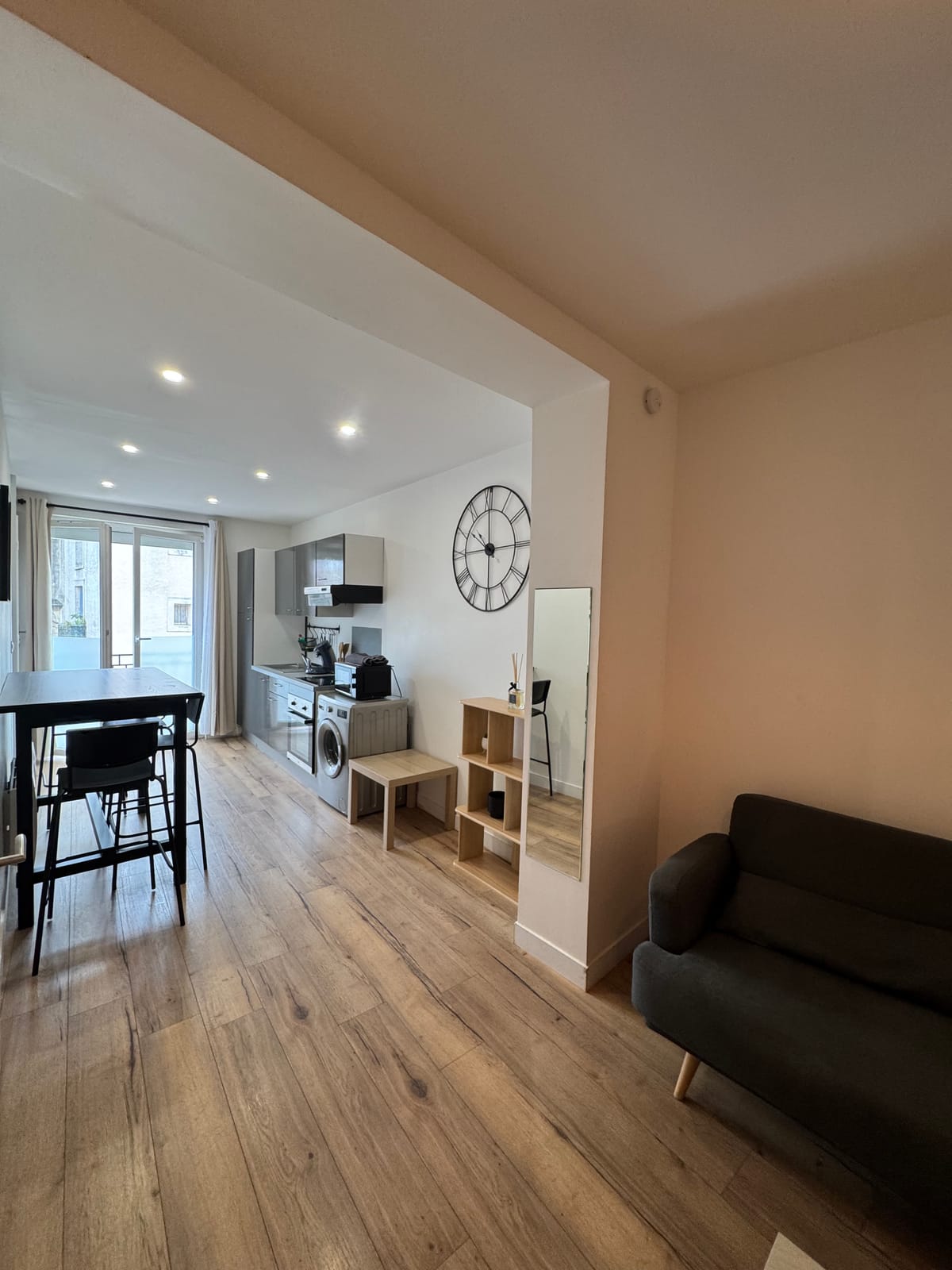
On two, the studio suitable for a visit to the old bridge and church, with its equipped kitchen and workspace for a simple meal or some mails on the way back. Family, the duplex offers 2 bedrooms and a washing machine, convenient after an afternoon at the pool. Both units are in downtown Saint-Jean-de-Védas, with quick access to the A9 east of the Hérault. Page on Baillargues details the neighbouring municipality, separated by Berange.